
Product Solution | LPKF NovaPrint
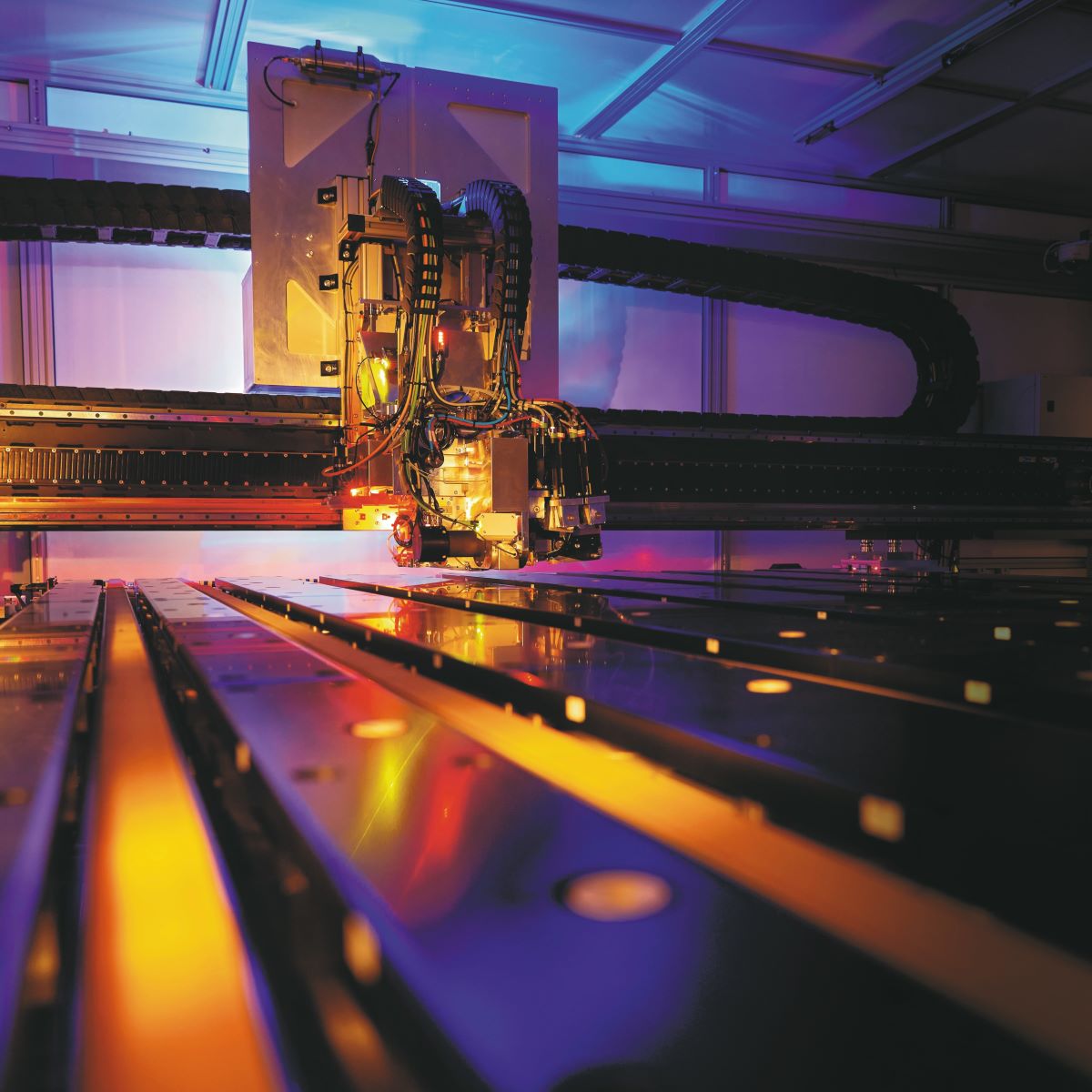
Laser Transfer Printing (LTP) transfers ceramic frits directly to glass
Key features
- Processes original ceramic frits (unlike inkjet)
- Superior precision with 150 μm lines
- Silver frits for conductive applications
- Eliminates screen costs and setup times
- Wet-on-dry multi-layer printing capability
 The glass industry faces a persistent challenge: producing small batches and custom designs efficiently without incurring the high costs and time-consuming setup of traditional screen printing. Creating, storing and maintaining expensive screens for every new design limits flexibility and drives up costs, especially for specialized projects.
The LPKF NovaPrint addresses this issue with its Laser Transfer Printing, or LTP, technology. This industrial printing system transfers ceramic frits directly to glass using precise laser pulses in a completely non-contact process, eliminating the need for screens, as well as expensive print heads.
How it works
A continuously coated, endless belt supplies ink to the digital laser transfer unit. When the laser beam hits the ink-coated belt, it vaporizes portions of the solvent, creating a vapor bubble that forms and ejects an ink droplet. This droplet lands with precision on the glass substrate.
Unlike inkjet systems, LTP processes ceramic frits at their original, screen-printing particle size, ensuring proven adhesion and durability after firing. Inkjet technology requires specially formulated inks with smaller particles, which often compromises material properties and requires complex qualification. LTP’s climate-controlled system delivers consistent results while inkjet technology remains susceptible to environmental influences and nozzle clogging.
LTP can produce fine lines as small as 150 μm with clean edges, whereas inkjet technology struggles with droplet formation and edge quality. Precise laser control allows for variable layer thicknesses in a single pass; inkjet technology requires multiple passes with limited control. The system currently supports black and silver ceramic frits.
Applications and handling
Silver printing enables conductive applications, such as automotive defrosters, antennas and more. Its wet-on-dry capability allows for multiple printing passes without prior drying. First, a fine black base layer is printed to prevent the silver from appearing yellow on glass. Then, the silver is printed on top with precision.
The system can handle glass ranging in size from 300 by 300 millimeters to 2,000 by 3,000 mm and in thickness from 1.4 to 8 mm. It offers productivity of up to 90 square meters per hour. Switch between designs digitally. Print serial numbers or QR codes for traceability.
Learn more
For more information, visit ltp.lpkf.com, email info.ltp@lpkf.com or call +(49) 3682-8924.