Can Decorative Glass Meet Safety Glazing Requirements?
What specifiers should know about tempered and laminated decorative glass and code compliance
Specifiers, architects, and design professionals frequently ask whether decorative glass can meet safety glazing requirements. Historically, decorative treatments were associated with aesthetics rather than performance. Today, advances in fabrication, interlayers and testing allow decorative glass to meet the same life-safety benchmarks as conventional architectural glazing.
When properly designed, fabricated, and tested, decorative glass can comply with recognized impact-safety standards referenced by the International Building Code (IBC). In many applications, design intent and code compliance are no longer mutually exclusive.
Safety glazing requirements focus on behavior under human impact, not appearance. Decorative glass installed in hazardous locations is subject to the same requirements as traditional glass. Understanding how decorative glass qualifies as safety glazing helps protect occupants, reduces inspection issues and minimizes costly redesigns.
What is safety glazing and when is it required?
Safety glazing refers to glass engineered to reduce injury if breakage occurs. Unlike annealed glass, safety glazing fractures in a controlled manner or remains intact upon breakage, significantly reducing the risk of lacerations and fall-through.
In the United States, safety glazing performance is governed by two primary standards:
- ANSI Z97.1 – Establishes impact-safety performance specifications and testing methods for architectural glazing.
- CPSC 16 CFR 1201 – A mandatory federal regulation defining allowable performance for glazing in hazardous locations such as doors, sidelites, and shower enclosures.
The IBC references both standards and defines where safety glazing is required. Section 2406 identifies hazardous locations, including:
- Doors and sidelites
- Glazing near walking surfaces
- Guardrails and balustrades
- Stairways and ramps
- Shower enclosures
- Areas subject to human impact
In practice, location—not aesthetics—determines compliance. Decorative glass does not receive special treatment under the code.
Key differences between tempered glass and laminated glass
Two primary safety glazing systems are used in architectural applications: tempered glass and laminated glass. Polycarbonate systems may also qualify in specific applications.
Tempered glass
Tempered glass is heat-treated to increase strength. When broken, it fractures into small, blunt fragments that reduce the risk of injury.
Common applications include:
- Doors and sidelites
- Interior partitions
- Shower enclosures
- Areas requiring high point-load resistance
Laminated glass
Laminated glass consists of two or more glass plies bonded with a polymer interlayer. Upon breakage, glass fragments adhere to the interlayer, allowing the panel to remain largely intact.
Key benefits include:
- Post-breakage retention
- Reduced fall-through risk
- Improved acoustics
- UV filtering
- Enhanced security and impact resistance
In some applications, glass is both tempered and laminated, combining impact resistance with post-breakage safety. Selection depends on exposure conditions, performance requirements, and design intent.
Understanding laminated glass interlayers
Laminated glass performance depends heavily on interlayer selection. Common architectural interlayers include PVB, ionoplast, EVA, and resin systems.
PVB interlayers
Polyvinyl butyral (PVB) is the most widely specified laminated glass interlayer in architectural applications. It offers optical clarity, versatility, and a long track record of performance. PVB-laminated glass can meet safety glazing requirements under ANSI Z97.1 and CPSC 16 CFR 1201 when properly tested. It also supports decorative elements such as printed imagery and translucent inserts.
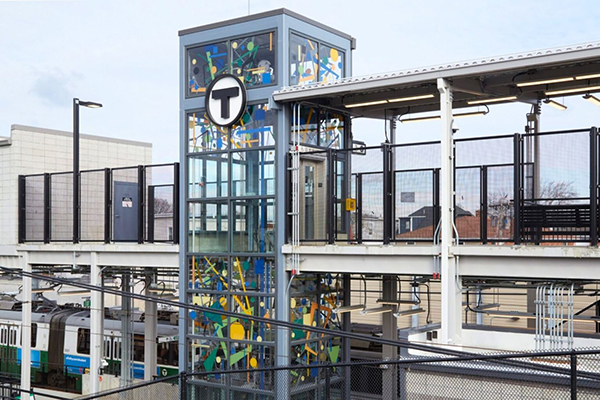
A representative application is the MBTA GLX Ball Square Station, where decorative laminated elevator tower glazing used tempered glass with a PVB interlayer to meet safety requirements while supporting large-format artwork.
Ionoplast interlayers
Ionoplast interlayers, such as SentryGlas, are selected when higher structural performance is required. Compared to PVB, ionoplast materials are significantly stiffer and stronger.
Advantages include:
- Improved load sharing between glass plies
- Reduced deflection
- Enhanced post-breakage capacity
- Superior edge stability in exposed conditions
Ionoplast is commonly specified for:
- Balustrades and guardrails
- Canopies
- Exterior façades
An example is the SunRunner Bus Rapid Transit public art project, where laminated glass with an ionoplast interlayer provided safety performance, durability, and long-term exterior stability.
EVA laminated glass
Ethylene vinyl acetate (EVA) laminated glass uses a thermoset interlayer that encapsulates glass plies during lamination. When properly fabricated and tested, EVA-laminated glass can meet the same safety-glazing performance requirements as PVB systems.
EVA offers advantages for decorative applications, including:
- Strong adhesion to specialty substrates
- Excellent edge stability
- Compatibility with embedded materials, fabrics, and inserts
By producing EVA laminated glass in-house, GGI maintains tighter control over bonding quality, visual consistency and fabrication tolerances. This capability supports faster lead times, greater flexibility for custom designs and repeatable performance across decorative and specialty applications.
Resin-laminated glass
Resin-laminated glass uses a liquid resin cured between glass plies. While resin systems can meet safety-glazing requirements when properly fabricated and tested, they typically require longer curing times and more controlled production environments, which can limit scalability compared to sheet-interlayer systems.
Can decorative glass qualify as safety glazing?
Yes. Decorative glass can qualify as safety glazing when it is designed, tested, labeled and certified correctly. Safety designation is based solely on performance testing, not appearance. Passing ANSI Z97.1 or CPSC 16 CFR 1201 impact testing is the determining factor.
Decorative treatments may include:
- Etching and satin finishes
- Tinting and colored substrates
- Back-painting
- Ceramic-frit and direct-to-glass printing
- Decorative laminated interlayers
- Or, combinations of the above referenced glass types
Harborside 3 210 Hudson Street illustrates how custom fabrication capabilities and multiple glass types can be combined to achieve both aesthetic goals and safety glazing compliance. In this Class A office building, the overhead glass located in the elevator bank was engineered to deliver a distinctive visual impact while meeting applicable safety glazing requirements.
The laminated glass assembly consists of ¼-inch low-iron glass with an Alice custom printed design on surface #1, laminated with a 0.060 PVB interlayer to a second ¼-inch low-iron glass lite featuring Alice printing on surface #3 and custom back-painting on surface #4. This layered configuration provides impact safety, post-breakage retention and long-term durability while supporting a highly customized design.
Beyond the elevator area, the project incorporates a range of glass types and fabrication processes throughout the interior glass walls and glass wall cladding systems. These assemblies demonstrate how decorative glass, when properly engineered and tested, can support complex architectural design while maintaining compliance with safety glazing standards.
Decorative glass types commonly used as safety glazing
Several decorative glass categories can meet safety requirements when properly engineered:
- Satin-etched glass when tempered or laminated after treatment
- Tinted glass processed identically to clear safety glass
- Direct-to-glass printing, such as GGI’s Alice, where ceramic-frit inks are fused into the glass during tempering
- Decorative laminated interlayers, including patterned films, fabrics, and metallic elements
- MeshFusion laminated glass, incorporating metal mesh within structural laminates
- Back-painted glass when verified through approved safety testing
For exterior printed glass, lamination with PVB or ionoplast interlayers is often recommended to improve durability, weather resistance, and code compliance.
Decorative exceptions in the building code
The IBC includes limited exemptions for certain decorative glazing under narrowly defined conditions. These exemptions do not designate decorative glass as safety glass and should not be broadly applied.
Local interpretation varies by Authority Having Jurisdiction (AHJ). When occupant safety is a concern, voluntarily specifying safety glazing is often the prudent approach.
Testing, certification and labeling requirements
Safety glazing must be permanently labeled, identifying:
- Manufacturer
- Applicable safety standard
- Testing category
Certification bodies maintain listings of qualified products. Glass without permanent marking may be rejected regardless of claimed performance.
How to specify decorative safety glazing
A structured specification process helps ensure compliance:
- Identify hazardous locations per IBC Section 2406
- Define required impact and retention performance
- Select appropriate construction (tempered, laminated, or hybrid)
- Confirm decorative finish compatibility with fabrication methods
- Verify certification and labeling before installation
Early coordination with fabricators reduces risk and streamlines approvals.