
Apprenticeship Helps Glaziers Play the Long Game
Investing time in employees creates loyalty and retention in apprentices, while expanding opportunity for employers and employees alike
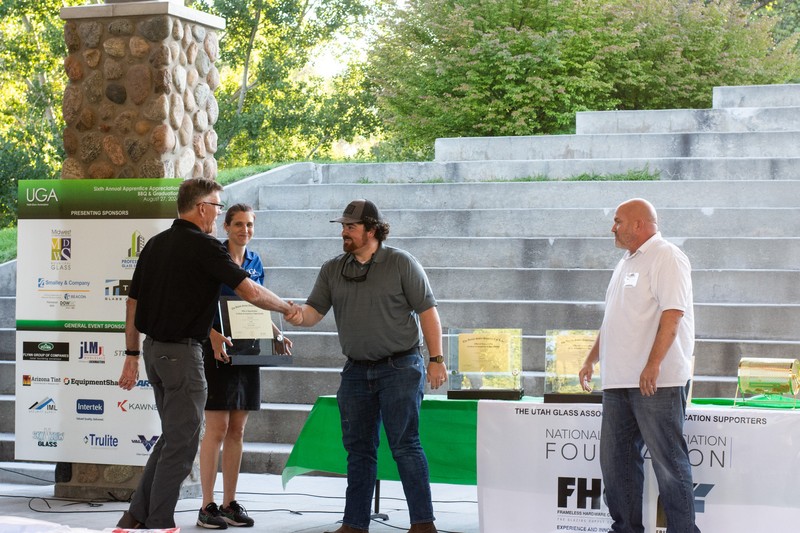
After nearly a decade working in the world of apprenticeship, most recently as a field representative and supervisor for the New York State Department of Labor, I’ve seen how both employers and employees benefit from this training and certification program. While we often speak about apprenticeship in terms of employer benefits—solving recruitment and retention issues—but it’s important to recognize how and why it benefits employees as well.
Having had the chance to speak to a variety of glazier employers and apprentices at employee graduations and events in the last year, on top of many years of conversations with employers and apprentices across a variety of trades, I want to highlight how apprenticeship helps support employer/employee relationships, and strengthens the glazing workforce.
Interested in learning more about apprenticeship and how NGA can help your business get involved? Learn more at MyGlassClass.com or contact our apprenticeship team for more information at apprenticeship@glass.org.
Building loyalty and shaping skill sets
Apprentices recognize and appreciate the opportunity of an apprenticeship, whether they’re a new hire or an existing employee. They’re promised predictable wage increases as they progress through the apprenticeship program, offering a sense of security and recognition of their increasing skills. They know that they’re learning a skilled trade while they work—earning while they learn. And they recognize that without their employer, they wouldn’t have this opportunity, which builds loyalty.
Curtis Beplay, a glazier who apprenticed with Steel Encounters, spoke about the type of loyalty this kind of unique opportunity offers. “I was extremely lucky to find this glazing apprenticeship because of the type of architecture I’m interested in,” he says. “I wanted to make skyscrapers, and I wanted to do this type of work.”
On the employer side, opportunity is also a major piece of the puzzle. Through investing in apprenticeship, employers not only get access to “qualified, trained, excited glaziers,” as Jodi Martinez, vice president of AllStar Glass, puts it, but they also get the chance to mold those glaziers themselves. Employers who commit the time and energy into an apprenticeship program can clearly demonstrate to their employees—apprentices and otherwise—that they invest in their people. That’s the kind of employer that people want to work for, which is why apprenticeship is such a powerful tool to build employee loyalty and retention.
Boosting employee pride and diversifying job opportunities
Pride in one’s work is a theme I’ve heard from apprentices across the trades, but nowhere more so than in the glass industry. Almost every glazier apprentice I’ve spoken to has told me, in some form, that what they like best about learning this trade is the ability to see the finished product they helped create—to see, as one said, “cool stuff that I have built with my own hands.”
Then there’s the pride of seeing their own development through the three to four years they spend in an apprenticeship program. Don’t forget, apprentices are learning on the job but they’re also learning off the clock: The time they spend on the classroom training portion of an apprenticeship is rarely paid, and it can be a clear indicator that they’re committed to the trade and to the company. Many enter an apprenticeship with no industry experience and complete it with the skills and confidence of a journeyworker.
As an example, Richard Manu completed an apprenticeship with the Flynn Group and has since moved up within the company to positions in CNC programming, project coordination and management. Looking back on his career path, Manu says of his apprenticeship, “It’s definitely a big stepping stone for what’s later on in life and I don’t think a lot of people know that about glazing. They just think it’s the install or field work… but if you can put your mind to it and put in the hard work, most definitely all those doors will open up to you. Maybe not all at once, but one door at a time is all it takes.”
For the employer, there’s the pride in passing hard-earned expertise to the next generation, as well as the pride of knowing their team is better trained and more committed to the work than the competition. Apprenticeship can even be the solution to difficult questions around succession planning—the apprentice hired today may become the most skilled and dedicated employee down the road with the drive and institutional knowledge to keep a company competitive and growing as leadership begins to consider retirement.
Expanding glazier scope for new projects
Personal growth, paycheck growth, skill growth: Apprentices experience all of these as they progress. It’s why many want to commit to an apprenticeship rather than just “a job.” Overall, apprentices tend to be forward-focused, thoughtful about their careers, and dedicated to crossing the finish line. In fact, 93% of apprentices who complete a program stay with the sponsoring employer according to the United States Department of Labor. In the words of Martin Alvarado of Southwest Glass & Glazing in Albuquerque, New Mexico, his apprenticeship helped him to “feel like a better person because I’m accomplishing something that I should have accomplished when I was younger, but it’s never too late.”
Through participation in an apprenticeship program, an employer can grow their business, not only in headcount but in scope of work. In many jurisdictions, Registered Apprenticeship offers access to public work, meaning employers can compete for lucrative contracts that aren’t available to all contractors. Moreover, the quality that comes from training employees with the apprenticeship model can also foster reputational growth. When employees are educated not only how to do the work but why doing it right matters, the result shows in the quality of the finished product. And that’s the kind of company people want to do business with.