
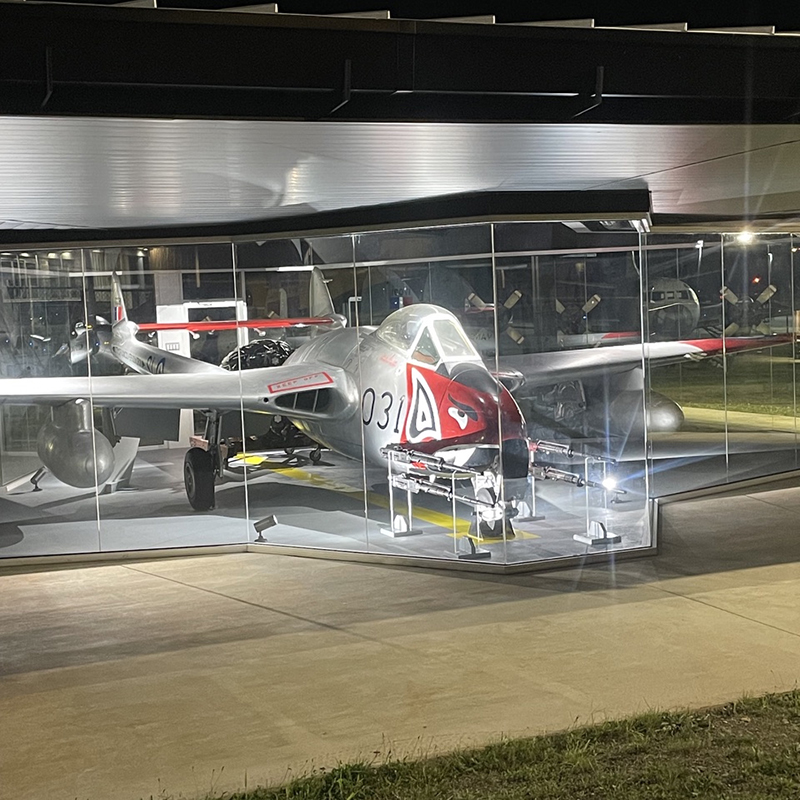
A new, permanent home for a historic 1948 de Havilland Vampire Mark III jet is now complete at the Comox Air Force Museum on Vancouver Island, British Columbia. The recently completed glass pavilion at Heritage Air Park is the culmination of 16 years of planning, fundraising and development, providing a climate-controlled environment to preserve and display a piece of Royal Canadian Air Force (RCAF) history.
The museum obtained the historic aircraft in flying condition. Because of its wooden construction, the plane could not be exhibited outdoors and remained safely tucked away in a hangar until its new pavilion was completed.
Designed by Thomas Dishlevoy Architects and glazed by Courtenay Glass Ltd., the pavilion features numerous Oldcastle BuildingEnvelope (OBE) glass products, including 12 millimeter monolithic tempered glass with polished edges, along with U.S. Aluminum framing systems. The contemporary enclosure provides visitors with an up-close view of the aircraft while protecting it from the elements.
The design evolved beyond the original concept of simply enclosing the aircraft within a structured perimeter. By extending the glass and framing, the design team created a more visually engaging display that uses less material while providing a greater overhang to shelter visitors from the rain.
The pavilion’s floor was painted gray with a yellow taxi stripe to replicate the appearance of a hangar floor, further enhancing the aircraft’s presentation. Interior lighting automatically illuminates the display at sunset and switches off at midnight, allowing visitors to appreciate the aircraft after dark.