Anodized Aluminum's Biggest Challenge Isn't Performance, It's Understanding
What architects, owners and contractors want from finishes
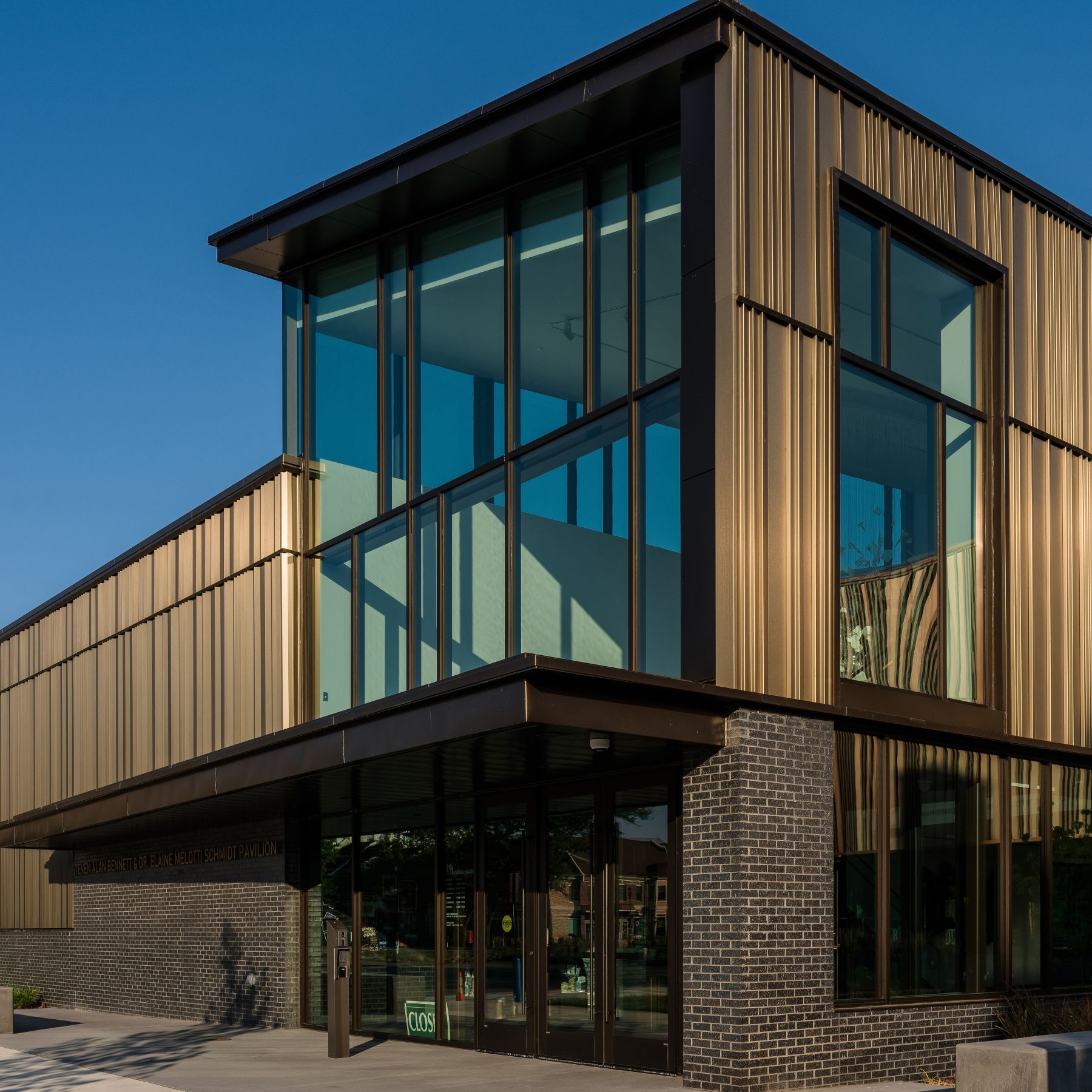
Above: Lorin Industries contributed its anodized aluminum capabilities to systems featured in the Muskegon Museum of Art in Muskegon, Michigan. Anodized metal systems are present in the structural and decorative elements, complementing the museum’s contemporary architectural design.
Architects want finishes that look exceptional on day one. Owners want those same finishes to look exceptional twenty or thirty years later. Contractors want materials that install predictably and require minimal maintenance.
Over the years, I've had countless conversations about anodized aluminum with architects, fabricators, contractors, and building owners. What I've learned is that the biggest hurdle isn't the material itself. The challenge is helping people understand what it actually is.
Most construction professionals have a good feel for materials like steel, glass, concrete, and painted finishes. They know how those materials behave, where they work well, and what kind of maintenance they require. Anodized aluminum is different because it often gets grouped with coatings and painted products, even though that's not really what it is.
In fact, one of the first things I find myself explaining is that anodizing isn't a coating at all. Nothing is being applied to the aluminum. The finish becomes part of the aluminum itself through an electrochemical process. That may sound like a technical detail, but it's an important one. Once you understand that difference, it changes the conversation around durability, maintenance, corrosion resistance, and how the material performs over the long term.
When a surface is painted, powder-coated, or otherwise covered, you're applying something to the material. Anodizing works differently. Through an electrochemical process, the aluminum itself becomes the finish. The oxide layer grows from the aluminum substrate rather than being applied on top of it.
Anodized aluminum resists weathering
Understanding this process is important because anodizing changes how the material behaves over decades of service.
In the glass and glazing industry, we're constantly balancing aesthetics with durability. Architects want finishes that look exceptional on day one. Owners want those same finishes to look exceptional 20 or 30 later. Contractors want materials that install predictably and require minimal maintenance. Those expectations are becoming harder to satisfy as projects face harsher environmental conditions, longer design lives, and increasing sustainability requirements.
This is where anodized aluminum deserves a closer look. The oxide layer formed during anodizing is extremely hard and highly resistant to weathering. Because it is integral to the aluminum itself, concerns such as chipping, flaking, or peeling simply don't exist in the same way they do with applied finishes. Even in demanding environments, including coastal applications where salt exposure is a constant concern, anodized aluminum has established a long history of performance.
Preserving the look of metal
Yet durability is only part of the story. One of the characteristics that continues to attract architects and designers is the ability to preserve the appearance of real metal. Unlike opaque coatings, anodizing is translucent. The finish allows the natural character of the aluminum to remain visible, creating depth and a metallic appearance that is difficult to replicate.
The industry has also made significant advances in color consistency, finish options, and fabrication capabilities. Roll forming, perforating, embossing, and other complex architectural applications have become commonplace. Many design professionals are surprised to discover how versatile anodized aluminum has become.
Looking ahead, I believe the future growth of anodized aluminum will depend less on technological breakthroughs and more on awareness. The material already offers durability, corrosion resistance, recyclability, and design flexibility. What remains is helping more architects, glazing contractors, fabricators, and building owners understand where it fits within their toolbox of material options.
My grandfather was part of the generation that helped pioneer continuous coil anodizing in the 1950s. More than 70 years later, I still find myself having the same conversation: explaining what anodized aluminum actually is. The encouraging part is that once people understand the difference, they often begin seeing applications they hadn't considered before.
That's why education remains one of the most important investments our industry can make, not just for anodized aluminum but for any material whose capabilities exceed its reputation.