How to Reduce Manufacturing Waste
How integrating sustainable practices across every operational level delivers measurable value
 New green initiatives at Solatube International demonstrate that even minor changes in day-to-day operations can dramatically improve a company’s overall sustainability. Making these mindful adjustments requires analyzing routine processes large and small for practical opportunities to eliminate waste or turn materials into something more useful.
Eliminating Plastic Waste for Transfers
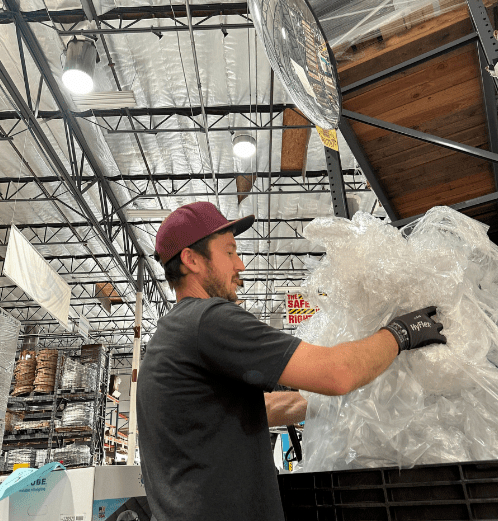
Our company partners with nonprofit Plastic Beach to capture and recycle thousands of pounds of soft plastic wrap from Solatube manufacturing processes. Expanding upon this circularity, the company identified an important opportunity to further eliminate single-use plastic waste with internal pallet transfers.
Previous operations often involved wrapping pallets in stretch film for their short journey from production to the finished goods warehouse. After serving this brief purpose, the plastic was summarily removed and placed in a recycling bin.
To address this waste, workers now secure pallets with reusable straps for all internal transfers, with no plastic involved. Team members can reuse the straps repeatedly, effectively securing loads during transport without creating any plastic waste.
This change substantially decreases the amount of film consumed, contributing to a goal of reducing stretch film use in transfers by approximately 20% and eliminating an estimated 1,000 pounds of plastic annually. With petroleum and natural gas serving as key materials in the production of stretch wrap, minimizing the use of this product helps lessen the extraction and processing of these non-renewable resources.
The change further enhances the company’s sustainable operations, while supporting a cleaner workflow throughout the transfer process.
Reducing Plastic Use for Transit
Solatube International further slashed plastic use by thoughtfully modifying stretch-wrap applications for customer shipments. By identifying and utilizing the most efficient wrap pattern, tension, and number of rotations, the team quantifiably reduced the amount of film used per pallet, while still maintaining effective load security for transit. The amount of plastic saved compounds significantly when scaled across thousands of pallets. This achieves a tremendous drop in plastic use, which equates to meaningful reduction in greenhouse gas emissions involved in plastic production.
Further progressing responsible material use, the warehouse’s simple changes in routine plastic use serve as achievable examples for other businesses seeking to improve their operations’ sustainability.
Transforming Waste Through Pallet Recycling
As part of its existing environmental stewardship, Solatube International has always recycled pallets whenever possible. The company now takes this environmentalism a significant step further with its new pallet recycling program, initiated to measurably extend each pallet’s lifecycle. As part of ongoing material management practices, pallets have long been reused and recycled where possible; however, an opportunity was identified to further streamline and scale these efforts across the facility. Now, the warehouse team takes a more structured approach to treating each pallet as an asset that can be recovered, reused, and put back into operation.
This solution elevates existing recycling efforts by reusing viable inbound pallets and using refurbished pallets, instead of purchasing new pallets whenever appropriate. The recent change has resulted in further increasing the number of pallets kept in active use and out of the waste stream, significantly reducing landfill waste and the greenhouse gases they emit. Pallet reuse also directly promotes forest and timber conservation, as the pallet industry represents one of the world’s largest consumers of hardwood and softwood lumber.
In addition to expanding material stewardship, this recycling program delivers an estimated 34% reduction in annual pallet cost.