
Elton Boocock is an AI strategist for the glazing industry. At the National Glass Association’s inaugural Glass Fabricator Conference, held June 14-17 in Chicago, Illinois, presented on the integration of AI into the glazing industry, emphasizing the need for controlled AI tools and the importance of data security, as well as the role of human oversight.
How to most effectively use AI
Boocock advised attendees on using AI strategically and efficiently; he advised audience members that vague prompts lead to vague, unrefined answers and solutions. Boocock says there are three things leaders need to do to make sure they are using AI most effectively:
- Create a simple AI policy
- Pick one painful process (choose one process that’s costing you time or remakes)
- Run one controlled 30/60/90-day pilot program using AI (pick one use case from your business to refine)
“Write an AI policy that not only empowers the use of AI, but the correct use of AI,” he says, and recommends that the policy is reviewed by a lawyer to make it legal.
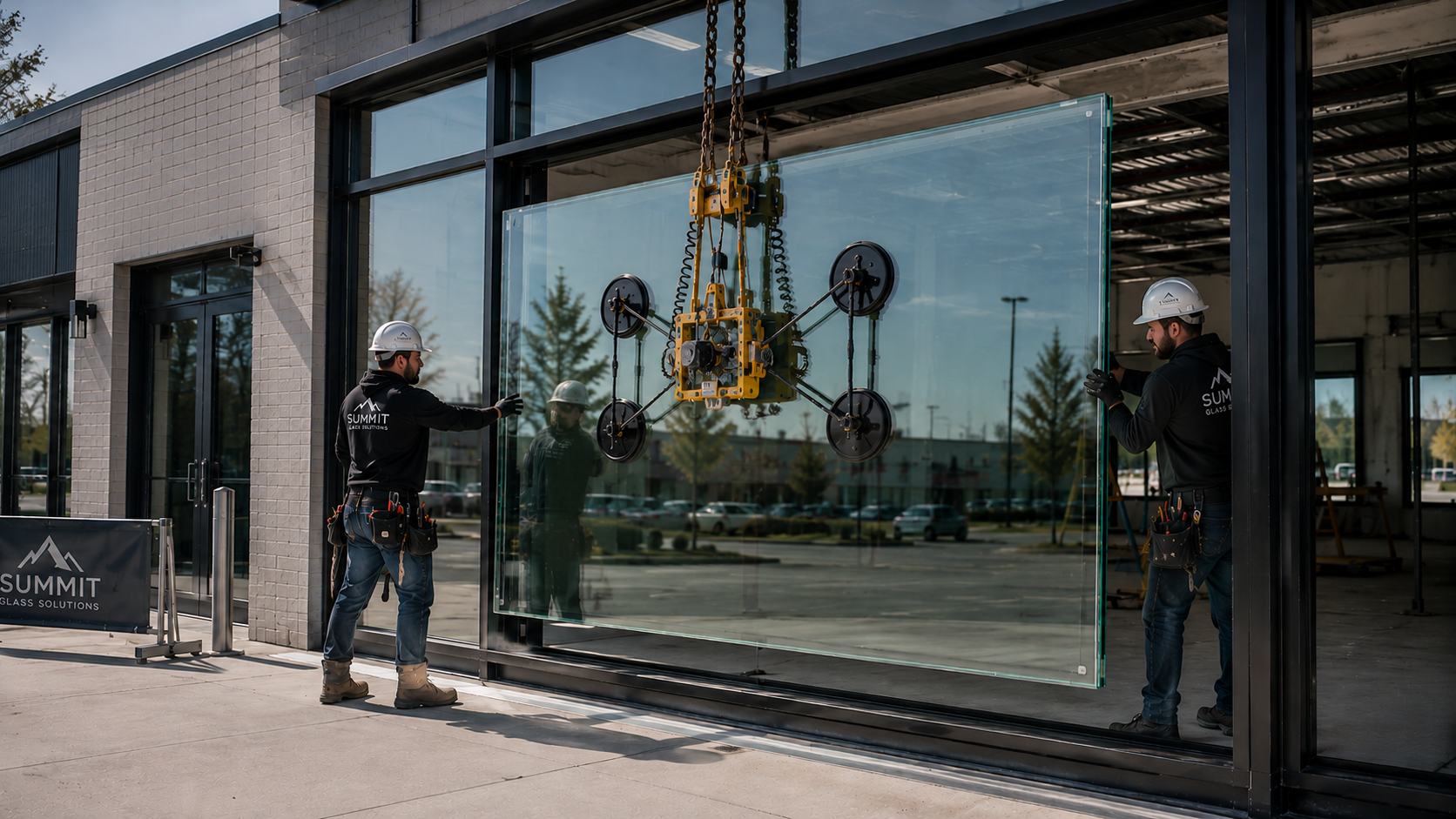
Boocock also says that “AI is fluent, not factual,” meaning that it lacks the industry-specific expertise that a professional would have. What this means is that AI can generate images and text that fulfills the boundaries of the prompt used, but that doesn’t mean what results is factually correct. For example, Boocock used an AI-generated image of a person transporting architectural glass that, to the untrained eye, may have looked correct at a quick glance, but in reality, the glass does not fit in the framing it's being applied to.
Boocock’s presentation concluded with a panel of industry experts, including Maxwell Garrow, solutions engineering manager, Guidewheel, which provides an AI-powered platform that clips plug-and-play sensors onto machinery; Nicola Lattuada, president, Lattuada North America Inc.; Johnathan Paredes, general manager, Bovone North America; and Ed Robles, vice president of sales/owner, Salem Fabrication Technologies Group, HHH Equipment Resources. During the panel, machinery suppliers agreed that there are potential, future opportunities for further AI implementation on the factory floor.
Garrow says that Guidewheel uses non-invasive sensors to monitor the “heartbeat,” or functioning, of machines, similar to a Fitbit to track your heart rate. “We're tracking the heart rate of machines and layering on AI and machine learning to actually give insights at scale into things like utilization, throughput, and downtime tracking,” says Garrow. “It works on any machine, whether that's upstream and core production, float machines; downstream and finishing, grinding, even things like auxiliary equipment, and compressors, so that you're getting a holistic view across all of your factories and all of your equipment.”
Paredes explained how AI can add further capacity to already full-automated systems. He shared a case study from Bovone about a fully automated system where the whole operation is automated from the cutting line to the rack system. The only manual component is the loading and offloading tempering. Paredes stresses that the technology/AI is there, and now it’s a matter of integrating software and/or AI that allows the system to work seamlessly.
Using AI securely and safely
Boocock also stressed the importance of security. He advised industry members to only use approved tools and encryptions and avoid inputting customer data or sensitive information unless it is a system that has already been approved by leadership. Permissions, passwords, and multi-factor authentication should always be in use.
Boocock advised the audience that the greater capacity of AI requires that users and their access levels needs to be tracked carefully.
Physical security, for something like a factory, is different than cybersecurity, says Boocock. “Now in the world of AI and any other software, security is about permissions, passwords, multi-factor authentication, using approved systems, retention rules, and backups.”
“The future does not belong to the companies that use AI everywhere, it belongs to the companies that know exactly where AI should help, where humans must decide, and how to keep the data safely on the rack,” says Boocock.