
Energy Advancements You Can See (Through)
VIG and electrochromic glass make high performance glass a reality
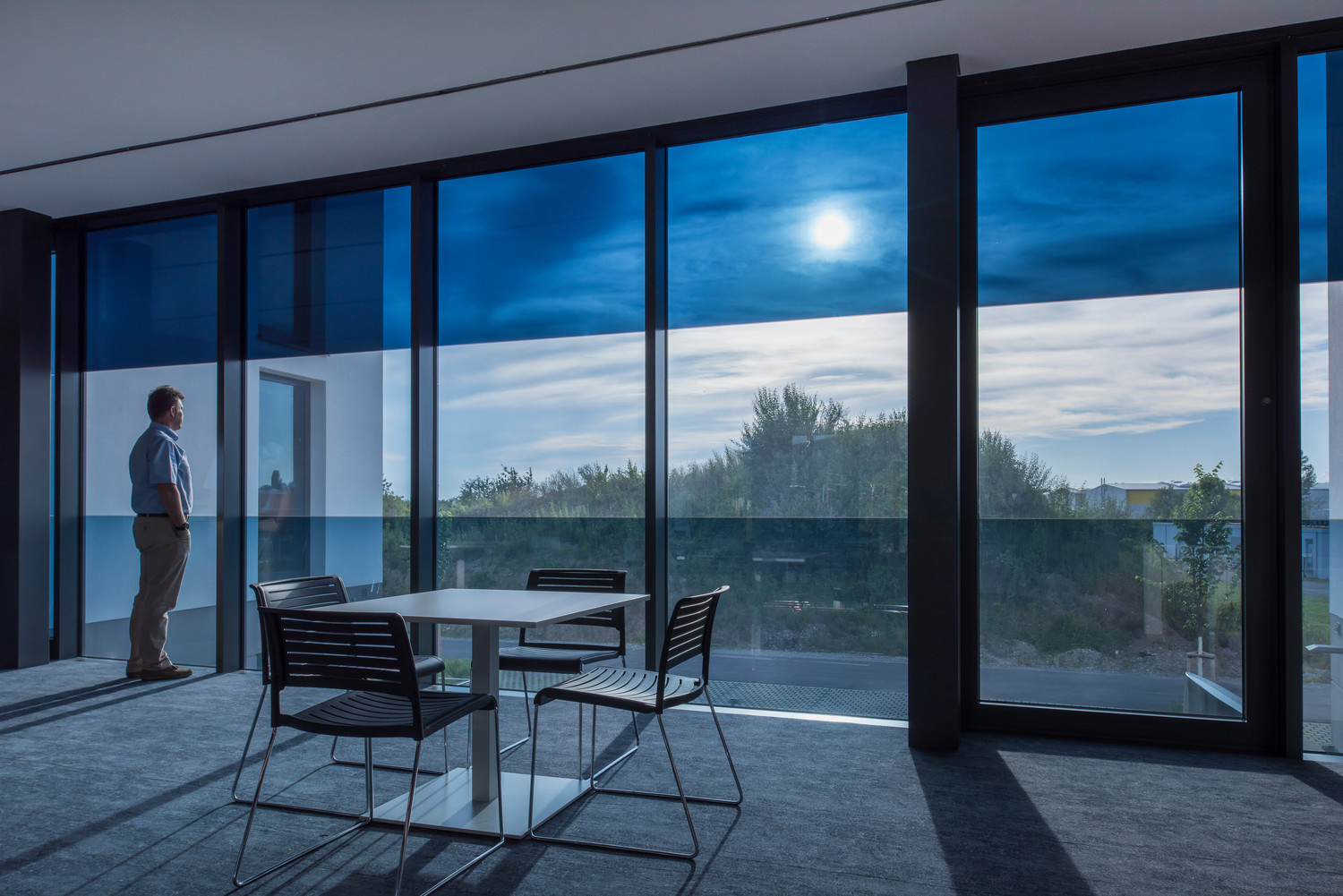
In a world with so many advancements, it has always seemed staggering that glass has stayed stagnant with regards to energy usage and performance. Many states are increasingly requiring better energy performance from building materials, and wall assemblies have met the challenge with greater insulation, achieving R-values of R-15, 18, and 21. So, it’s hard to understand how we are still providing glass that carries an R-2 to R-6 rating.
However, the high-end residential sector has undergone a major transformation in the past two decades, driven by three converging priorities: energy efficiency and decarbonization, occupant comfort, and wellness along with architectural minimalism demonstrated in large glass expanses. With those larger glass expanses comes the need for greater energy efficiency, surpassing what traditional double- and even triple-pane insulating glass units can achieve. This has mandated the inclusion of passive performance standards, reduced glare, and smart-home integration. The need for greater performance has also accelerated the development and adoption of two advanced glazing technologies: vacuum insulating glazing, or VIG, and electrochromic glass.
VIG offers greater thermal efficiency, and electrochromic glass features dynamic solar and light control. Together, these technologies are redefining what high-performance windows mean in luxury residential design, and have the potential to offer increased glazing performance across different climates in both residential and commercial construction
VIG offers the thermal performance of wall assemblies
VIG replaces the gas-filled cavity of traditional IGUs with a near-total vacuum, eliminating conductive and convective heat transfer. By replacing the standard air or gas-filled glass units with this extremely low internal air pressure and while still using low emissivity coatings, manufacturers can produce lower U-values and an R-10 rating in a unit that is only ⅜ of an inch, far narrower than the standard 1-inch IGUs.
This reduction in thickness allows for a myriad of installation options, especially in retrofitting older buildings and homes that have the shallow-depth classic steel windows such as the W20 profile. These ⅜-inch VIG units can fit in this space or even in older aluminum and vinyl window options and provide drastic energy savings. Beyond thermal performance, VIG also offers dramatic acoustic advantages for sound insulation due to the dead airspace that provides better decibel reduction numbers than laminated glass. And the higher internal surface temperatures of the VIGs reduce the overall assembly condensation risk and eliminate thermal discomfort near glazing surfaces.
Early versions of VIG faced difficulty in durable performance and appearance. In the past, VIG units have suffered from seal degradation and loss of vacuum over time. The technology was also plagued by aesthetic issues due to the visible vacuum ports on the face of the glass. These silver rings made selling the units a real challenge, especially when you had many small units near each other in one frame.
Recent innovations have worked to reduce or eliminate many of these issues. Modern VIG units obscure the ports with clear options limiting the visual obstruction. Recently, even better technology has led to edge ports, which eliminate the port being detected altogether. Advancements in solar glass, hybrid seals, and laser-sealing techniques have also improved the unit size, durability, and lifespan of VIG, with some reports showing the potential for a 25-year lifespan.
New technology in micropillars has also made the small supports inside the glass less visible. Micropillars prevent the VIG unit from collapsing into itself when air is removed, but recent progress has resulted in clear supports, reducing visibility. Additional advancement has optimized spacing requirements for structural integrity as well as thermal bridging minimization.
Hybrid VIG insulating glass units have the potential to offer the same performance as a wall assembly, if thickness is not a concern. Hybrid VIG units can be constructed using a ¼-inch low-emissivity outboard lite with a ⅜-inch air space and an inboard VIG unit. This type of unit offers R-values of R-16-R-18, matching with wall assembly performance while also offering views and natural light and reducing HVAC loads significantly.
Electrochromic glass is a dynamic solution for lower solar heat gain
Electrochromic glass utilizes thin film layers made of metal oxides to alter light transmission through the glass unit via ion movement. When a small voltage is applied, the unit can dynamically change tint. Electrochromic glass systems can significantly lower visible light transmission—units can have a 60% VLT in the clear state, which reduces down to 4% when tinted.
The EC system can be integrated into smart house systems, be sensor driven or controlled via a cell phone. And unlike standard switch glass, which only turns from clear to opaque, EC glass can vary the amount of tint visible. The system can tint slightly, and shift down to darker tints depending on the brightness that day, which provides a custom shading experience. Most systems have four settings, but the number of settings may increase as innovation improves.
EC’s reduced solar heat gain eliminates the need for visible or motorized shades and blinds which maintain views while providing visual comfort like a pair of sunglasses for a window. EC also reduces cooling loads and enhances HVAC performance. Like with VIG, innovation continues, and recent developments include a greater ranges of tints, uniform tinting over large panels, faster transitions, and better UV resistance. The newer units utilize all inorganic solid-state layers to provide longer service life.
Enter the next-generation, cutting-edge EC research which includes zinc-based electrochromic systems with high durability, tested to15,000-plus cycles, large optical modulation (greater than 50%) and multi state switching among clear, gray, black and mirror states. All at a lower cost with greater scalability and improved environmental stability.
Complementary technologies for next-gen solutions
Vacuum insulating glass and electrochromic glass represent two complementary revolutions in residential glazing and even in commercial applications as the costs decrease. Together, the two technologies can address glass performance in extreme climates: VIG benefits colder climates by addressing the long-standing problem of thermal inefficiency, delivering wall-like insulation in a window form and EC glass supports performance in hotter climates by transforming windows into dynamic systems that actively manage light, heat, and comfort.
While cost remains a barrier, rapid advancements in materials science, manufacturing, and smart home integration are accelerating adoption. As these technologies mature and converge—and even, potentially, combine into one unit—they could lower energy usage in those old commercial buildings in New York, San Francisco and beyond as they become the next commonplace items in the glass material offerings. It is time to see glass become part of the solution and not the problem.