
A Guide to Build Plant Safety
Best practices for factory housekeeping, PPE and glass handling
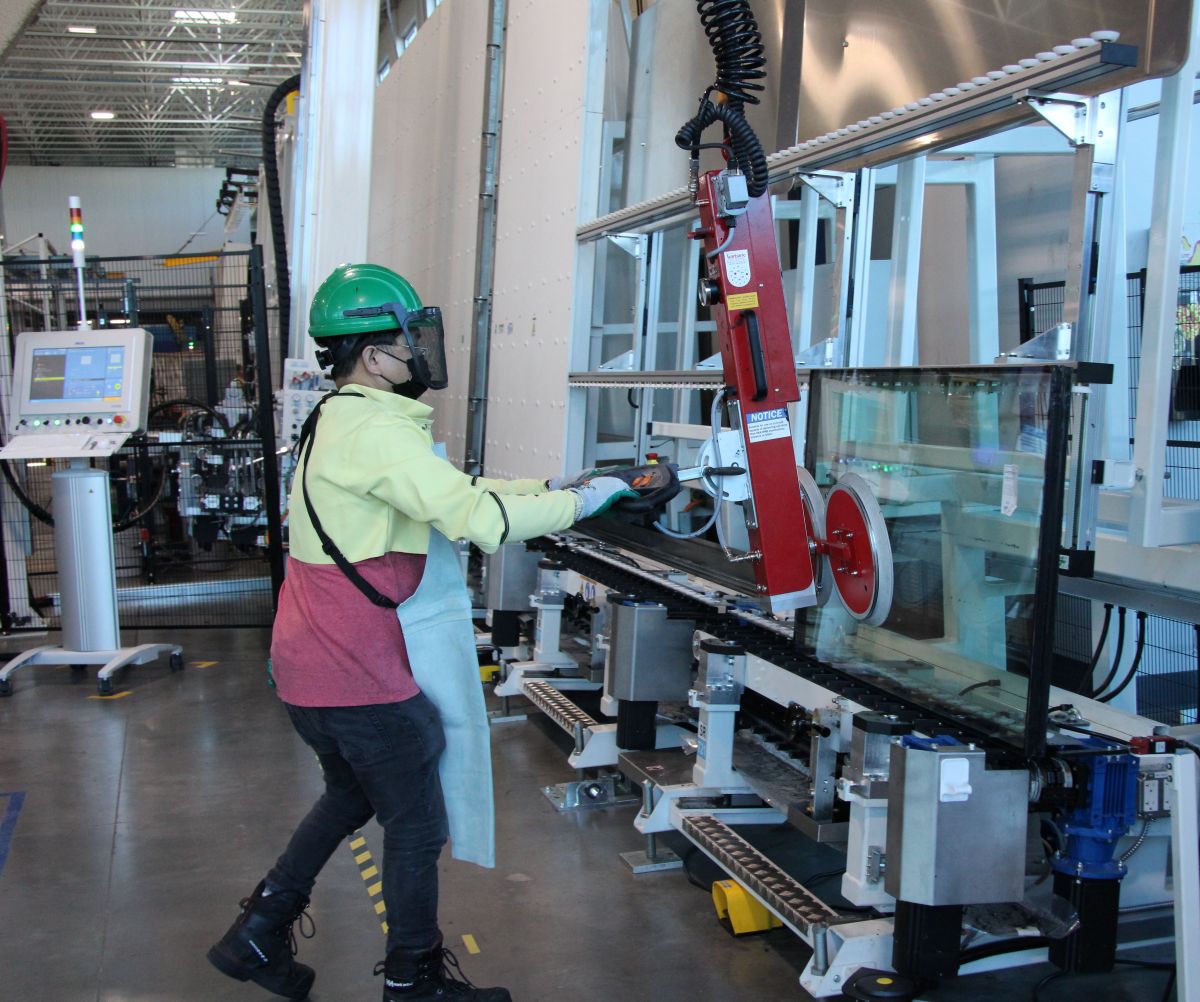
While a significant portion of FGIA’s documents deal with performance testing, safety is always the top priority. In the fabrication of insulating glass units, detailed and written procedures are critical to provide safety process uniformity between individual operators and work shifts.
The fabrication of IGUs needs to be assessed for safety hazards, but we all know creating in-plant safety control measures is easier said than done. To that end, FGIA produced IGMA TM-5000, Do's and Don'ts of Glass Safety, a technical manual that can act as a template in creating such a plan. The following includes just some of the “do’s and don’ts” tips.
Best Practices for Walkways and Housekeeping
- DO instruct visitors on emergency procedures, warning signals and exits. DO NOT allow visitors or employees to take short cuts through production areas.
- DO clearly mark aisles and passageways separate from motorized traffic. DO NOT allow anyone but the crane operators in the glass unloading area.
- DO visibly mark “No Traffic” or “Hazard Warnings” in glass handling areas. DO enforce “Stop and Look” rules at intersections.
- DO remove trash and debris daily. DO NOT allow unused and scrap glass to accumulate in the production area.
- DO clean up spills immediately, and any vacuum interleaving powder (Lucor) from the floors in the cutting and loading areas. DO NOT allow water to accumulate on the floor around the glass washer and water filtration.DO clean up spills immediately, and any vacuum interleaving powder (Lucor) from the floors in the cutting and loading areas. DO NOT allow water to accumulate on the floor around the glass washer and water filtration.
- Do place warnings or floor markings where doors may open into walkways. DO NOT allow team members to work in the glass area(s) without wearing proper Personal Protective Equipment, or PPE that is not approved for use.
PPE Requirements
PPE for cutting and breakout of annealed glass includes gloves, arm and chest protection, shoulder and neck protection, waist protection and steel-toed shoes. Based on glass size, the consideration for gloves is cut rating. Other PPE to wear includes chaps and a full cut-resistant jacket. For further safety, mandate safety glasses, shoes, cuffs with thumb loops, sleeves and an apron.
Additionally, work involved with transporting racks requires a hardhat. In fact, one is necessary any time glass is handled over shoulder height. Face shields and metatarsals are also required. This is also mandatory for line supervisors and managers.
Glass Storage and Moving
When moving glass via a crane and fork truck, do not use a pallet jack to move racks. The load has a high center of gravity, and there is no counterweight for the load, meaning any sudden stop can cause the load to tip. Also, avoid moving from the front as the load could tip forward. Or, if tilted toward the mask, the glass could fall toward the operator. Use a fork truck from the rear of the rack. This way the load is supported by the mast.
Handling Notes
Never attempt to catch falling glass; not a piece on site worth it. When handling tempered glass, avoid striking or damaging the edge, which could result in instantaneous failure of the entire piece. Keep both hands on lites and keep lites vertical to body. When in doubt about larger pieces, get assistance.
DO face the direction you are travelling toward and hold the glass away from the body, with palms out facing away. DO NOT walk backward with glass. Be aware delayed breakage can occur if the damaged glass is subjected to moderate thermal or mechanical stress. DO NOT stack glass racks two or more high near a production line, equipment or electrical switch gear.
Proceed with Caution
The purpose of this manual is to set forth examples for in-plant safety measures, which IGU fabricators are encouraged to review, modify and adopt for use in their own plants to satisfy the requirements for providing a safe work environment. As always, documenting processes at your own plants will go a long way when it comes to preventing accidents in the future.