
GFAB Kicks Off with Insights on AI, Design and Economic Outlook
Major Takeaways
- AIA Chief Economist Richard Branch says the economy is “surviving not thriving,” but retrofit and renovation offer significant opportunity
Architects require more education on glass products, and one speaker encouraged glass industry members to pursue educational sessions at design schools
Day one of the National Glass Association's inaugural Glass Fabricators Conference (GFAB) kicked off on June 15 in Chicago, Illinois. Sessions covered the wide spectrum of issues facing today's glass fabricators, including designer/fabricator collaboration, AI use, generational leadership gaps, the state of the economy and more.
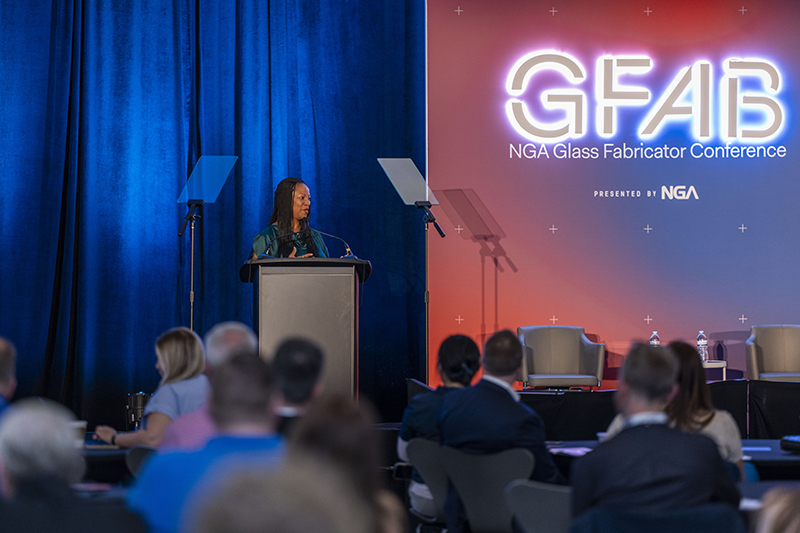
"This conference didn’t happen because someone had a good idea and put it on a calendar. It happened because fabricators across this industry told us—clearly, consistently—that they needed a dedicated space," says NGA President and CEO Lakisha A. Woods during her opening remarks. "A space that speaks your language, addresses your challenges, brings in the right voices and pushes the industry forward in ways that matter to your operations, your people, and your bottom line."
The first day focused on executives, offering insights specifically for decision makers. Stay tuned for further coverage of NGA Glass Conference, and the hands-on learning of the GFAB workshop track.
The Executive Track concluded with a fun boat tour of the Chicago River. This event was sponsored by Vitro Architectural Glass and on the tour, attendees got to see some unique projects that Vitro has worked on.
Glass in architecture and design
"If you want to win more business with architects and designers—and I believe you do—the most powerful thing you can do is help us understand what’s possible. Not in a sales pitch or lunch and learn presentation in our office. In real conversations," said GFAB emcee and Principal & Global Director of Inclusion, Gensler, Jason Pugh, to kick off the day. "When an architect understands what a fabricator is truly capable of, that knowledge changes how we design. It changes what we specify. It changes who we call first. The companies that get that business? They’re not always the biggest. They’re the ones who built a relationship. Who showed up. Who made the architect feel like a partner, not just a customer."
Woods sat down with Executive Vice President and CEO, International Interior Design Association, Cheryl Durst for the "Glass in the Interior" session to discuss how glass is, and should be, used in interior applications, as well as how designers and glass fabricators can best collaborate on those projects. Durst outlined the many benefits in using glass in the interior.
Durst says that, according to neuroscientists, interacting with glass brings a sense of calm. Humans typically spend about 90% of their lives indoors, so glass offers a way to interact with the outside world even when inside. Biophilic design in architecture is increasingly popular as the industry and designers learn more about the importance of daylight and connecting with nature.
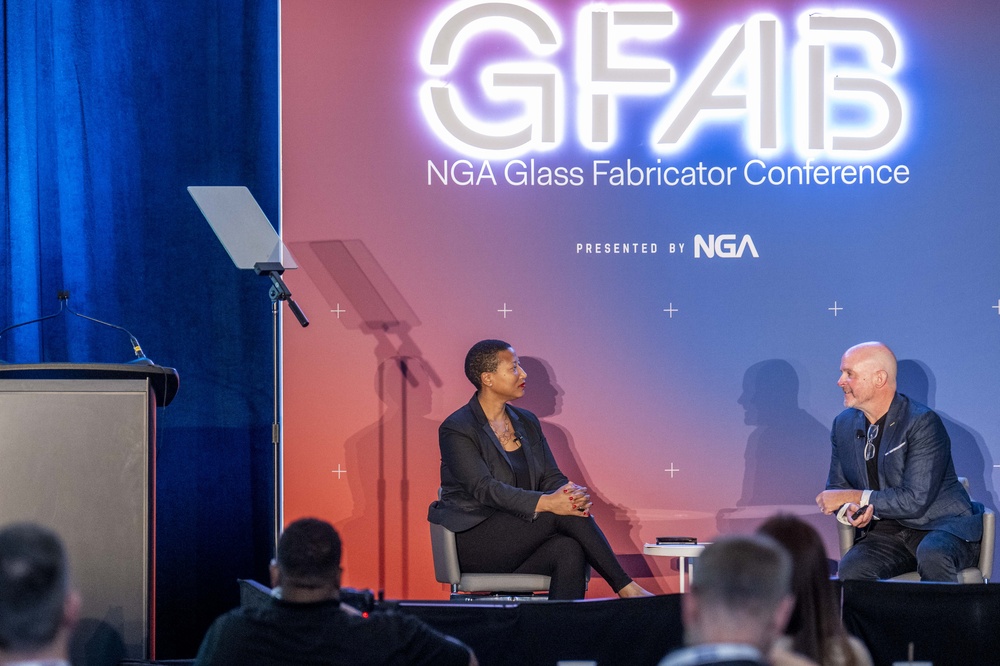
“Glass is a four-legged stool. It is art, a science, a craft and a business,” says Durst. "Light is life. Beyond its most ancient properties, glass is essential...to the building industry, to the built environment, and to human beings."
When it comes to how designers can best work alongside glaziers, Durst says that education between the two parties is important. She advised the glass fabricators in the room to offer to speak to design students at their nearest schools with those programs. Glass is often not taught as a component in design schools, she says, so it would be of interest to next-generation designers.
"Lexicon and vocabulary are critical. I think demystifying the words used in the glass industry; opening up that vocabulary for designers so they can understand the words used and what they're associated with, would be helpful. Then they can understand when glass is talked about, when and how it is specified and at what point designers can start talking to their architects and clients about how to incorporate glass," says Durst.
In another session on day one, Mark Toth, national sales director, Skyline Architectural Glass, and Kimberly Dowdell, vice president, Amrize, sat down for a one-on-one talk between a fabricator and an architect to discuss the key issues facing both of those players: sustainability, safety and innovation. This session begged the question: What does it actually look like when an architect and a fabricator get it right?
Both parties agreed that environmental stewardship and reducing embodied and operational carbons are significant goals when designing and building. Toth emphasized the environmental friendliness of glass, from sand extraction to glass recycling capabilities.
Toth and Dowdell also discussed how to choose the right glass depending on the application. Toth gave as an example the use of glass in healthcare, where sanitation is key. Easy-to-clean glass solutions should be chosen over porous options that could invite germs.
Shifts in economy, generations and elsewhere
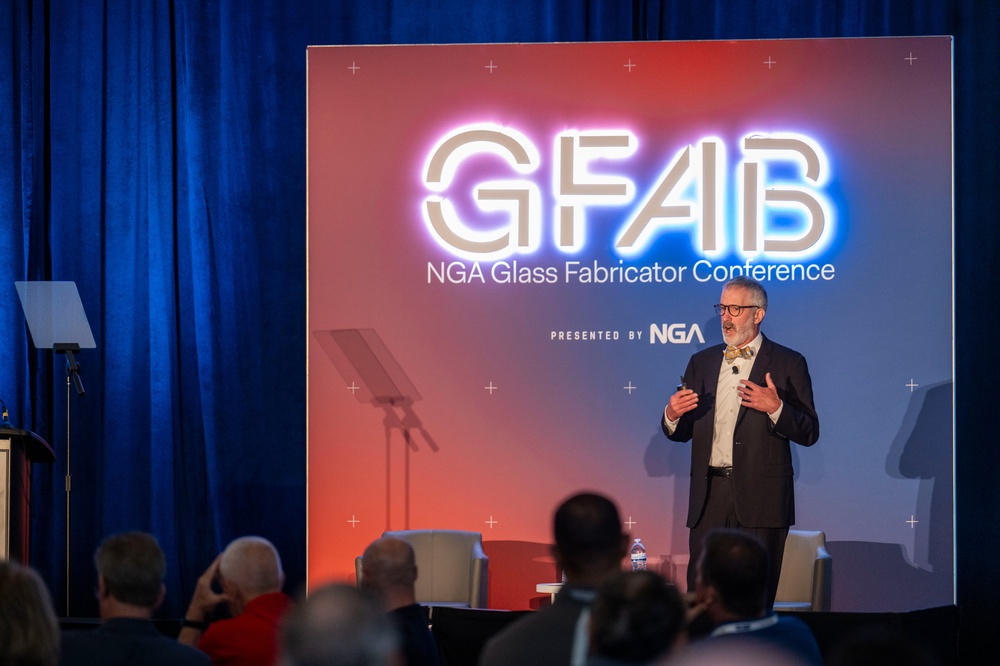
During his economic outlook presentation, Economist Richard Branch provided some insight on the 2026 economic landscape, which he says is "surviving, not thriving." He predicted that rising oil prices will drive construction costs higher.
By segment, the nonresidential outlook is flat to start 2026, but data centers are growing “astronomically,” up from 5.4% to 6.7% between 2025 and 2026. Branch also said that growth in residential construction can help inform potential growth in other areas to come. For example, single family construction booming in one area means there's potential for educational, healthcare and commercial construction in the future.
While architectural billings and contracts have remained soft since 2022, inquiries are steadily increasing. Renovation, rehabilitation projects and historic preservation projects are also performing well, largely because building stock peaked right before 2006, Branch says. Those buildings, now 20 years old, increasingly need renovation.
Scott Mashuda, founding partner & CEO, REAG, offered attendees insight and advice on the merger and acquisition market. Mashuda said that when executives are considering a business exit, they should consider sustainable cash flow, given that is what buyers are most concerned about.
Kim Lear, a researcher and generations expert, Inlay Insights, ended the day's sessions with a presentation outlining generational difference in the workplace, including Baby Boomers, Gen X, Milennials and Gen Z. Lear says it is highly valuable for leaders to understand the different generations at their business.
As an example, Gen X was raised during the "Wild West of advertising" before there were regulations on advertising and products, and many were extremely misleading. As a result, many in Gen X have an aversion to traditional sales tactics, so when working with someone in that generation it may serve someone well to have that context. Lear offered many such examples and how adjusting the way we speak to each other to be more empathetic of our different working styles can help create a more productive and understanding workplace.

What the tech says
Elton Boocock, an AI strategist with thinkivity AI, presented on AI use in business. Boocock advised attendees on using AI strategically and efficiently; he advised audience members that vague prompts lead to vague, unrefined answers and solutions.
Boocock says there are three things leaders need to do to make sure they are using AI most efffectively:
- Create a simple AI policy
- Pick one painful process (choose one process that’s costing you time or remakes)
- Run one controlled 30/60/90 day pilot program using AI (pick one use case to refine)
Boocock also stressed the importance of security. Only use approved tools and encryptions and avoid inputting customer data or sensitive information unless it is a system that has already been approved by leadership to do so. Permissions, passwords and multi-factor authentication should always be in use.
After Boocock's presentation, a panel was invited on stage to delve into how their individual companies are automating. The panel included Maxwell Garrow, Guidewheel; Nicola Lattuada, Lattuada North America Inc.; Johnathan Paredes, Bovone North America and Ed Robles, Salem Fabrication Technologies Group/HHH Equipment Resources. There are two different approaches to automating the fabrication floor: integrated automation, which means integrating automation into existing machinery and equipment; and full smart factory automation, which includes robotics, AI-enhancements and data collection.