Sustainability Drives Design Decisions, say glass industry exhibitors at AIA26
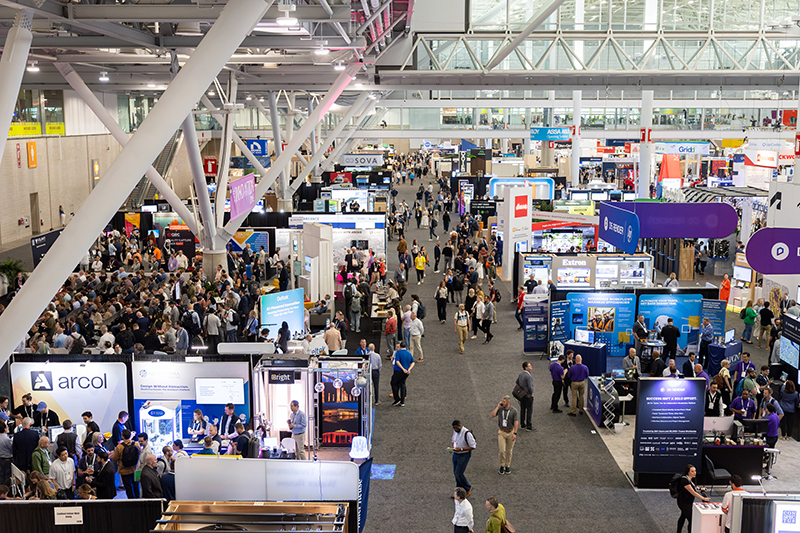
The AIA26 Expo was held in sunny San Diego last week, June 11-12. The show floor featured around 600 exhibitors, including leading glass and fenestration industry companies. Company reps say that sustainability continues to drive architect interest in building products, while security and protection are also becoming major considerations. Booming sectors like healthcare and data centers are also shaping glass industry innovation.
Architects want sustainability with aesthetics
While federal considerations for sustainability may have shifted, glass and fenestration exhibitors say architects remain focused on multifunctional sustainable solutions that also perform aesthetically.
One of those solutions included YKK AP America’s timber and aluminum-based façade solutions. Following their parent company’s acquisition of German-based Seufert-Niklaus GmbH—a manufacturer of timber and aluminum systems—YKK AP showcased the new façade product at the show. Architects like the aesthetics of timber, says Steve Schohan, marketing and communications manager, as well as its thermal performance. Triple glazing will also be possible for the system, he says.
Mass timber’s appeal has grown in the last 10 years according to representatives of Think Wood, a communications collective formed to provide information and resources about wood and mass timber products to builders. While aesthetics and sustainability are major factors, say reps—including wood’s renewability and low embodied carbon—architects also appreciate its durability. Mass timber can be sanded and refinished during the life of the building.
Security and safety are major design considerations
Exhibiting glass industry companies showcased a range of security solutions, including glazing and hardware. Company reps for Action Bullet Resistant and U.S. Bullet Proofing say that architects are looking for better energy performance from security systems as well.
Security is also expanding into behavioral health environments. Graham Architectural Products, a brand of Oldcastle BuildingEnvelope, showcased its recently released GT6300 Human Impact Window system designed for patient protection. Andreea Papas, vice president of marketing for Oldcastle BuildingEnvelope, says that security and protection are becoming major major design considerations. “Designers may not be implementing the most security on every project, but they’re doing something, even if it’s considering sightlines and safe pathways to exit.” This interest also requires education, Papas says, as knowledge about standards and testing of glazing products remains variable in the building community.
Data center construction implements security solutions
Several exhibitors also mentioned that they’re seeing a greater demand for security products—including high performance glazing and security locks—for data centers. Nicole Bauer, senior marketing coordinator at Total Security Solutions says the company has seen increasing demand for forced entry protection for new projects. Reps for Assa Abloy similarly say they’ve seen increased demand for their security devices in new construction of data centers.
Data centers are part of the infrastructure that powers AI. Virginia and Texas have the largest number of both existing and planned data centers, according to Pew Research Center data published in April; as the leader, Virginia currently operates 398 centers, with 287 in planning. As of the reporting, 38% of Americans live within 5 miles of at least one data center, which tend to be built in clusters. In total, the U.S. operates 3,000 data centers, according to Pew, with that number likely to expand “substantially” in the coming years.
Builders of new data centers may be implementing preventative security solutions due to growing community concerns about the expanding construction. While high profile attacks on the physical structures themselves have not been reported, the home of an Indianapolis city council member who supported data center construction was attacked in April. Recent research from Gallup found that seven out of ten Americans oppose local construction of AI data centers.