
Optimizing Water Management
How closed-loop water recycling supports plant efficiency and sustainability
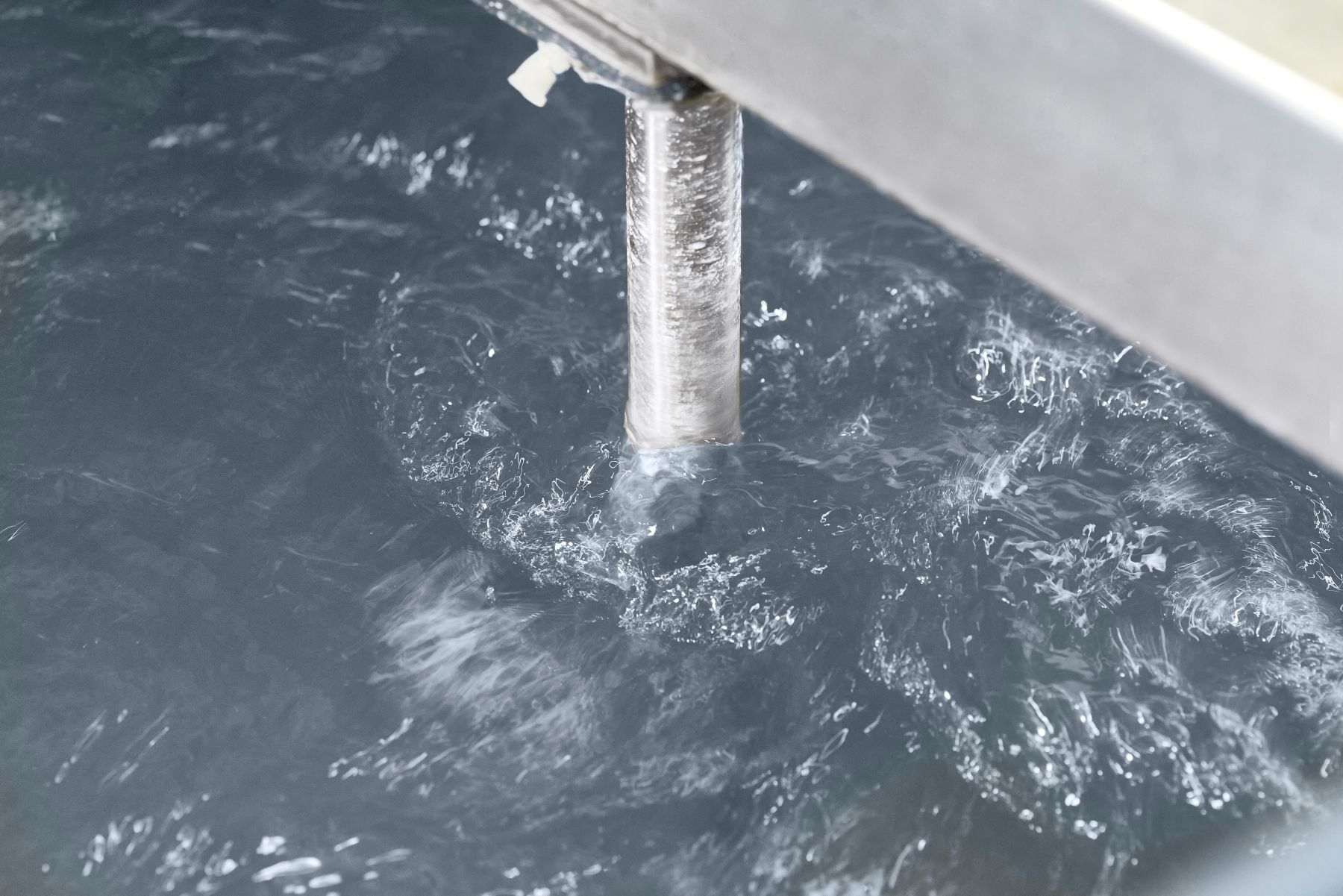
Above: Clean water recovered after the filtration process, ready to be reused in glass processing. Photo courtesy of Filtraglass.
Water plays a fundamental role throughout the glass processing industry. It is essential for cooling, grinding and polishing operations, while also directly influencing production quality, machine reliability, and operational efficiency. As manufacturing facilities continue to increase production capacity and integrate multiple processing lines, efficient water management has become an increasingly important challenge.
Beyond reducing water consumption, modern production plants seek solutions capable of maintaining stable process conditions, minimizing equipment maintenance and supporting more sustainable manufacturing practices. The recent installation of a centralized water recycling system at the new production facility of L&L Glass in Denver, Colorado, provides an example of how these objectives can be addressed simultaneously.
Operational benefits of water recycling
Efficient water recycling systems contribute to several aspects of plant performance.
-
The continuous removal of glass particles helps reduce abrasive wear on pumps, pipes and processing equipment, decreasing maintenance requirements and minimizing unexpected production interruptions.
-
At the same time, recirculating treated water considerably reduces the demand for fresh water, lowering operating costs while improving resource efficiency.
-
Another important aspect concerns waste management. By separating glass particles from process water, the filtration process generates a dry, solid residue that can be handled more efficiently and, depending on local recycling practices, may be recovered for further industrial use instead of being disposed of as wet sludge.
Water efficiency and sustainable manufacturing
Water management has become an increasingly important component of sustainable glass manufacturing. Environmental regulations, growing awareness of resource conservation, and increasing operating costs are encouraging manufacturers to adopt production systems that minimize both water consumption and waste generation.
Closed-loop water recycling systems contribute directly to these objectives by reducing freshwater demand while improving process stability and lowering the environmental footprint of glass processing operations.
Rather than representing only an environmental initiative, efficient water management has become an operational strategy that supports both productivity and long-term competitiveness.
Case Study: A growing glass processor investing in efficiency
L&L Glass specializes in shower enclosures, mirrors and other architectural glass applications. The opening of a new production facility represents another step in the company's continued expansion and commitment to increasing manufacturing capacity.
Like many modern glass fabricators, the company required a water treatment solution capable of supplying several processing machines simultaneously while ensuring consistent water quality throughout the production cycle. To meet these operational requirements, a centralized water recycling system was integrated into the new production line.
The installation serves four edging machines operating simultaneously from a common water treatment circuit. During production, process water is continuously collected, filtered to remove suspended glass particles, and recirculated back into the system. This closed-loop approach maintains stable operating conditions while significantly reducing the accumulation of abrasive glass particles within the machinery.
For facilities operating multiple interconnected machines, centralized water treatment offers important operational advantages by simplifying water management and ensuring consistent process performance across the production line.
Technology adapted to industrial requirements
One of the key aspects of modern water treatment systems is their ability to adapt to different production layouts and machine configurations.
The installation at L&L Glass illustrates how centralized water recycling can be integrated into facilities operating multiple processing machines while maintaining continuous production and stable operating conditions.
The L&L Glass project illustrates how advanced water recycling technologies can contribute to improving operational efficiency in modern glass processing plants.
By combining lower water consumption, improved equipment reliability and more efficient waste management, centralized water treatment systems support production environments that are both economically and environmentally sustainable.
As water becomes an increasingly valuable industrial resource, integrated water management solutions are expected to play an even greater role in the future development of the global glass processing industry.