Top Five Factors for Choosing Aluminum Fenestration and Finishes
Why aluminum remains a top material choice for commercial buildings
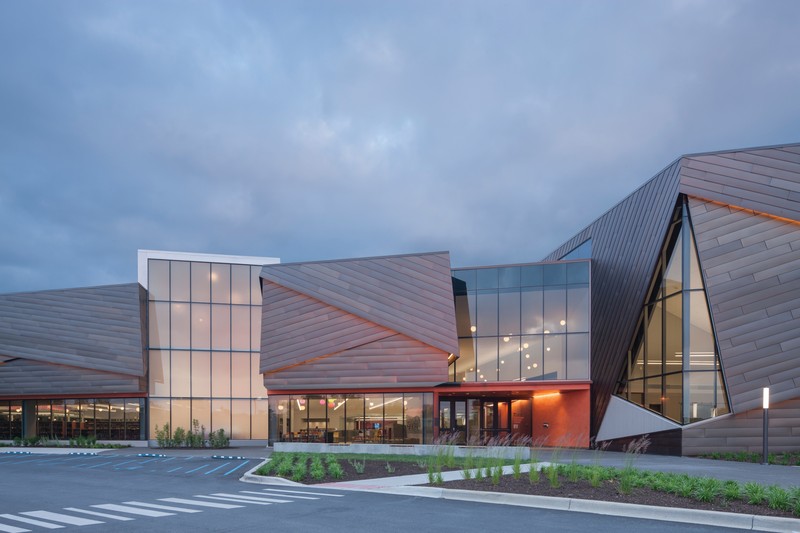
Finished aluminum fenestration and framing have been on-trend for decades. As the material of choice for commercial buildings’ windows, entrances, storefront and curtain wall systems, aluminum balances high-performance functionality and first-class appearance.
Five factors keeping architectural metal products in top position
- Designed for versatility
Aluminum allows flexibility in shaping daylight openings to meet each project’s architectural vision. This metal can be extruded into profiles enhancing clean, crisp modern aesthetics or customized to match historically crafted designs. It can be fabricated into expansive sizes with precise geometric angles or stretched into sweeping curves and stylish arches.
- Finished with purpose
The finish creates a first impression, and a lasting one. Color choice facilitates recognition and connection, transforming a property to a place – a destination contributing to the community within and outside of its walls.
Natural neutrals, richly earthy hues, warm wood tones and cozy blues were the top trends of 2026. Forecasts for 2027 already indicate a continuation of these colors with a slightly bolder flavor: lunar whites and limewash beiges, matte dark browns and moody charcoals, pale pink roses and apricot-forward terra cottas, sparkling sapphire and jewel tones, and eye-catching bronze and aluminum metallics.
Appearance is only part of the finish equation. Long-term durability also matters. For exterior architectural aluminum, specifying finishes that meet the highest industry performance standards, AAMA 611 Class I for anodize and AAMA 2605 for paint coatings, helps maintain the intended appearance for years to come.
- Engineered for performance
Finished aluminum fenestration systems define the visible daylight openings, while concealing the importance of their performance. Thermally broken framing does the hard work of keeping the building’s interior temperature comfortable, keeping out the unwanted heat or cold, and supporting energy-efficient operations. To interrupt energy transmission, manufacturers create a cavity in the aluminum framing members and insert an insulating barrier. These cavities and thermal barriers can be widened or added for increased performance.
- Installed for reliability
The light weight and resiliency of factory-finished aluminum help ensure prefabricated and lineal “stick” products reach their jobsites damage-free. Orders can be labeled, sequenced and packaged to simply field work, saving on-site storage space and labor.
Once installed, the finished metal requires minimal care and rarely needs repair. Many architectural aluminum products maintain their intended appearance and performance well beyond their warranty – up to 40 years or more.
- Intended for sustainability
Architectural aluminum products with high-performance architectural finishes not only deliver longevity; they also support circularity. Aluminum can be recycled locally almost anywhere in the U.S. When aluminum is recycled, its intrinsic material properties are preserved. This allows the metal to be “upcycled” into products of similar use and quality.
When paired with durable, high-performance finishes and energy-efficient fenestration design, aluminum can contribute to building solutions intended to perform for decades, while supporting broader sustainability goals.
From evolving aesthetics and expansive daylight openings to higher thermal performance, installation efficiency and sustainability, architectural aluminum continues to adapt to the priorities shaping commercial buildings.
Trends may change, but aluminum’s combination of versatility, performance, durability and recyclability gives it something even more valuable: staying power.