Built back in 1891, Manhattan’s Terminal Warehouse functioned as a freight hub connecting rail lines toward the Hudson River. Over time, its role in New York’s rail infrastructure faded, and the remaining full city block in West Chelsea became self-storage and office space.
Historic revitalization
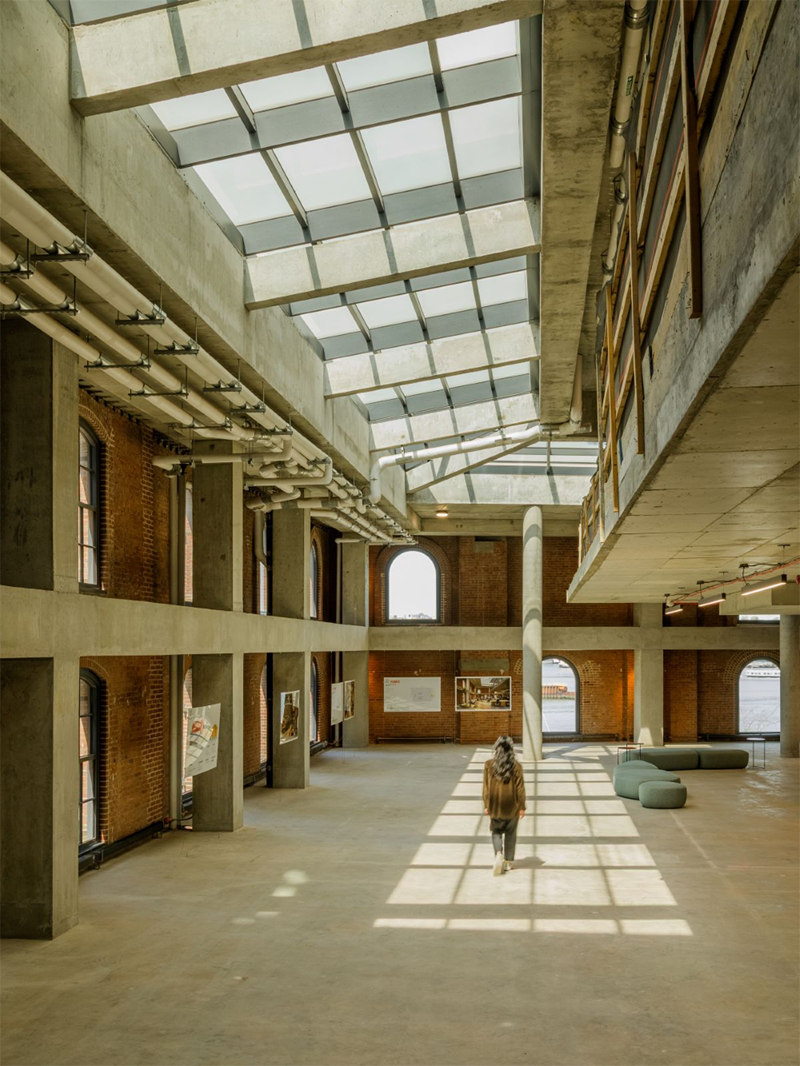
Revitalizing the historic building, three developers teamed up to transform the structure into a modern workplace and event space while preserving the brick masonry, heavy timber and steel structure. Part of COOKFOX’s strategy for bringing daylight into the center of the large floorplate was a new skylight.
“In addition to a new courtyard at the building’s heart and double-height spaces cut in throughout, the skylight is one of the primary means of introducing daylight deep into the floorplate of the building,” says Simon Willet, AIA, senior associate, COOKFOX, New York.
Vitro products used
To meet the architects’ daylighting, thermal performance and UV lighting-limiting goals, the team selected Solarban 72 Starphire glass by Vitro Architectural Glass to maximize light transmittance and solar control. The glass combination provides a visible light transmittance (VLT) of 68% and a solar heat gain coefficient (SHGC) of 0.28.
“Daylighting was instrumental in transitioning the building from a space for warehousing goods into a workplace for people. It was also key to achieving the project’s WELL certification and for meeting COOKFOX’s imperative for biophilic design by reinforcing natural circadian rhythms,” Willet says.
The recommendation to go with Solarban 72 Starphire glass came from the exterior wall consultant, Thornton Tomasetti. The structural engineer determined that this Vitro glass combination was the most effective product at the client’s price point to meet their program requirements.
Located on the wraparound terrace at the 8th floor setback on the west side of the building, the skylight also incorporates fritted glazing for enhanced performance.
In addition to the new skylight, COOKFOX carved 130,000 square feet from the center of the building to design a large interior courtyard. The landscaped open-air space brings additional natural light inside the structure.
To make up for the loss of leasable space, a new six-story vertical extension on the western side was added. COOKFOX chose a modular look to mimic the scale and proportions of freight cars. The façade also features garden loggias and expansive terraces overlooking the Hudson River.
The structure’s original 670-foot tunnel now serves as assorted retail, conference and event venues and informal gathering spaces. The historic design showcases the original rails and decorative track lines, along with the thick masonry walls, iron shutters and long-leaf pine timber from trees dating back to the 1500s.
The significant reuse of materials meant that the project reduced embodied carbon by almost half, as compared to new construction. The project is targeting LEED Platinum and WELL Gold certification.