Clear Views and Safe Skies
Bird-friendly glass solutions protect birds without compromising aesthetics, performance
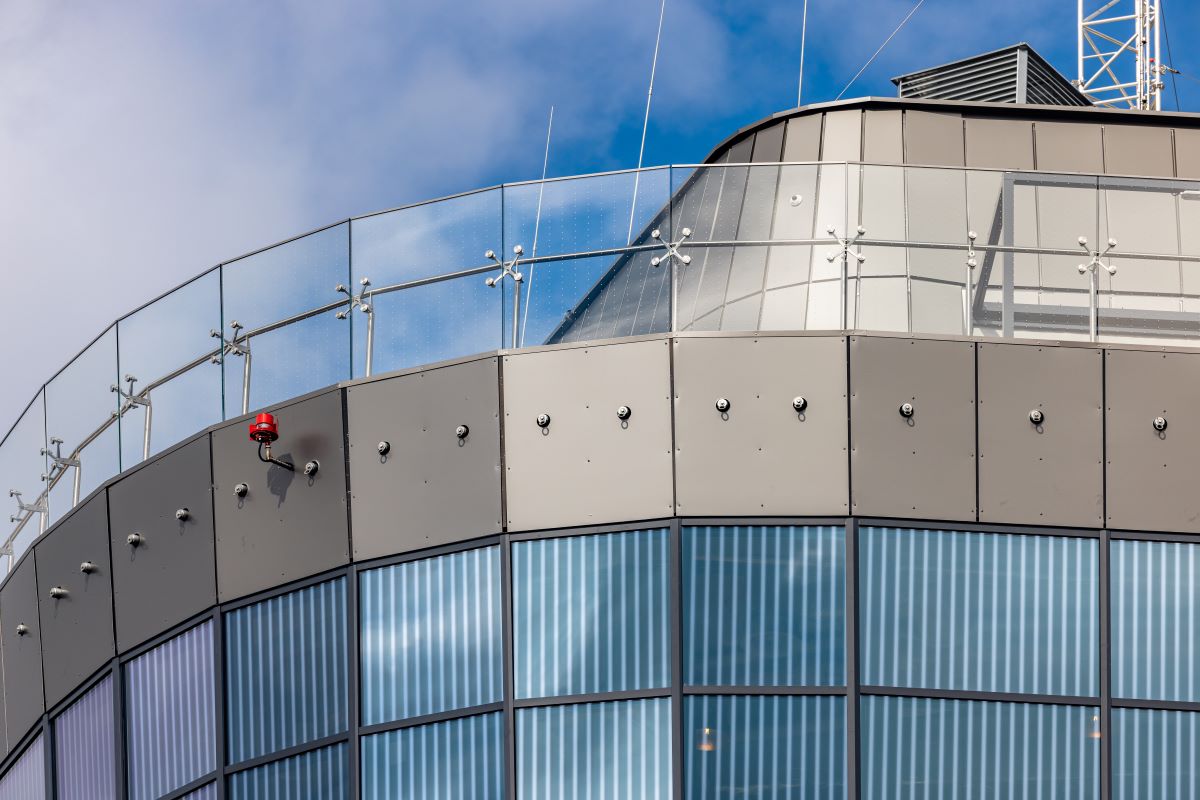
According to the American Bird Conservancy, an estimated one billion birds die from glass collisions in the U.S. every year. This is because clear and reflective surfaces in the built environment can be invisible threats to birds. So, how can the glass industry help lower this number?
Interrupting reflections on architectural glass by creating visual markets or patterns at a specific spacing and geometry can significantly reduce bird collisions. Adding these patterns and coatings to glass transforms it into bird-friendly glazing.
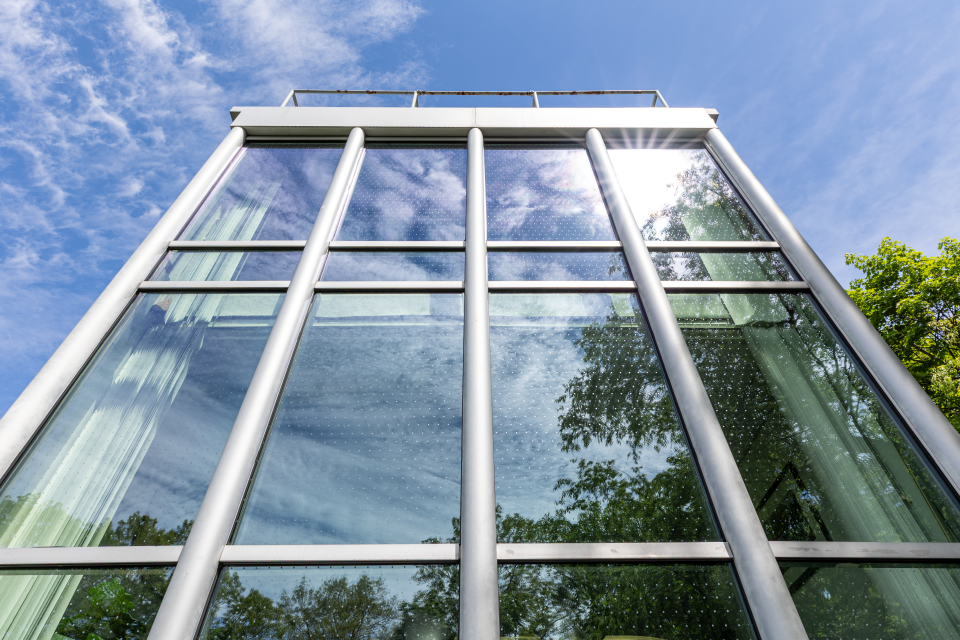
Bird-friendly products on the market
Bird-friendly glass can take many forms, ranging from patterns that are visible to the human eye, to strategies that are almost invisible to humans but visible to birds. Here are a few common bird-friendly solutions:
- Acid-etched. Acid etching is a process by which the glass surface is modified to create a light translucent satin appearance while preserving light transmittance properties of the glass. Acid-etched patterns are typically applied to the outside surface of the glass and have high resistance to wear, scratching and staining.
- Laser etched. Decorative glass that has had an image engraved into the surface using laser technology. Laser etching can provide a high detail, crisp engraved image.
- Ceramic Frit. Ceramic frit is a permanent coating consisting of engineered glass and inorganic pigments designed to be applied to any surface of the glass. They are highly durable, resistant to UV and outdoor elements and some may be applied to surface 1. Visual markers meeting the above prescriptive guidelines may be applied via screen print or digital printing processes.
- Ceramic Enamels (other than Ceramic Frit). Ceramic enamel is a permanent coating consisting of engineered ceramics and inorganic pigments. They are highly durable, resistant to UV and outdoor elements, but cannot be applied to surface 1. Visual markers meeting the above prescriptive guidelines may be applied via screen printing.
- Glass Laminates. Glass laminates are two or more plies of glass bonded together by an interlayer. Visual markers may be incorporated within the interlayer, on the surface of the interlayer or between interlayer layers creating a highly durable system which prevents wear, scratching and staining of the markers. These visual markers should be incorporated within the laminate of the outboard lite.
- Silicone Coatings. Silicone coatings are used on surface 2 of the glass and are spray applied utilizing patterned stencils.
- UV Coating. Research indicates that UV markers in the range of 300-400 nanometers are visible to some birds.6 Markers made with UV coatings and film interlayers meeting the prescriptive guidelines mentioned in the previous section can be effective at reducing the risk of bird collisions for birds that can see UV.
- Films and Decals. While the other glass product solutions mentioned in this section are not suitable for post-installation and retrofit situations, films and decals may represent the best option in such cases. They can also be used in new construction projects when applied on the exterior surface of the glazing system but may not be as durable as the other solutions.
Almost all U.S.-based primary glass manufacturers selling to the commercial market, and many glass fabricators, offer a range of bird-friendly solutions, and continue to broaden their product portfolios. Guardian Glass introduced its newest Bird1st UV-coated solution and Bird1st Etch. Vitro Architectural Glass launched BirdSmart Bird Safe Glass, launched in March 2025, is the company’s first proprietary bird-friendly product that combines laser-etched dot patterns on the first surface. NSG Group offers a patterned UV enhanced coated glass, Pilkington AviSafe, first introduced in 2020.
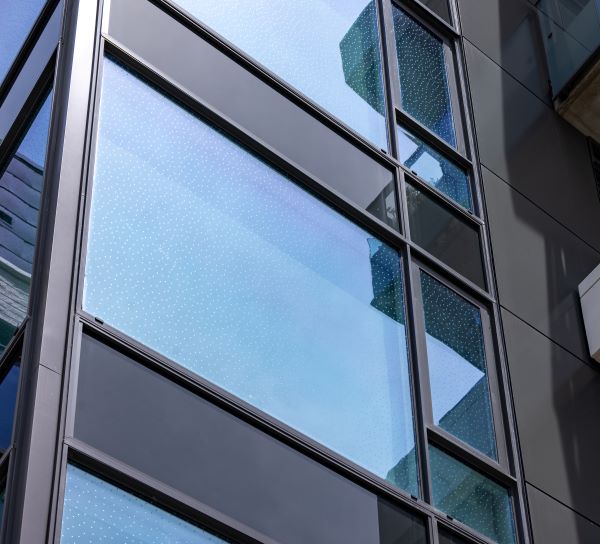
Many glass fabricators also manufacture bird-friendly solutions, including Walker Glass, which debuted its updated AviProtek Turbo at last year’s GlassBuild America. The new product line offers bigger sizes and faster lead times to meet growing demand. “It positions our bird-friendly program to respond to the growing demand for effective bird-friendly glazing solutions meeting applicable standards and legislation across Canada and the United States,” says Marc Deschamps, Walker’s vice president of products and business development.
Glass fabricator Andluca won the 2025 Glass Magazine R&D award for its Innovio with Safelight UV system, a bird-friendly photovoltaic glass. The laminated system uses the company’s bird-friendly interlayer which, though transparent and color neutral, features a UV pattern, helping to reduce bird collisions. The award-winning system combines bird-friendly technology with its Innovio solar energy generation technology, the system represents multifunctionality in sustainability needs by offering renewable energy generation.
Local regulation continues to drive adoption
“Public awareness and demand for bird-friendly glass has increased significantly over the past decade. What was once a niche consideration has become a more common component of façade design, particularly as municipalities have introduced bird-friendly building requirements,” says Alexander Sobolev, Guardian Glass channel marketing manager and bird-friendly glazing subject matter expert. “Adoption accelerated in recent years following New York City’s implementation of Local Law 15, which made bird-friendly glazing a requirement for new construction. At the same time, both new-glazing and retrofit technologies continue to evolve to address emerging project needs and constraints.”
Sobolev adds that demand for larger glass sizes has increased. Guardian offers its Bird1st UV solution in multiple sizes, including 130 inches by 102 inches, jumbo, 130 inches by 204 inches and super jumbo, 130 inches by 240 inches, sheet sizes.
“Vitro's bird-friendly glass offerings have evolved significantly over the years, driven by advancements in technology, growing environmental awareness and the increasing demand for sustainable building practices,” says Chris Fronsoe, director of innovation, commercial segment, Vitro. “Beyond product development, we’ve also prioritized education, creating articles for our Glass Education Center and drafting white papers to inform architects, builders and the public about best practices for bird-safe architecture. Over the years, our bird-friendly offerings have grown from addressing a niche environmental concern to becoming a leader in how technology and environmental stewardship can coexist in modern architecture.”
The codes and standards around bird-friendly glass have also evolved. “The biggest change in codes/standards is likely that bird friendly glazing has become a requirement rather than only existing as a recommendation,” says NSG Glass Technology Manager Kayla Natividad. “As more jurisdictions adopt bird-friendly requirements, and more products have been tested for efficacy, there has been a greater understanding of what makes an effective solution for adoption.”
Pilkington AviSafe also evolved over the years. It was originally designed as a single coated product, but the product offering was recently expanded to include a low-e coating on surface 2. This has allowed glazing configurations to meet energy requirements and mitigate the need of a laminated outboard, says Natividad.
Andluca’s bird-friendly solutions have evolved through close collaboration with the American Bird Conservancy and glass fabricators over the past several years. The company first certified SafeFlight UV in laminated glass. Building on that foundation, Andluca expanded certification to IGU configurations, allowing SafeFlight UV to support a broader range of applications and market needs. In parallel, ongoing materials development has produced new interlayer formulations with optimized UV contrast for birds, which Andluca expects will further improve collision deterrence as these materials progress toward future production, says the company spokesperson.

Greater adoption will push technology, standardization
Sobolev says there is still room for improvement in this product and technology space. Guardian continues to explore opportunities to advance and expand the bird-friendly solutions that are available to architects and builders.
“The future of bird-friendly glass depends on advancing technology, wider adoption and integration into sustainable building practices,” says Vitro’s Fronsoe. “As awareness of bird collisions grows, more regions are likely to pass laws mandating bird-safe glass in public and private buildings. This will drive innovation, prompting manufacturers like Vitro to refine technologies and develop solutions that further enhance bird safety while maintaining energy efficiency and aesthetics.”
Fronsoe adds that education and collaboration are key to progress. “Architects, builders and planners need resources to integrate these solutions effectively. Partnerships between manufacturers, conservation groups and regulators will help establish standardized tests and performance benchmarks to ensure consistent quality. The next phase of bird-friendly glass will focus on making it a standard feature of sustainable architecture while meeting the demand for energy-efficient building materials.”
Deschamps says that as the demand for bird-friendly glass continues to grow, new technology will be introduced and further enhancements will be achieved with existing technology. “We must also keep in mind that bird-friendly components will have to be compatible with new glazing technologies as they emerge, including ones designed to achieve better solar performance, such as triple-glazed units or VIG,” he adds. “We expect that more cities, counties and states in the United States will continue to adopt some form of voluntary bird-friendly guidelines or mandatory codes. There’s still a long way to go on that front.”