Q+A with Oldcastle BuildingEnvelope | Building Forward
Manufacturing as a foundation, service as the future
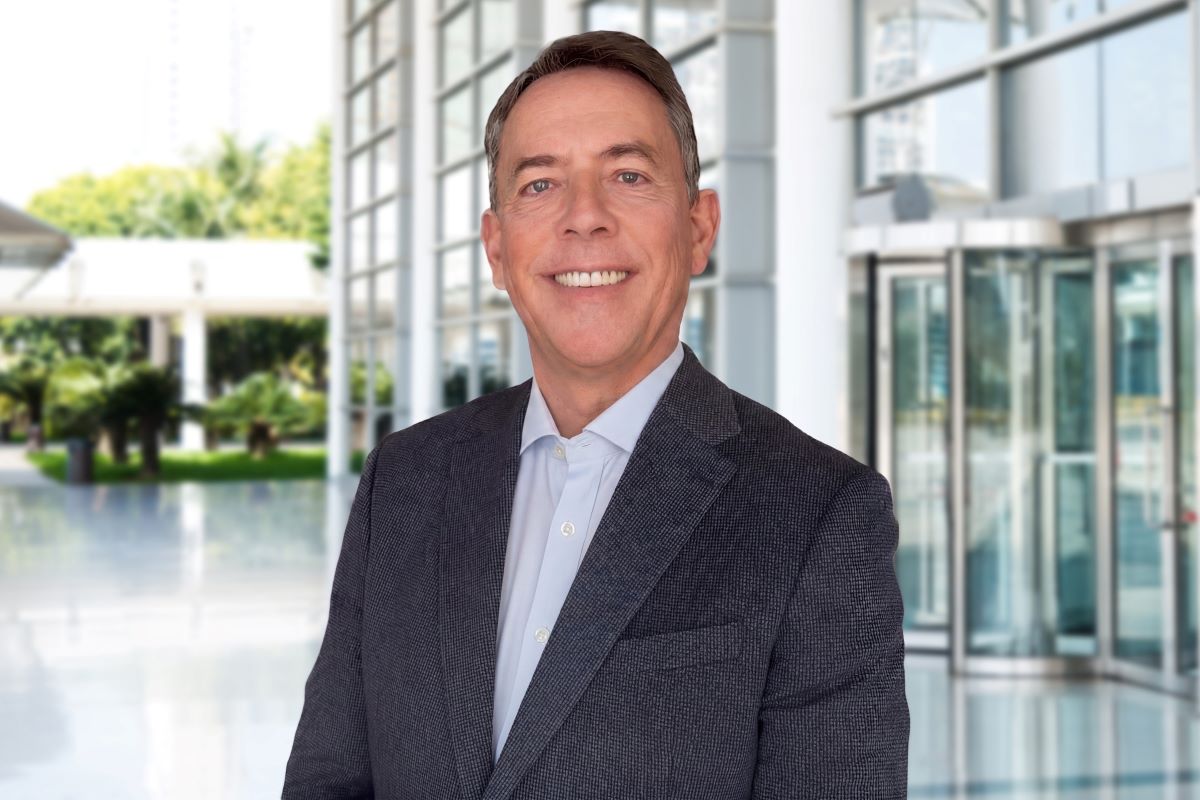
 Two years into leading one of the industry’s largest companies, Mark Adamson, president and CEO of Oldcastle BuildingEnvelope, a KPS Capital Partners portfolio company, is focused on turning a sprawling enterprise into a cohesive, service-led force—and he’s doing it one customer conversation at a time.
Glass Magazine: We last spoke with you shortly after you joined OBE. For readers who may have missed that introduction, can you catch us up—who you are, where you’re from and what brought you here?
Mark Adamson: I hail from Northern England, just south of Newcastle. My father was a cop, my mother was a dinner lady. I started my career at Deloitte, then moved to GlaxoSmithKline, and from there to Formica. That was my entry into the building products world, and I’ve been in it for 30 years since. My family and I have moved from Cincinnati, to New Zealand and Australia, then to New York. I spent a stint in private equity—turned to the dark side, as I like to say—before KPS called and said they had a really big asset they wanted me to run. I couldn’t resist. I’d been a CEO for 20 years by that point and missed it. It’s not an easy job, but I’m thoroughly enjoying myself.
GM: Your predecessor Bruno Biasiotta spoke about transforming OBE from a holding company into an operating company. Where did that journey stand when you arrived, and where are you taking it?
MA: When I took over, the business was very fragmented. OBE had come together over decades through acquisitions that had never been fully integrated. For a $2 billion corporation, we were operating like a collection of $40–$50 million companies, which has its advantages in terms of local feel, but it also meant we couldn’t deploy the technology, systems and innovation you’d expect from a business our size. The task has been to rationalize that, to do things once and do them really well, while preserving that local customer touch. We don’t want to become too corporate, too centralized.
GM: CRL is often described as the crown jewel of OBE’s portfolio. What does its growth story look like right now, and where are you placing your biggest bets?
MA: CRL is exactly that, the jewel in our crown. The financials are strong, the brand is exceptional and I wanted to build the organization around it. But when I arrived, I noticed that despite how preeminent CRL is in the industry, they hadn’t opened a new branch in 15 years. In distribution, coverage is everything. We’ve been aggressively rolling out new locations. We opened Tampa recently, Saint Louis and Cincinnati just launched, with additional locations in the pipeline after that. The vision is a true one-stop shop, not just hardware, but a curated selection of glass products and metal products. The things a glazing contractor or fabricator needs in a market that might not otherwise have that kind of presence.
GM: When we spoke in 2024, you described wanting to shift OBE from a manufacturer to an innovation, service-led company. A year-plus in, what does that actually look like in practice?
MA: For manufacturing to be invisible, it has to be really, really good. You don’t notice it when it works. We’ve been on quite a journey there. In our metals business, lead times dropped from 14 weeks to six. Our on-time, in-full measure went from the low 50s to the mid-90s. Glass is following—most of our glass plants are now running at 90% on-time in-full. The manufacturing engine is getting to a point where it’s seen and not heard, which is exactly what we wanted.
I’ll be honest that the CRL transition was harder and took longer than expected. We underwent a major SAP conversion that went live at Thanksgiving, and it was painful for our customers. We’ve taken ownership of that. We’re on top of it now, and the last three months I’ve started to feel like the flywheel is really turning. I think people will see significant improvement across CRL in the coming months.
GM: What are you hearing from customers right now, and how is it shaping OBE’s priorities?
MA: I just came back from a week in New England, with customers all over the region, and what I’m hearing is that the market is tough. Demand has softened, housing starts are at their lowest since the financial crisis, and developers are caught in an affordability trap—they don’t have the lease rates to justify building. One customer told me it feels worse than the financial crisis. Today, software and technology are booming while construction is quiet. That creates its own kind of pressure.
While running Formica through the financial crisis, what I learned is that during tough times, there’s a flight to quality. People want to partner with organizations that are going to be there in 10 to 15 years. Many of our customers are telling us they want to consolidate vendors, they don’t want 50 salespeople calling on them. They want to pick one or two partners and go deep. That’s exactly where OBE is positioned with our one-stop shop offering across metal, glass and CRL.
GM: Tariffs and supply chain pressures are top of mind across the industry. How is OBE navigating those headwinds?
MA: My management team collectively has over 500 years of experience—there’s nothing in the current environment we haven’t navigated before. The playbook is: keep control of your costs, don’t overreact, don’t cut too deep. We’re using AI heavily right now to reduce overhead, and we’re feeding those savings back into the field sales force. An increase in salespeople in a down market might seem counterintuitive, but the knee-jerk reaction of clamping everything down is exactly the wrong move. This will end. There will be a market on the other side of this, and you have to be ready to capitalize on it. People remember the partners who were with them when it was tough.
GM: You’ve led organizations across cement, steel, laminate, windows, glass and hardware across multiple continents. What does that broader view tell you about where this industry is headed?
MA: Most building products sectors have consolidated significantly over the years. You see it clearly in float glass, where there are effectively four or five major players. That consolidation hasn’t happened at the fabrication level in glass, and I don’t expect it to. Climate and regional requirements are too different. New England is a completely different environment than Miami. Those local shops will continue to exist and thrive. What I think is coming is a distribution revolution. Companies built on coverage and market presence are the model. People like turning up and seeing a friendly face. That community dimension matters. I think that’s where the glass and glazing industry is heading, and it’s exactly where CRL’s expanded branch network plays.
GM: What excites you most about the next two to three years?
MA: The one-stop shop concept, genuinely. The ability to offer customers all three product categories—hardware, glass, metal—potentially unitized, locally available and backed by real advisory support. Some of our larger branches will have architectural resources to help customers with design. That’s a different kind of value proposition than the industry has seen before.
And artificial intelligence. I’m not a technology-focused person, but every week I see something new that AI can do and it’s staggering. We haven’t scratched the surface when it comes to what it can do to help our customers win more work and run more efficient businesses. That’s genuinely exciting.
GM: What do you want glazing contractors, fabricators and partners to know about OBE right now?
MA: We’re listening. We feel the economic pain this industry is experiencing right now. And we also feel our own. There are areas, particularly CRL service, where we haven’t covered ourselves in glory, and we know it. We get out, meet customers, talk to people in this industry. We’re a $2 billion business, and if I can deploy real resources to help customers win more sales and operate more efficiently, the product and the sale will follow.
From Fragmented to Front-Footed: Mark Adamson on Leading OBE Through Change
In this episode of Glass Cast with host Katie Devlin, Mark Adamson reflects on what it takes to shift a $2 billion manufacturer toward a service-led model, why he's betting on the one-stop shop, and what his 531 years of collective management experience has taught him about leading through uncertainty.