The Role of Steel in Modern Architectural Fenestration
From durability to design versatility: How steel is shaping the future of fenestration systems
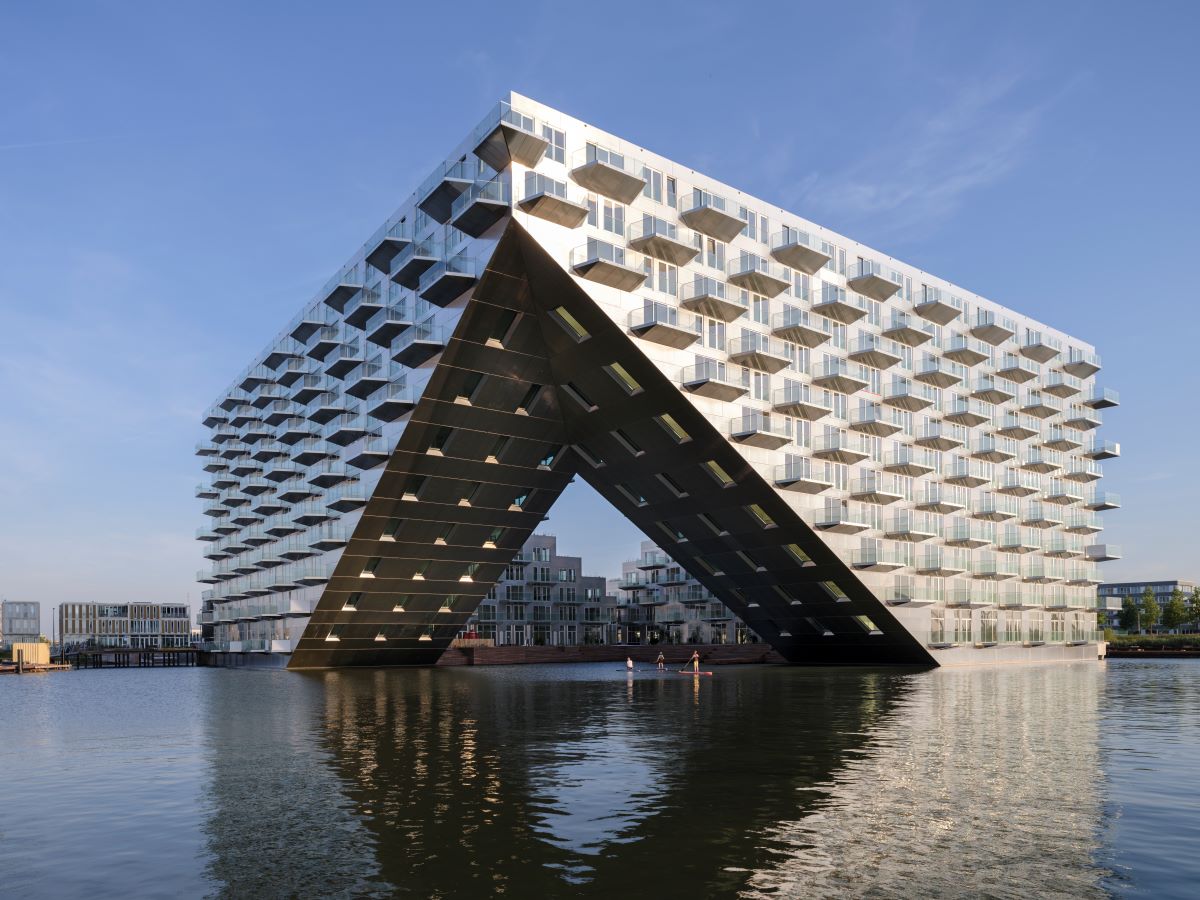
Above: Sluishuis apartments in Amsterdam feature Jansen’s VISS Fire roof glazing product.
In modern architectural fenestration, steel can offer both structural integrity and design flexibility. It allows for slender framing profiles that maximize daylight and views without compromising durability.
Technical Glass Products is a supplier of fire-rated glass and framing systems and specialty architectural glazing products. Steel-based products that TGP supplies include its SteelBuilt window and door and curtain wall systems, Fireframes Designer Series doors and frames, TGProtect FR System, SmokeSafe Window & Door Systems, and more.
Jansen is a 100-year-old Swiss producer and distributor of architectural steel profile systems for doors, windows and facades. Jansen manufactures the steel profiles used in production of other products and sells to U.S. manufacturers who then make the finished unit.
Benefits of using steel
Miller and Knickerbocker say that steel has several value propositions: architectural creativity, environmental performance and life-safety.
“Steel is a very strong material, and as a strong material, you can really go with large dimensions and spans,” says Miller. “With that, larger spans of glass also become possible.”
Miller adds that steel is naturally slow to expand and contract in response to heat and cold. Combined with a high-performance thermal break and high-quality glass, a high-performing, operable window or door is now possible, he says.
Steel allows for large, oversized and unique shapes, making it ideal for high-end residential, premium retail and premium restaurant spaces, says Miller. Steel also offers artistic craftsmanship that some other materials cannot offer due to its strength and versatility.
“At Technical Glass Products, we saw the benefits of these construction and manufacturing methods and prioritized the use of steel in our fenestration and curtain wall systems. Steel allows TGP to readily meet fire and life safety standards,” says Knickerbocker, due to steel’s survivability. “With steel, the shape availability tends to be simpler, it can’t be formed into the shapes aluminum can, but steel improves operation efficiency and allows the use of smaller profiles. Within its inherent strengths, steel sets a baseline of design and performance excellence that is increasingly desirable in a wide range of the building industry.”
Steel’s material benefits offer value in exterior and interior non-rated and fire-rated curtain wall construction. It can also provide engineering value in door systems, like doors, sidelites, transoms and vision lites, and window assemblies by allowing larger spans without the need to plan supplemental support systems, according to Knickerbocker. This is especially true in fire-rated applications and other builds that require the use of heavier-than-average glazing units.
Evolution of steel in architecture
Steel has been around as a structural framing material for more than a century. Steel windows and doors were first used in industrial and commercial buildings in the 19th century when steel construction methods were first developed.
An example of the evolution of the use of steel through the past century is the Battersea Power Plant in London, England. The former power station was constructed in the late 1920s and decommissioned in 1975. In 2022, the building reopened to the public containing residential space, bars, restaurants, office space, shops and entertainment spaces. Battersea also features steel windows with a thermal break, windows that also match the historic period of the original structure. According to Robert Miller, CEO of Jansen, these steel windows demonstrate the benefits of steel.
“You’re able to get that original look and feel but with modern innovation and modern performance,” says Miller. Miller adds that steel architecture is more commonly being used in the renovation of historical buildings in order to preserve their original appearances.
Chuck Knickerbocker, curtain wall manager for Technical Glass Products, says that before the late 1800’s, buildings tended to have massive masonry walls and had significantly fewer stories than moder buildings. It was the advent of steel in building construction, as well as the invention of the elevator, that allowed buildings to grow into taller buildings and even skyscrapers due to steel’s inherent strength.
But using steel framing in glazing systems is only a recent development, due to recent advances, says Knickerbocker. Cold roll-forming, a metal manufacturing process that shapes flat metal strips into uniform profiles, and laser welding techniques in steel manufacturing have allowed the creation of narrower profiles, he says, without compromising the material’s inherent performance capabilities.
Steel manufacturing has advanced to allow narrower window profiles than what other materials allow without compromising the materials’ inherent performance capabilities through cold roll-forming and laser welding techniques, according to Knickerbocker. In addition to allowing a wide range of cover cap materials, from aluminum to real wood veneers, steel-forming technologies also allow greater shape flexibility than what was previously possible for a more expansive aesthetic range. Likewise, the availability of anti-corrosion protection, like powder coating, continuous gasketing, etc., has expanded where this material can be used throughout the built environment. Gaskets isolate the water and prevent it from coming into contact with the steel components. In systems like steel-framed curtain walls, a continuous gasket, typically made from extruded silicone, fills the gap between curtain wall components and keeps water off the tops of IGUs.
Knickerbocker says that steel’s strength and durability made it a popular choice as it allowed stronger and taller structures with less material expenditure. Today, steel is more commonly used for fenestration systems in Europe due to a combination of historical precedent, stricter energy efficiency standards, aesthetic preferences for slim profiles, which its strength allows, and different construction methods.