
The Table Is Big Enough
Women leaders on breaking barriers in glass and construction
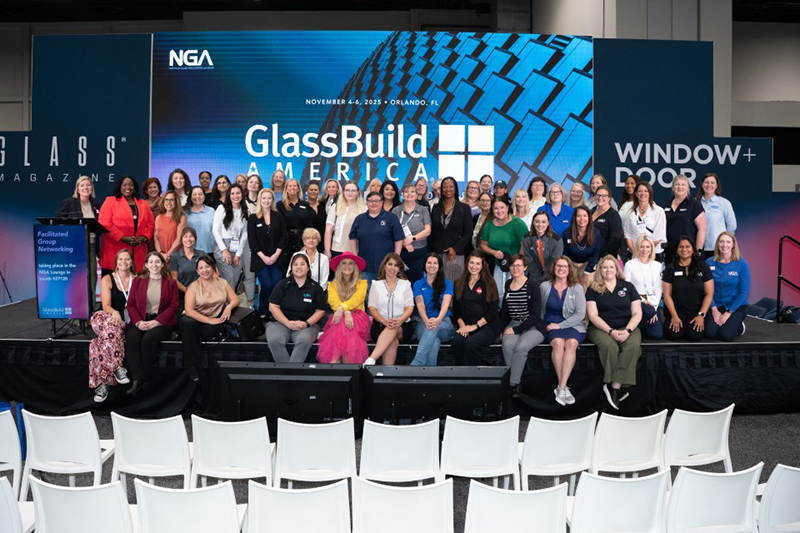
At GlassBuild America’s Women in Glass + Fenestration: Women Leaders Panel in November last year, two of the construction industry’s most influential women took the stage for a candid conversation about leadership, visibility and the work still ahead. Lakisha Woods, CEO of the National Glass Association, and Sheronda Carr, CEO of the National Association of Women in Construction, didn’t hold back—offering hard-won wisdom, personal stories and a clear-eyed vision for what the industry must become.
Showing up, even before you’re ready
Both leaders agreed on one thing immediately: waiting for the “right moment” to step into visibility is a mistake. Woods framed it simply: the industry needs your story now, not when you’ve reached the top. “You do not need to be the expert to post,” she says. “People love the story of the journey. The best part of the story is the hard part—where the hero struggles. Share that, because someone else is watching, thinking no one else feels this way but me.”
Carr echoed that call to action, connecting personal brand to industry-wide impact. “Show up as your best self, always, with a spirit of excellence in all that you do,” she says. “Whether you think people are looking at you or not, your personal brand is extremely important.”
A workforce crisis looms
The conversation quickly turned from personal motivation to industry urgency. Women make up 51% of the U.S. population yet remain dramatically underrepresented across construction and glass. For Woods, that’s not just an equity issue, it’s an existential one. “Five to 10 years out, it actually keeps me up at night when I think about what’s coming,” she says. “How can women show up and get what they need to move into leadership roles?”
Carr, whose organization represents roughly 6,500 women across 120 local chapters nationwide, pointed to a retention gap as the core problem. “We bring in one, and three leave,” she says. “We focus a lot on workforce development—bringing women into the industry—but we’re not retaining them very well.”
The solution, both leaders suggested, is not relying on programs alone. It’s culture, and making sure women’s voices are valued once they’re in the room, not just hired into a company.
SH Championing one another, without exception
Perhaps the most pointed moment of the conversation came when Woods was asked to finish the sentence: The future of women in glass and construction will be stronger when… . Her answer was direct, “It’s when women champion other women. So often, we get to that place where we’re finally promoted, and instead of helping the next woman up, it’s other women saying the negative things. We have to learn to trust each other. Know that we can make the table bigger. There’s plenty of space.”