
Italian Glass: That’s Amore
Unique glass installations spotted across Italy
If you read my last blog, you would know that my wife and I recently became empty nesters. She wanted something to look forward to after dropping our youngest off at school, so we planned a trip to Italy. It was a long time coming.
Being a glass guy, I knew Italy is home to some of the most technologically advanced glass fabrication equipment companies in the world. In fact, while at GlassBuild in September, I saw the handful of Italian glass fabrication companies at the Italian Pavilion booth. While the country is known for its cutting-edge manufacturing technology, there is also a deep appreciation for history, craftsmanship and the art of glass, creating a fascinating blend of innovation and tradition.
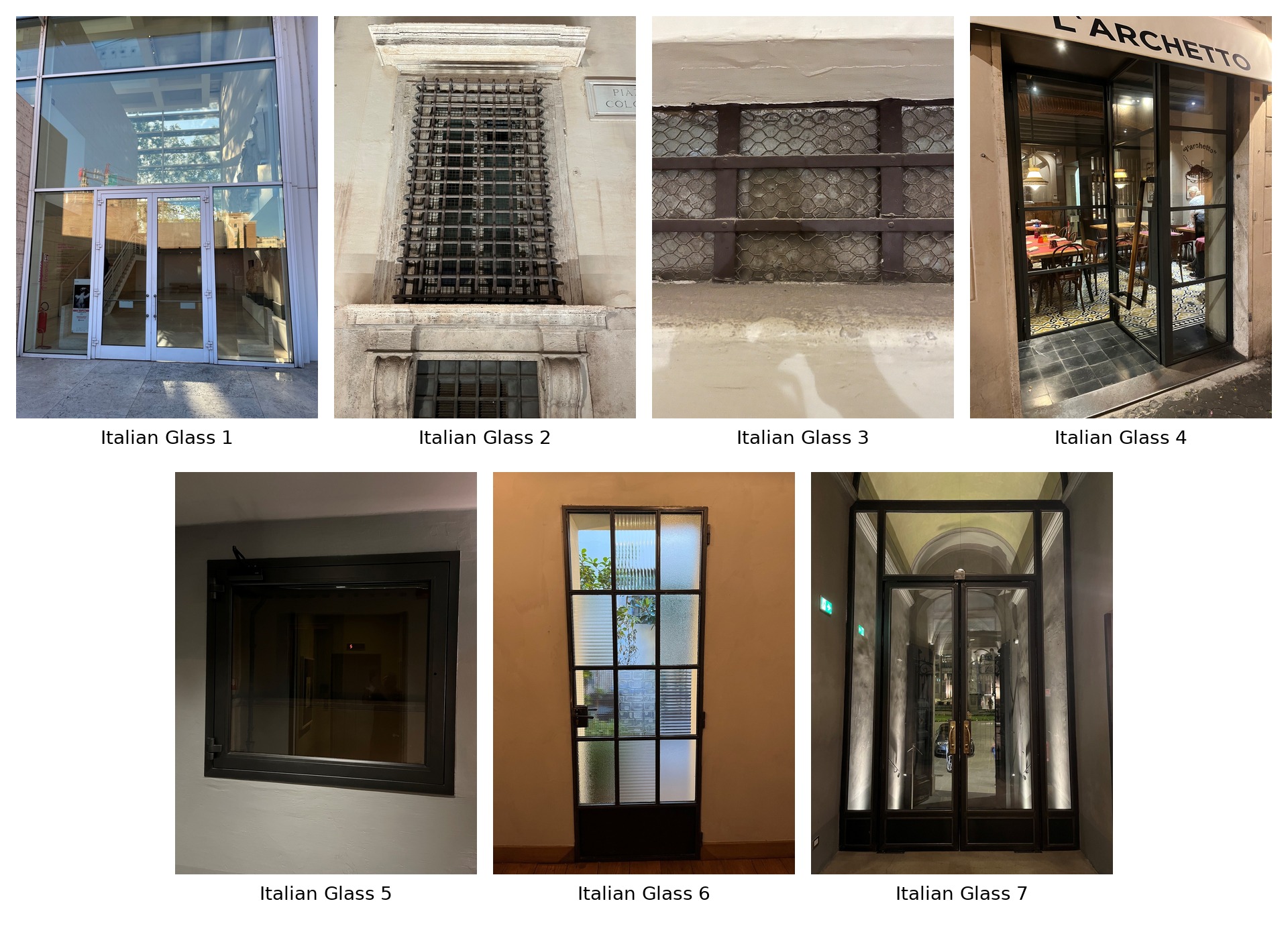
As we toured the country, I made it a point to keep an eye out for unique glass installations and applications along the way. Here are some highlights of Italian glazing that stood out to me, with accompanying images labeled accordingly at the top of this post.
Large glass sizes (sidelites and transoms), steel frames and four knuckle pivots on each door.
[Image: Italian Glass 1]
This installation bears a striking resemblance to a recently completed school project Technical Glass Products (TGP) supported. While I’m no expert in Italian building codes, my guess would be that this installation is not fire-rated. However, the profile similarities between the Italian door frame and the one at the school are a testament to the design benefits of steel-framed glazing assemblies.
Maybe the earliest version of forced-entry-resistant windows. Steel bars embedded into the structure, over wire mesh, over the glass.
[Italian Glass 2]
While this style of security window broadcasts its ability to deny unauthorized access, we know having bars over windows can actually work against occupants’ feelings of safety — especially in school environments. Luckily, today’s design teams have several options for enhancing a building’s security without making it look like a fortress.
Perhaps the first version of “wired glass”?
[Italian Glass 3]
Wired glass certainly has a unique look. And for many of us, it was a hallmark of our school days. As building codes continue to limit the use of fire-rated wired glass to specific applications, the material is not as present as it once was. Seeing instances of this material alongside ultra-modern glazing assemblies reminded me of the constant innovation the glass industry strives for.
Sleek steel storefront with 90-degree corners and a diagonal pull.
[Italian Glass 4]
Early in my glazing career, I might have looked at this storefront and not thought much of it. Now, I know the exactness a system needs to be able to turn a corner like this and maintain its functionality. I’m also impressed when design teams find ways to specify hardware that works with a glass-forward assembly like this.
Operable steel windows looking into the hotel lobby with a closer and knuckle pivots ... could this be fire-rated?
[Italian Glass 5]
Again, I’m not an expert in Italian building codes (or how project teams update buildings older than America to meet requirements), but this opening has the trappings of a fire-rated assembly. Seeing applications like this makes me glad that the International Building Code requires fire-rated glass to have a permanent label that identifies its specific rating.
The narrowest of narrow steel doors with several types of pattern glass.
[Italian Glass 6]
This door makes me wonder if any glazing design teams have tried to pair different surface textures or patterns we offer in our channel glass assemblies. As we took the train across the country through various older cities, I did see several factories with channel glass installations. Channel glass is more common in Europe for this type of application.
Another steel entrance with large glass sizes, a transom and an arched lite above that.
[Italian Glass 7]
These doors were 10 to 12 feet tall — monumental and heavy with all that glass and steel. Yet, the doors remained functional. Whenever we at TGP assist a firm in designing full-lite fire-rated doors, I am blown away by how much coordination is required to ensure the door, hardware and other components are compatible. Collaboration is truly key to project completion.
Touring Italy with my wife was a fantastic way to ease into this new phase of our lives. And seeing these glazing assemblies — how they blend new and old technology — reminded me that despite the change to our relationship and proximity to our kids, it doesn’t mean our roles have changed. Both parts of my life have a thread uniting past and present. What is this thread? As they say in Rome, that’s amore!