Isoclima CareGard Combines Forced-Entry and Ballistic Protection for Healthcare Facilities
 Isoclima Specialty Glass, LLC, the U.S. subsidiary of Isoclima Group headquartered in Este, Italy, is bringing forced-entry, ballistic, and impact-resistant glazing together in CareGard, a purpose-built solution for healthcare environments.
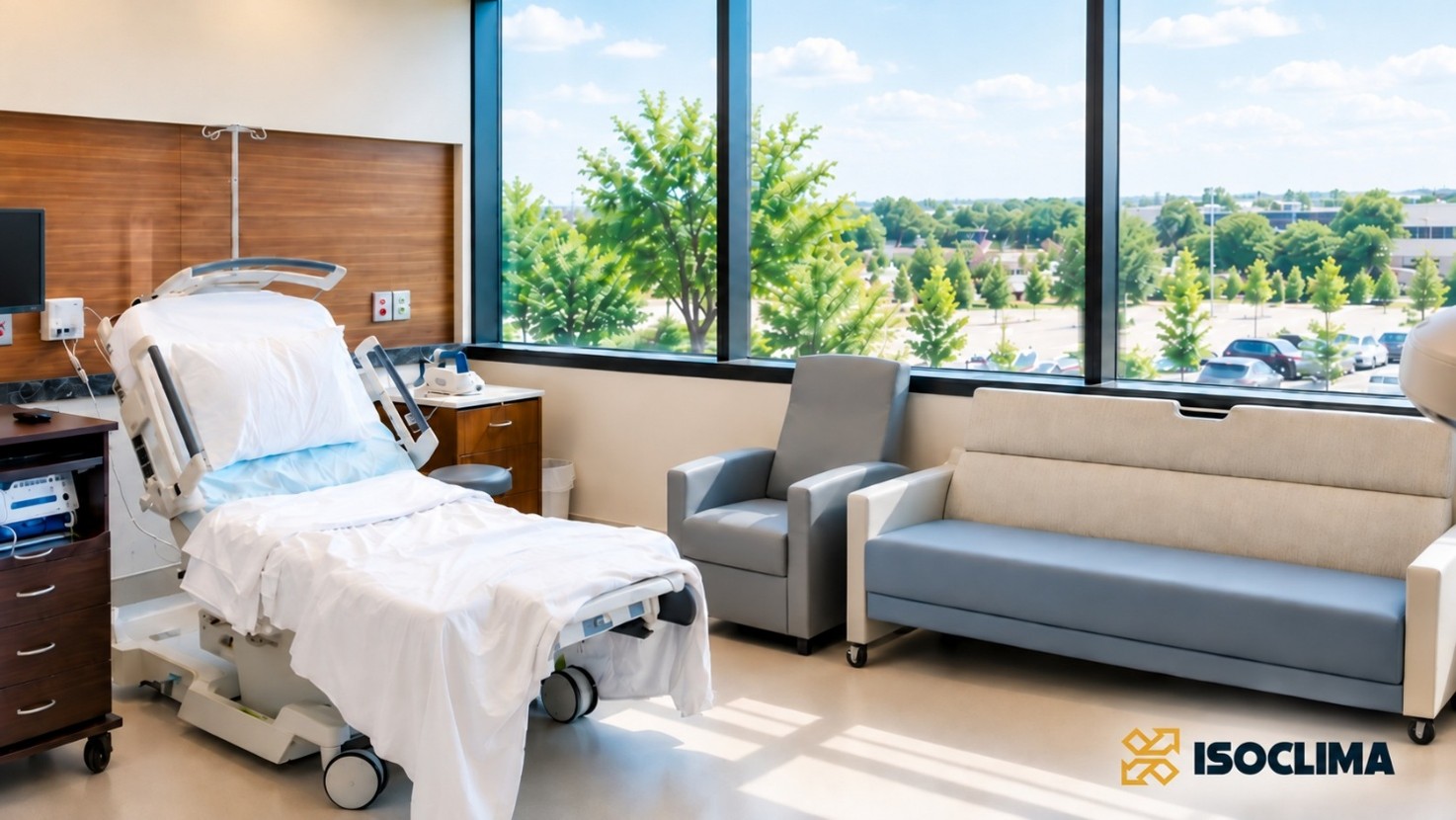
Hospitals, emergency departments, patient observation areas, and other healthcare facilities can have different glazing requirements from one opening to the next. A patient room may require clear staff sightlines and impact resistance, while an intake area or secure entrance may call for greater forced-entry protection. Exterior windows may add thermal, solar-control, and weather-performance requirements.
“Healthcare security glazing has to do more than provide protection,” says Lance Cotton, president at Isoclima Specialty Glass. “It also has to support observation, privacy, and the way patients and staff use the space. CareGard gives project teams a way to address those needs without treating every opening the same.”
Tested performance
CareGard combines forced-entry resistance, ballistic protection, and impact safety in a symmetrical glass-clad polycarbonate construction with heat-treated glass on both exposed surfaces.
The glazing has been tested to ASTM F3561 Level 8, a high level of forced-entry resistance under a test method used to evaluate fenestration systems following a simulated active-shooter attack. CareGard has also been tested to NIJ Level IIA and Level II for ballistic resistance to handgun threats, with no penetration and no spall reported in testing.
Additional CareGard testing includes:
- ASTM F1233-08 Glass Class 1.4 for body passage
- 5-aa1 attack resistance for 16 minutes
- H.P. White Level A using .38 Special ammunition, with no penetration
- ANSI Z97.1 safety glazing requirements
- CPSC 16 CFR 1201 safety glazing requirements
These tests address different types of forced-entry, ballistic, impact, and safety performance. Project teams can select the appropriate CareGard configuration based on the anticipated threat, opening location, and project requirements.
CareGard is available in monolithic, laminated, and insulating glass, as well as custom configurations. The standard product has a nominal thickness of approximately 9/16 inch, weighs approximately 4.95 pounds per square foot, and is available in sizes from 12 by 12 inches to 60 by 96 inches.
Observation, privacy and exterior performance
CareGard can be configured for different areas within a healthcare facility, rather than applying the same glazing makeup throughout the building.
Options for observation and privacy include translucent interlayers, printed patterns, tinted or reflective glass, and switchable privacy glazing. These options allow project teams to consider staff sightlines and patient privacy alongside required security performance.
For exterior openings, CareGard can be incorporated into insulating glass configurations with low-E coatings, tinted glass, reflective glass, and bird-friendly glazing options. Because changes in glass makeup can affect thickness, weight, and tested configurations, Isoclima recommends confirming those requirements early in the design process.
“Different areas of a healthcare facility can require different levels of protection, visibility and privacy,” says Cotton. “CareGard allows architects and facility teams to match those requirements to the needs of each space.”
CareGard is designed for a range of healthcare applications, including hospitals, emergency departments, patient observation rooms, intake areas, psychiatric hospitals, behavioral health units, crisis stabilization centers, counseling and treatment spaces, and correctional healthcare facilities.