Architects and Fabricators Working Together
Climate action, aesthetics and bird friendly glass bring architects, fabricators together
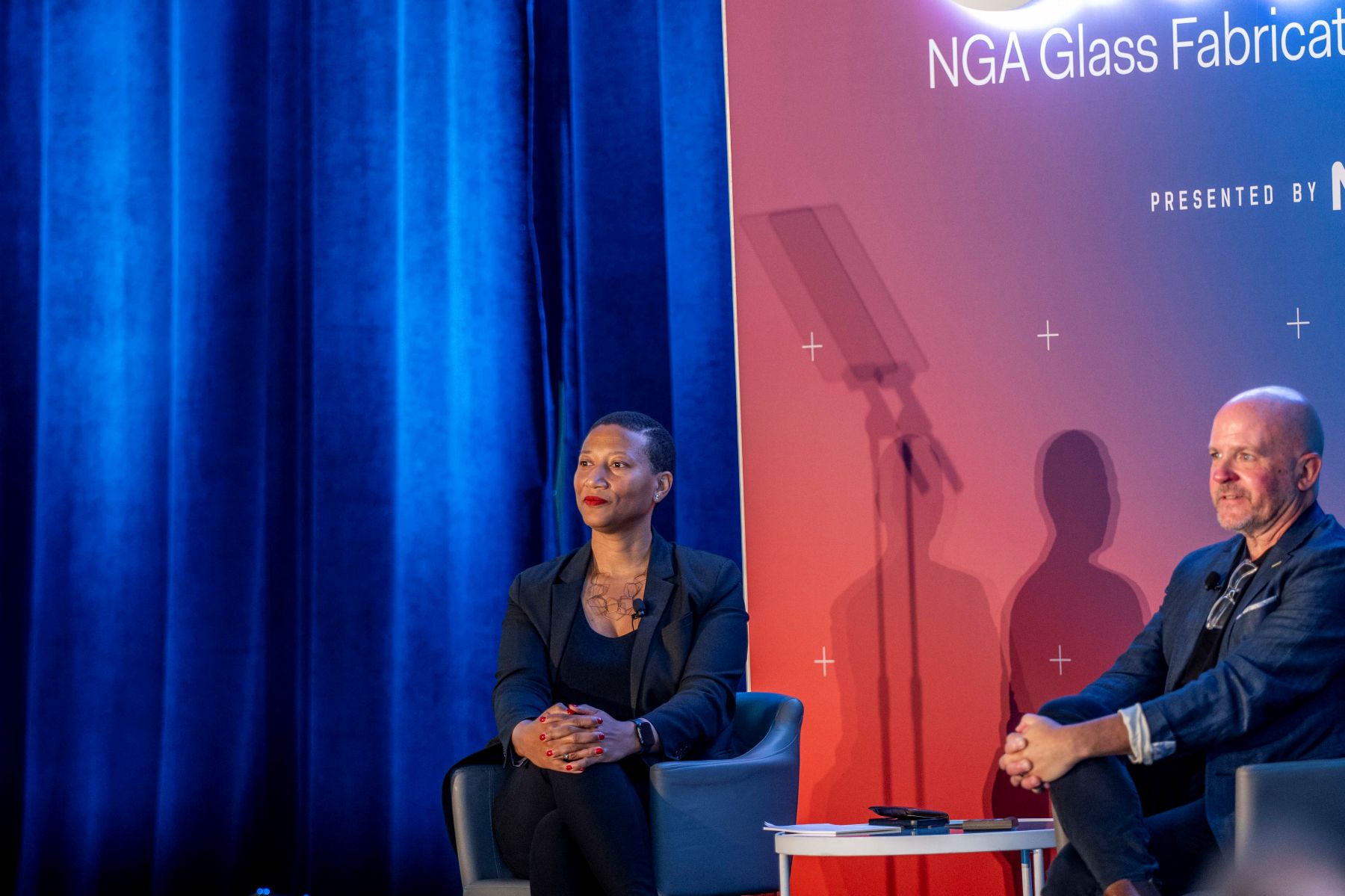
At the National Glass Association’s first-ever Glass Fabricator Conference (GFAB), Kimberly Dowdell, vice president, Amrize, a building solutions company, and fabricator Mark Toth, national sales director, Skyline Architectural Glass, sat down discuss how fabricators and architects can best work together, as well as what’s new in the world of architecture and glass fabrication.
Toth and Dowdell agree that early communication between architects and fabricators are the key to achieving client goals. Kickoff meetings between the architect and the fabricator for large projects are a tangible way to help ensure project success, as well as discussion between the two project players consistently throughout the project.
Climate action and sustainability drive partnership
“One of the things that architects are very passionate about is climate action and being very intentional about modifying the way that we practice so that we can be better stewards of the built environment,” says Dowdell, who also served as president of the American Institute of Architects in 2024.
Dowdell said that over 1,500 architecture firms are currently committed to the AIA 2030 Commitment, which, according to the AIA’s website, is “an actionable climate strategy that gives us a set of standards and goals for reaching net zero emissions in the built environment.”
Dowdell adds that this is an area of opportunity for glass fabricators to appeal to architects. Architects are increasingly looking to work with glass fabricators who are “moving the needle” in the space of climate action and sustainability. Environmental Product Declarations are an example of something an architect may look for from a glass fabricator because that will allow them to see how those glass products will help them meet their climate goals.
Aesthetic considerations
Toth says that when it comes to incorporating a desired aesthetic into a building using glass, architects need input from glass fabricators. Dowdell says that glass is an important part of an architect’s “toolkit” because it allows them to open up a building to nature and to allow light in, which has been proven by many in the industry, including the NGA’s own technical and advocacy team, to be beneficial for the mental and physical wellbeing of occupants.
“Glass is really a gift; imagine what our built environment would be like if we didn’t have it,” says Dowdell.
Toth says that over half of the projects that Skyline works on are in healthcare. In the healthcare space, “glass is one of those magic materials,” he says, because it’s easy to clean, highly durable, pathogen resistant and allows natural light into the building. From a design perspective, Toth adds that many healthcare facilities are moving away from using curtains as a means of privacy, and instead moving to switchable privacy glass for its aesthetics and ease of cleaning, says Toth.
Bird safety top of mind
Bird-friendly glass and ecofriendly solutions are another topic that’s of increasing importance for both fabricators and architects.
Toth says that when birds are migrating, they don’t like to fly over water, so they fly along the path of the lake, making Chicago and other lake-adjacent cities, like Milwaukee, cities with extremely high bird death rates from birds colliding into the glass of tall buildings.
Toth says that the perceived cost of using bird-safe glass on both new construction and retrofit is something that he hears often from fabricators. “It really isn’t an expensive process. On average, it’s about 0.4% of the total budget from a façade standpoint.”