Glass Partitions are Here to Stay
Demountable wall systems continue to present robust opportunity in office interiors and retrofits
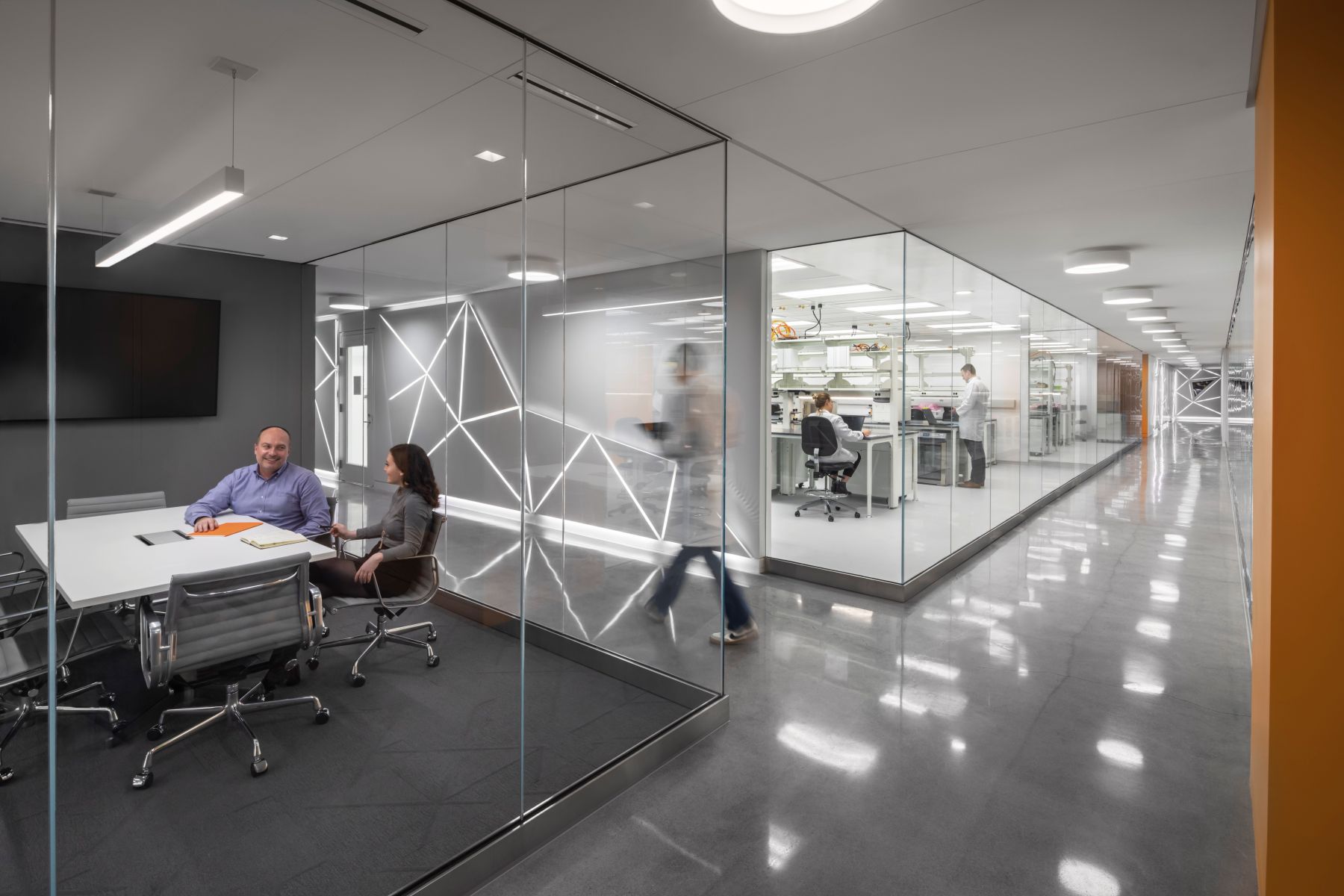
Above: Photo courtesy of CRL
Designs for interior office spaces have changed dramatically in recent years as modern workplaces abandon rigid approaches solely focused on dividing areas. Instead, today’s office designs address flexibility, collaboration, and employee well-being. As companies continue to rethink their office environments, interior glass partition systems have emerged as one of the fastest-growing segments for commercial interiors.
Several factors are driving this shift. From tax benefits to evolving expectations for workspaces, architects and building owners are increasingly looking to glass partition solutions that offer greater design flexibility, allow easier retrofits, offer employee-centric wellness benefits, and deliver long-term value.
This trend represents more than an architectural preference but a significant business opportunity for glaziers. According to a 2025 presentation by Jeff Phillips of Wilson Partitions at GlassBuild America 2025, the Division 10 market is valued at $1.8 billion and growing. Yet, much of the segment has traditionally been captured by contract furniture dealers rather than glaziers.
Evolving Employee Workplace Expectations
Employees now expect offices to support both collaboration and focused work. Companies want open environments that encourage staff interaction while still providing quiet spaces for meetings, calls, and concentrated work. Glass partitions address these dual objectives effectively.
Unlike traditional cubicles that create barriers to interaction, glass partitions preserve sightlines throughout the office while allowing natural light to penetrate deep into the building’s space. The resulting workspace feels larger, brighter, and more connected without sacrificing functionality.
Achieving Flexibility
One of the biggest drivers behind today's growing glass partition market is the need for flexibility. Office layouts no longer remain unchanged for decades. Hybrid work schedules, fluctuating staffing levels, and even tenant turnover require interiors that can evolve without requiring complete demolition and reconstruction.
Demountable glass partition systems allow offices to be reconfigured quickly while minimizing construction waste, reducing downtime, and preserving existing building views. Demountable partition systems also allow conference rooms and collaborative spaces to expand or contract, meeting changing occupancy needs.
For building owners, highly flexible glass partition systems provide a practical way to modernize existing office spaces while accommodating the inevitable changes businesses and employees bring about.
Balancing Openness and Privacy
Early office concepts often prioritized privacy over collaboration. Today’s workspaces however require noise-suppressing glazing systems while maintaining visual openness. Dual-glazed systems and advanced framing designs routinely achieve high Sound Transmission Class (STC) ratings capable of meeting acoustic goals while maximizing open sightlines.
These glazing solutions allow occupants to remain visually connected to the surrounding office while providing the sound privacy required in today's hybrid work environments. The expertise of manufacturers and glaziers is critical for proper performance and installation.
The Wellness Factor
Creation of environments that support employee wellness remains important to the design community and its clients. Studies continue to associate daylighting with improved comfort, productivity, and retention.
Glass partitions are uniquely capable of supporting wellness initiatives by maximizing daylighting throughout the workspace. By allowing natural light to reach deep into interior spaces, designers reduce dependence on artificial lighting while simultaneously creating brighter, more inviting work environments.
Tax Benefits for Building Owners
Beyond aesthetics and design flexibility, interior glass partition systems may also reduce taxes in the long run. Qualifying demountable partition systems can be classified as furniture rather than permanent building systems. As a result, they may be eligible for accelerated tax depreciation under applicable federal tax rules, allowing owners to recover costs more quickly than with conventional, permanent fixtures.
Specifically, Division 8 specifications typically cover the building components associated with openings such as doors, frames, hardware, and windows, while Division 10 products comprise nonstructural elements, such as partitions. Historically, furniture manufacturers and dealers have captured the valuable Division 10 market with the sale of complete partition wall systems.
However, today's glass partition systems are shifting that landscape in glaziers’ favor. While tax treatment depends on the specific product and project circumstances, accelerated depreciation has become an important consideration for developers and businesses investing in retrofits, opening the door to glass partition systems.
The innovative Fallbrook Glass Partition Systems from CRL are a noteworthy example of an advanced approach to partitions. Available in framed, semi-framed, and grid formats, Fallbrook glass partitions seamlessly divide spaces while maintaining transparency and daylighting. The Fallbrook line also features a cut-to-length program where frame members are precut to project specifications and shipped ready for fast and easy installation.
A Growing Opportunity
Today’s office interiors are no longer just a place to work. They have evolved into spaces designed to attract and retain employees, encourage collaboration, support wellness, and adapt as business needs change. Glass partition systems play a key role in this transformation, offering the flexibility, daylighting benefits, and potential tax advantages that make them an ideal solution for both new construction and retrofit projects.
As companies increase investments in workplaces that better support employees and building owners, demand for glass partition systems will continue to grow. For glaziers, this represents one of the most promising opportunities in commercial interiors. Glaziers who serve as trusted experts in modern workplace solutions will be well positioned to capture a larger share of this expanding market.