
Laminated Glazing Edges
Effects of moisture, solvents and other substances
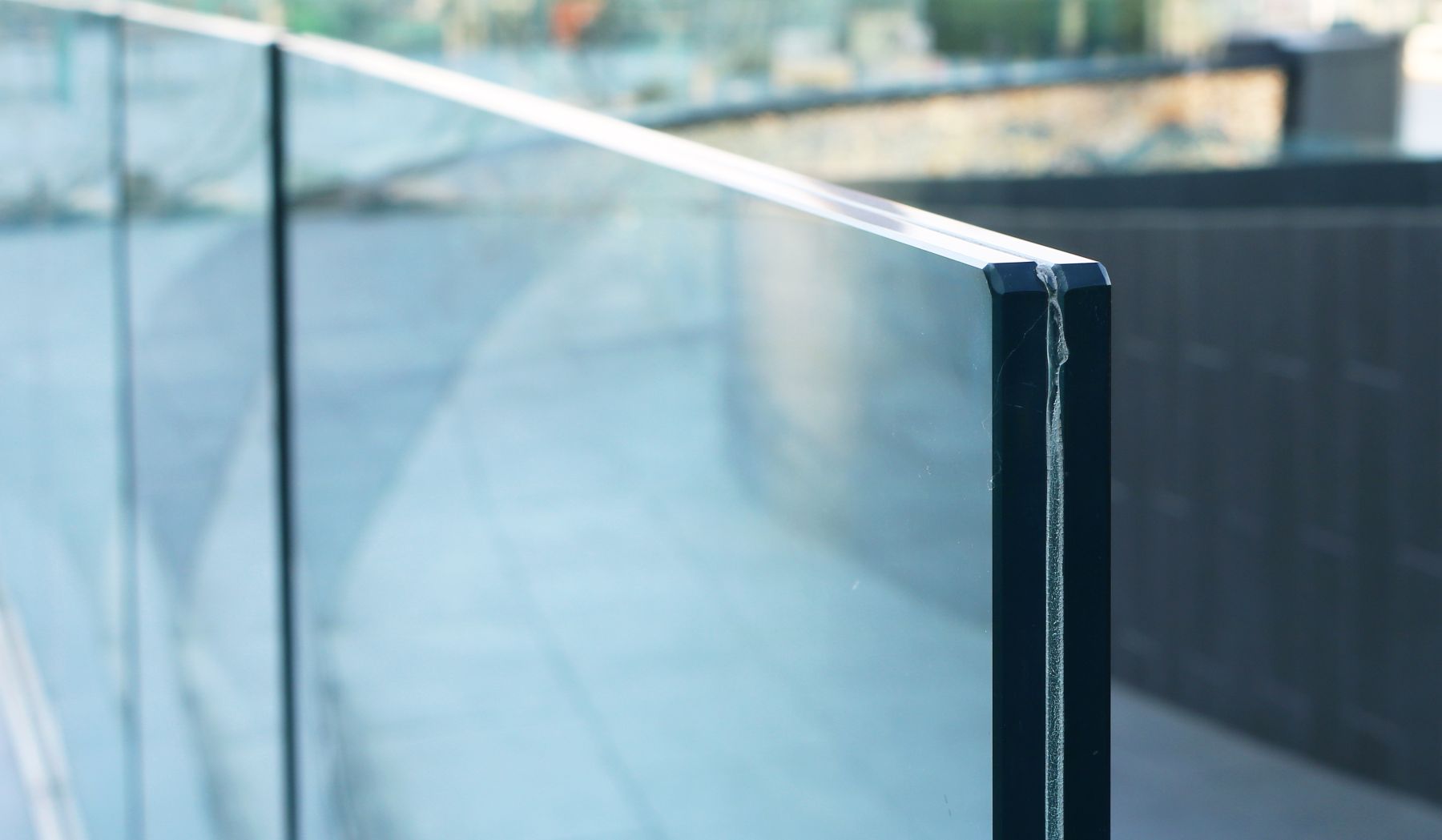
Laminated glass performs best when its edges are properly protected and maintained. Moisture, solvents, standing water, and glazing materials including caulks, sealants, tapes, gaskets, setting blocks, and glass cleaning solutions could interact with the edges of laminated glass in ways that may affect durability, performance, and appearance. Understanding these interactions, and the edge conditions they may produce, is the first step toward ensuring lasting results in any laminated glass installation.
Effects of moisture exposure
Water or water vapor can cause edge blush, which appears as a whitish haze around the glass edges. This can occur when unframed laminated glass edges are subjected to prolonged exposure to moisture, standing in continuous water contact, or when framed laminated glass systems have weep holes that are not draining properly. The extent of edge blush may vary depending on environmental conditions. Various interlayer types are available, and they may react in different ways. For example, interlayers that do not contain plasticizers may not be susceptible to edge blush. Moisture intrusion, along with other incompatible chemicals, may change the adhesion characteristic with interlayers and glass, resulting in delamination over time. See the NGA Laminated Glazing Reference Manual, available at glass.org/store for interlayer types and glazing recommendations.
Effects of caulks, sealants, tapes, gaskets and setting blocks
The presence of plasticizers, solvents or other ingredients in caulks and sealants can potentially permeate into the laminate interlayer resulting in edge effects. If the interlayer and the caulk or sealant will or may be in direct contact, compatibility between the components should be verified with the caulk or sealant the interlayer manufacturers before installing the laminated glass. When the sealant is not in direct contact with the interlayer, edge effects are unlikely. Manufacturers generally recommend resilient non-hardening sealant compounds, tapes, or elastomeric gaskets when installing laminated glass. The best way to avoid delamination is to verify compatibility of the glazing materials intended for use with the sealant and interlayer manufacturers. Sealants containing solvents and oil-based compounds are not recommended for use with laminated glass. Edge seal films may be used to minimize solvent and chemical penetration into the laminated glass edge, though these may not be compatible or available for all laminate types.
For more information, refer to NGA Laminated Glazing Reference Manual, NGA Standard Test Method for Sealant and Glazing Tape Evaluation when in Contact with Laminated Glass Edges, and ASTM C1087 Standard Test Method for Determining Compatibility of Liquid-Applied Sealants with Accessories Used in Structural Glazing Systems.
Effects of cleaning solutions
When some cleaning solutions are in prolonged contact with laminated glass edges, edge effects may occur. See NGA Glass Technical Paper Proper FB01-00 (2023) Proper Procedures for Cleaning Architectural Glass Products and FB02-02 (2023) Heat-Treated Glass Surfaces are Different, available for free download at glass.org/store.
Weathering and thermal performance
Exposure to heat and weathering are common methods for assessing the durability of laminated glazing. Standards ANSI Z97.1 American National Standard for safety glazing materials used in buildings and ASTM C1900 Standard Practice for Weathering and Evaluation of Laminated Glass both include an assessment of optical changes after weathering, as significant changes can be indicative of product degradation, which may have an effect on impact and safety performance.
Thermal testing of architectural laminated glass is often done in a boil or bake process. ASTM C1914 Standard Test Method for Bake and Boil Testing of Laminated Glass outlines the methodology for both of these tests and provides guidance on how to determine if a laminate has passed.
From the NGA
For additional information on laminated glazing durability, consult the NGA Laminated Glazing Reference Manual.