
Optris Glass Tempering Scanner Delivers Coating-Independent Temperature Monitoring from Below
 Low-emissivity (Low-E) glass has become essential for energy-efficient windows and façades, yet it creates persistent challenges for infrared temperature measurement during tempering. Traditional systems positioned above the line often struggle with the low-emissivity coated surface, producing inaccurate or unstable readings. Reliable temperature data is critical: temperature distribution directly affects glass quality, process stability, and final product performance.
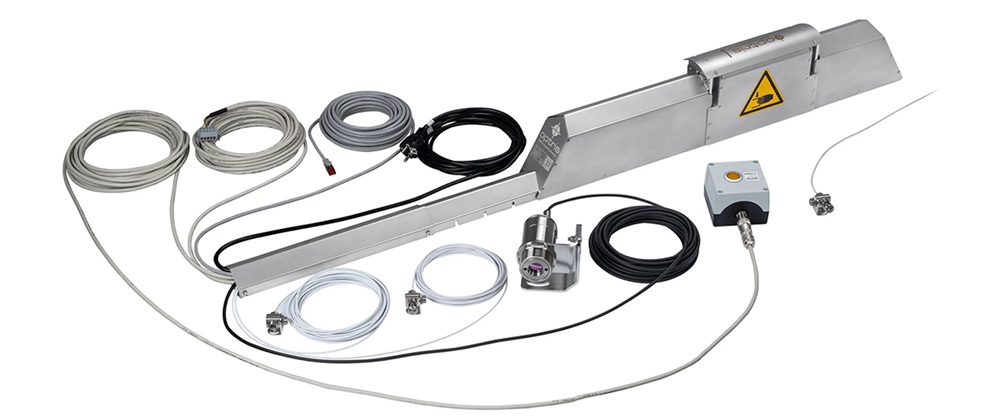
Optris addresses this with its new Glass Tempering Scanner (GTS), a comprehensively modernized system that measures from beneath the production line. By viewing the non-coated, high-emissivity underside of the glass, the GTS delivers continuous, coating-independent temperature data—regardless of the Low-E coatings or glass types processed on the same line.
Single-Camera Design with Super-Wide Optics
At the heart of the GTS is a single PI 640i G7 thermal camera equipped with a newly developed 120° super-wide-angle lens. This ultra-wide field of view enables the system to capture temperature distribution across the full width of the line from a compact installation position. Depending on operating mode, scan widths reach up to 3.5 m at 125 Hz or 4.3 m at 32 Hz (horizontal configurations typically support up to approximately 3 m; diagonal arrangements can extend further but are less common for standard lines).
The camera delivers 640 × 480 resolution and supports measurements up to 1500 °C with an NETD of 80 mK, allowing clear detection of thermal irregularities. Two built-in aiming aids simplify precise scan-line alignment during setup.
Designed for Easy Integration and Robust Operation
The complete GTS arrives as a pre-assembled, pre-configured, all-in-one unit with clearly labeled plug connectors and 10-meter cables for furnace door sensors, glass breakage sensors, and aiming-support IR radiators. Its compact footprint (722 × 145 × 72 mm) fits easily beneath new or existing tempering lines where space is limited. A wide-range power supply (100–240 V, 50–60 Hz) supports global installations.
Protection is built in: a remotely controlled shutter shields the optics from hot falling glass fragments in the event of breakage, while dedicated cable protection reduces thermal and mechanical risk. Optional air cooling enables operation in ambient temperatures above 45 °C. The supplied stainless-steel cable duct adapts on site in 5 cm increments to common system widths.
Ready for Immediate Use with Powerful Software
After mechanical mounting and network connection, the GTS is ready for standalone operation. PIX Connect software (with predefined GTS layouts) and CompactPlus Connect handle configuration and visualization. Operators can view live temperature profiles, thermal images, measurement ranges, alarm states, and process histories in real time. Snapshots can be stored for later analysis, supporting quality control, process optimization, and documentation.
“With the new GTS, we have significantly simplified our previous solution while also making it more efficient. Measuring from below using just one thermal camera with a super-wide-angle lens significantly reduces installation and maintenance efforts and provides operators of glass tempering systems with a compact system solution that can be quickly integrated into new machine designs,” says Torsten Czech, Head of Product Management at Optris.
By combining coating-independent bottom-up measurement, wide-angle single-camera optics, compact pre-wired design, and robust protection features, the Optris Glass Tempering Scanner offers a practical, efficient alternative to conventional multi-component or top-down systems. Glass manufacturers gain more consistent temperature data, faster installation, lower maintenance, reduced waste, and improved process stability—helping deliver higher-quality tempered glass with greater confidence.