
2026 Top Glass Fabricators Report
Leading businesses predict slim growth and slow recovery in the year ahead
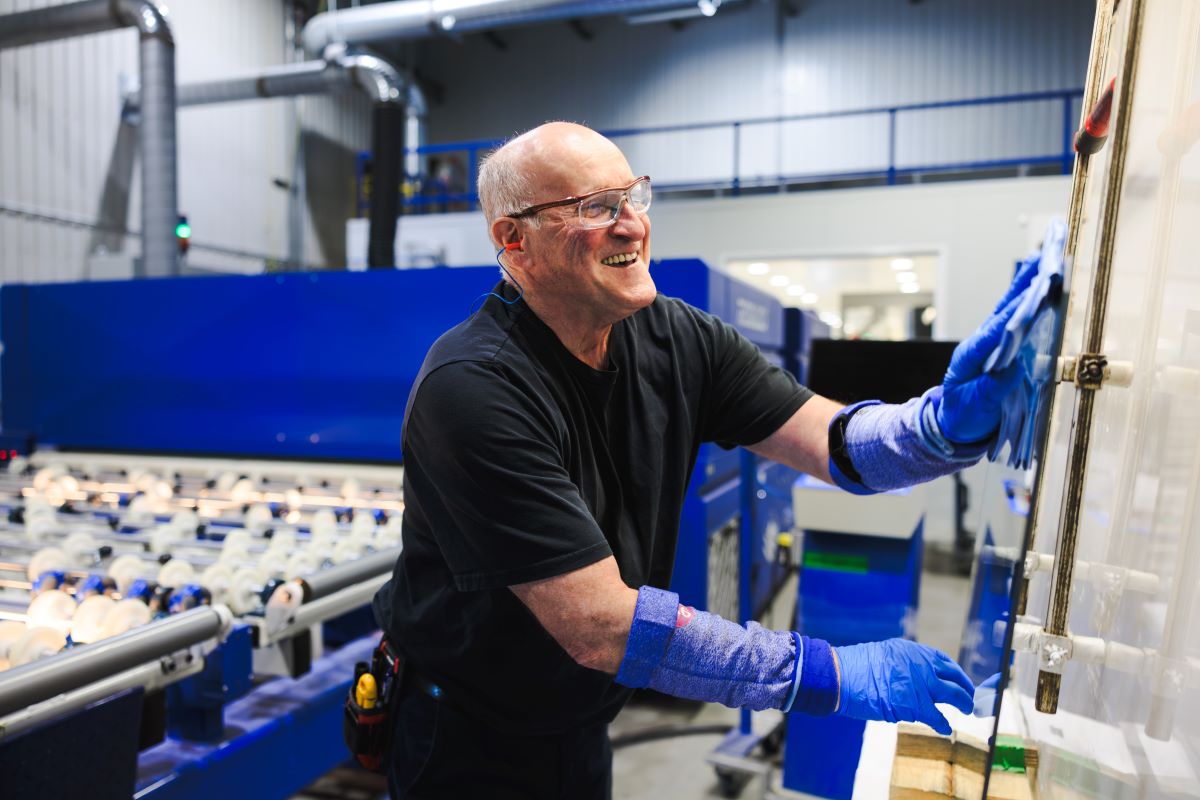
At the time I write this in February, “cautious optimism” has become almost a clichéd term for describing the 2026 market outlook after the market uncertainty that defined 2025. If it’s possible to characterize Top Glass Fabricators’ mixed outlook moving forward, I would instead call it “resilient optimism” given the difficulties even leading companies have experienced over the past decade.
And while responses from the Top Glass Fabricator survey suggest that almost all fabricators felt 2025 was a difficult year, many say that 2026 has the potential to be better, while also recognizing that the same market uncertainty may remain.
And 2025 was a difficult year. The Trump administration began to enact tariffs in February, escalating to “Liberation Day” tariffs in April. In June, tariffs on aluminum and steel rose to 50%. Fabricators report that machinery, hardware and metal products were the top three products affected in their section of the industry. “Most hardware comes from overseas that is sold domestically, and we saw an increase from our vendors,” says a rep from Glassfab Tempering Services. To learn about fabricator capabilities and fabricated glass products most in demand, see Products.
According to a plurality of survey respondents, tariff rates also had the effect of delaying and slowing projects. “Tarriff introductions and inconsistencies created uncertainty and volatility, causing hesitation and paralysis in the market. “Projects were delayed,” says Garrett Ames, president of Dillmeier Glass. For more on tariffs and capital equipment, see Investments.
Tariffs compounded existing issues, and led to general market uncertainty and cost increases, according to fabricators. “In 2025, the most significant challenges to our business stemmed from cost volatility, supply chain complexity and project uncertainty, all of which disproportionately affect specialty glass fabrication,” says a rep from Isoclima Specialty Glass. “Tariffs and pricing fluctuations on key raw materials—such as base glass, interlayers, coatings and specialized components—made cost forecasting and long-term pricing more difficult, particularly on projects with extended lead times.”
Big closures from Top Glass Fabricator Oldcastle BuildingEnvelope compounded this sense of uncertainty and volatility—the company closed three facilities in Hauppauge, New York; Highland, Michigan; and Louisville, Kentucky, in August of last year.
Still, fabricators responding to the Top Glass Fabricators survey in January seemed to feel that some market pressures were beginning to ease at the start of this year. “There are clear signs that more projects are beginning to receive the green light after a period of hesitation, and the gradual easing of interest rates should further support this momentum,” says Max Fisher, vice president, Eastern Glass Resources. “As financing conditions improve, developers and building owners are likely to move forward on projects that had previously been delayed, helping to stimulate broader market activity.” For more on 2025 sales growth and regional market activity, see Growth.
Labor remains a major issue across the industry, and workforce development has become a major initiative at the National Glass Association. In recognition of this complex and enduring issue, this year we asked fabricators about hiring, training and employee benefits.
The Top Glass Fabricators report is also a time to celebrate the growth and persistence of leading fabricators in our industry. Find the long-running industry ranking of North America’s leading fabricators in the List.
Top Glass Fabricators Report
Scroll to view the whole report or jump to these sections:
- The List | An industry ranking of leading architectural glass fabricators.
- Labor | Hiring, training and employer benefits.
- Growth | Total market sales, regional growth and glass supply.
- Products | Glass capabilities, product demand and recycling capacity.
- Investment | Capital investments, headwinds and tariffs.
Visit the World of Glass and download the Fabricator Database
For more information about the North American fabrication market, visit our updated fabricator map with newly-added recycled glass locations. The map's database is available in the National Glass Association store. Free to NGA members.
At a Glance
Data from the 2025 Top Glass Fabricators survey of North America's leading architectural glass fabricators.
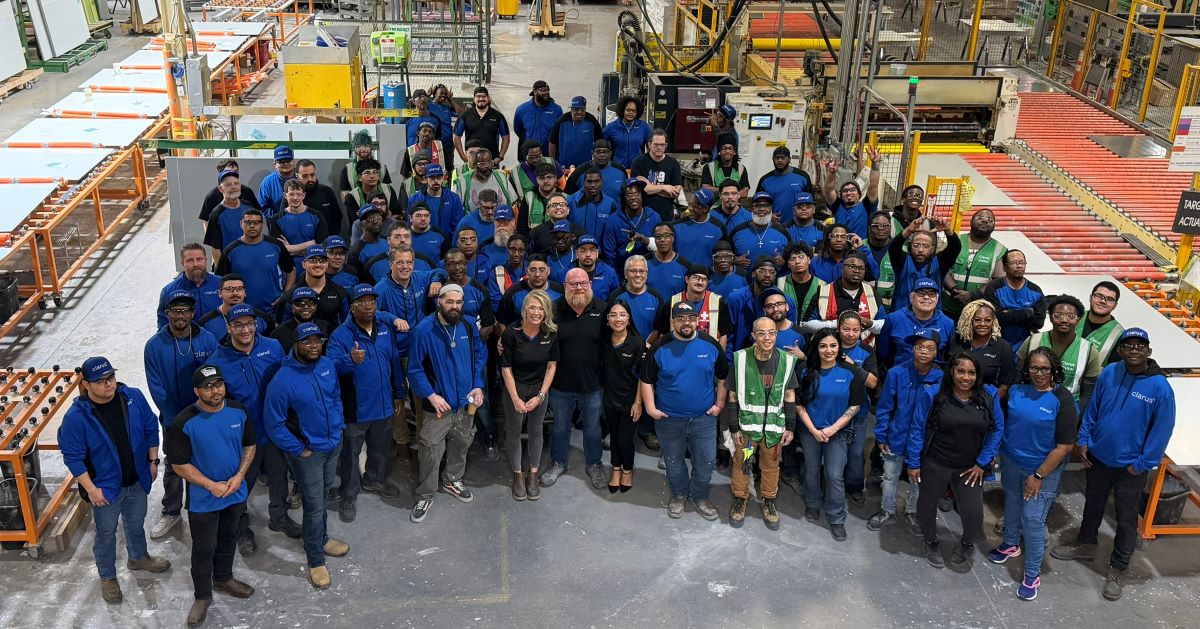
Growth
Last year saw a return to higher year-over-year sales growth, according to leading fabricators. Almost half, 45%, of responding fabricators reported higher sales in 2025 compared to the previous year, a 12-point increase. Over three-quarters of respondents said they expect sales to continue increasing in the coming year.
While that’s good news for the industry, fabricators’ expectations for 2026 were mixed—uncertainty about market conditions tempered expectations for potential growth. A majority reported “cautious optimism” and flat to moderate growth for the year ahead, especially due to lowering interest rates. “We forecast a slight increase in business as interest rates continue to drop,” says Jeff Wilkins, production manager and business development, Pennsylvania Insulating Glass. “We expect that lowered interest rates will increase home sales, renovation and construction projects.”
As is common during times of market instability, more respondents report they did retrofit work in 2025 than during the previous year. Sixty-four percent of fabricators said retrofit comprised 25%-100% of their business last year, compared to 46% the previous year. “Retrofit activity is expected to remain strong as owners upgrade existing buildings to meet new performance, energy and security standards,” says a representative for Isoclima Specialty Glass about the coming year.
While almost all respondents reported that glass supply was either the same or better in 2025 compared to 2024, 39% also said that tariffs affected raw glass purchases last year (See Investment). While it didn’t appear to affect the global geographic region in which the glass was purchased—North America remains the primary place responding fabricators purchase glass—about 20% of respondents say they changed where they purchased glass last year. Fabricators cited price increases as the main cause for seeking a different source for float glass.
A plurality of respondents with businesses operating in all U.S. regions say that construction in the South and the Sun Belt regions is growing, especially Florida, due to population growth. These reports are supported by U.S. Census Bureau data for 2025, which indicates that Texas, North Carolina and Florida received the largest influx of domestic migration last year. By percentage—meaning the amount of growth compared to the state’s existing population—South Carolina is the fastest-growing state in terms of population.
For more information on fabricator workforce, see the NGA Compensation & Benefits Study for Fabricating Companies. The report examines seven job titles in fabricating companies, segmented by annual salary vs. hourly roles. This study compiles salary and compensation benchmarks to arm members with information to help them attract and retain employees.
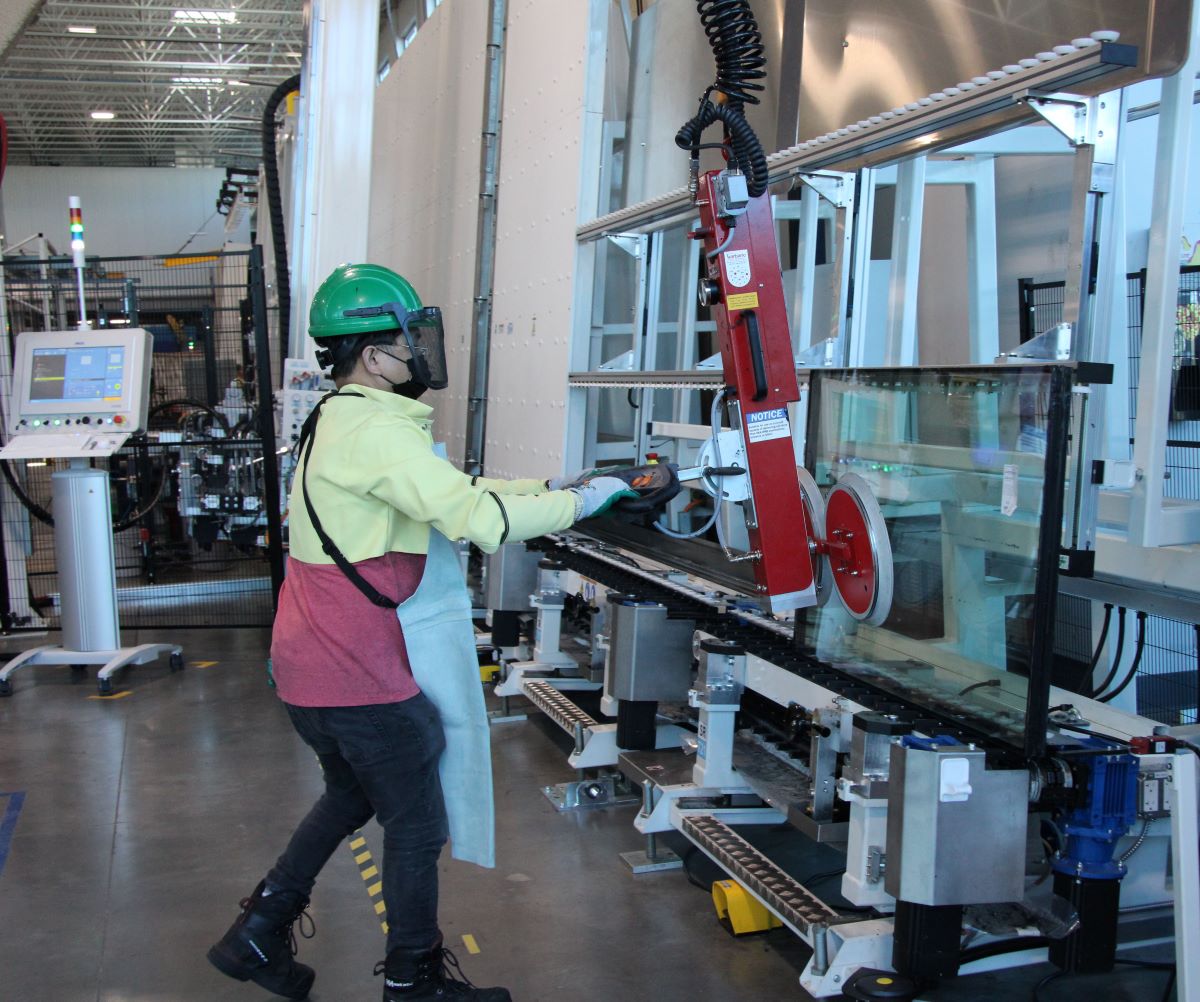
Labor
A third of responding fabricators found it more difficult to hire in 2025. Production personnel and supervisors were the hardest positions to fill, according to respondents. The size of the workforce seems to have remained the same year-over-year—a significant majority of respondents, 82%, said shifts stayed the same, and only 3% reported removing shifts.
Given the National Glass Association’s focus on workforce development and training, this year we also asked respondents about the benefits their companies offer to employees. Medical, dental and vision insurance topped the list of benefits most companies offer, followed closely by bonuses and a 401(k) account. About half of the responding companies say they offered parental leave.
For more information on fabricator workforce, see the NGA Compensation & Benefits Study for Fabricating Companies. The report examines seven job titles in fabricating companies, segmented by annual salary vs. hourly roles. This study compiles salary and compensation benchmarks to arm members with information to help them attract and retain employees.
About 60% of companies reported having a current training program, and a little less than a third say they plan to invest in one this year. When asked about their training course content, commonalities across fabricator programs include:
-
Establishing production quality standards early in the onboarding process.
-
Gradual exposure to different departments in the business, including front-of-office operations.
-
30/60/90-day check-ins.
-
One-on-one training with a team leader or experienced staff member, which can include workday shadowing or a kind of buddy system.
For GlassTemp Inc., the process of onboarding can also offer the new hire and staff an opportunity to see which position might suit both the company and the individual. President Bob Becker says that during the training program, “The employee is exposed to each workstation throughout this process. This allows both the employee and management to decide where mutual interest lies.”
At some companies, the training does not end after 90 days. “We have continuous improvement lunch-and-learn [events] to help staff learn about glass more thoroughly,” says Adam Mitchell, marketing manager at Agnora.
Though companies appear to be offering a range of benefits, Nelson Morello, CEO of L.A. Glass and Mirror, also underlined the pinch workers are feeling outside of their jobs. “The cost of living for shop workers is still very high, so they need to move to a [place far from work] where they can afford a house to rent, and are not even thinking of buying a house,” he says.
Stop Losing Money on the Tempering Line
Two solutions for glass fabricators serious about transforming operations into a competitive advantage.
MyGlassFAB
A six-course training bundle that walks furnace operators through the entire tempering process — from heat-treating basics to equipment maintenance.
Explore CoursesGFAB Conference | June 14–17 | Chicago
Hands-on workshops on quality control in glass tempering, automated inspection ROI, and peer connections with fabricators nationwide.
The glass companies winning in today's market aren't just buying better equipment or training more people — they're doing both, strategically.

Products
Fabricator capabilities remained relatively similar year-over-year. Shower enclosures remain a major product category, with greater demand than for jumbo glass, according to respondents. Part of the reason may be increased residential work, says Kristina Buckett, director of sales and business development, Dallas Flat Glass Distributors, who attributes the robust demand for enclosures to “high-end residential remodeling and new construction. Since homes are struggling to sell, people are doing all they can to upgrade, including updating windows and shower enclosures.” Joseph Smith, warehouse operations manager, The Glenny Glass Co., added that demand for European-style shower doors appears to be “steadily increasing year-over-year.”
Several respondents said regulation also drove product innovation last year. “Demand in 2025 was driven primarily by regulatory pressure, safety concerns and evolving design expectations in the U.S. Stricter building codes and sustainability requirements increased the use of high-performance insulating and laminated glass to meet energy, acoustic and thermal standards,” says a rep for Isoclima.
Respondents said that security and sustainability will both drive demand for fabricated products in the coming year. “We expect innovation to be shaped by new building codes, with higher expectations around safety, and stronger sustainability goals. Areas like security glazing, bird-friendly solutions and energy-efficient glass will continue to influence product development,” says Kevin McMahon, vice president of sales and marketing, Goldray Glass.
“Looking ahead to 2026, product innovation is expected to be driven by a convergence of security, sustainability, performance and regulatory requirements,” says Kilpatrick. “Ongoing concerns around occupant safety in schools, government buildings and public venues will continue to push advancements in security glazing, including multi-threat solutions that combine ballistic, forced-entry and impact resistance.”
Related to sustainability, about 92% of fabricators say they recycle glass at an external facility, like a municipal recycling facility, or MRF. While many fabricators reported no issues with recycling—some reported the ability to recycle glass in-house and with suppliers as well— barriers to recycling remain for fabricators. The most common is complicated logistics and the lack of facilities near the business able to recycle specialty glasses.
“There is no local source to go to [for recycling]. Also, separating out all of the types of glass still proves to be too difficult and costly to consider shipping out,” says GlassTemp’s Becker.
“Much of the glass we produce is laminated, coated, multi-layered or engineered for security and performance, which makes separation and traditional recycling more challenging than standard float glass,” says a rep for Isoclima. “In addition, access to facilities equipped to process specialty glass varies by region, and transportation costs can be a limiting factor.”
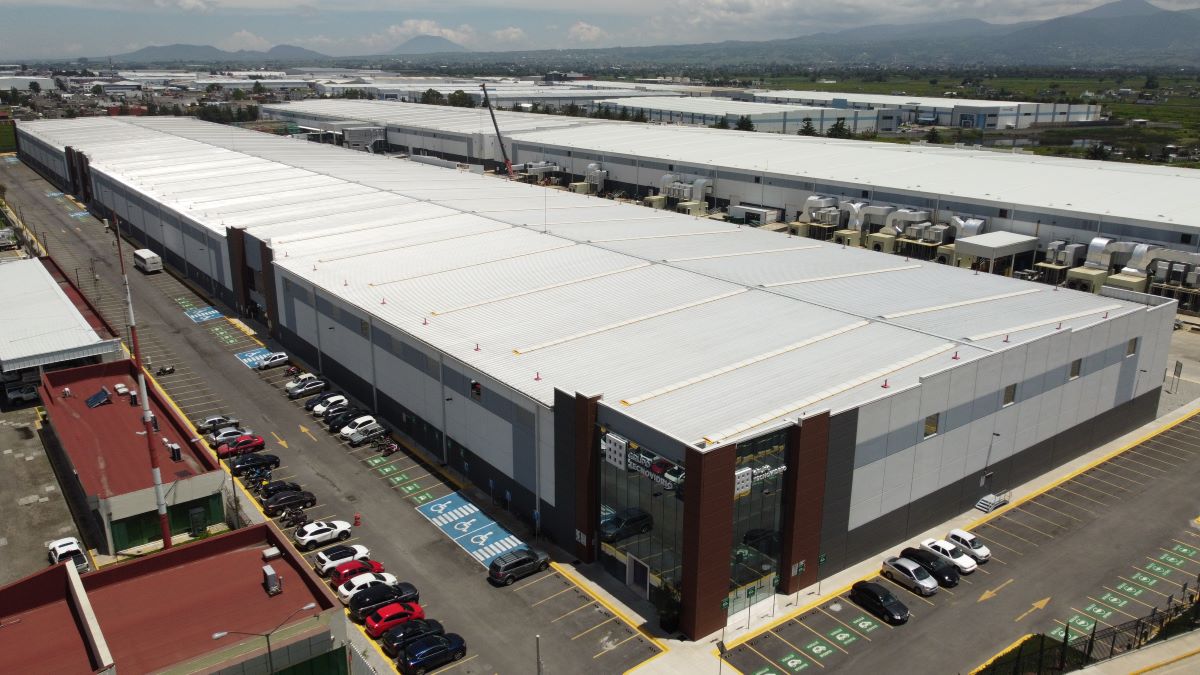
Investment
Capital equipment purchases topped the list of fabricator investments in 2025. When asked about the reason for their equipment or machinery purchases, fabricators pointed to growing demand and the need for greater capacity, requiring them to scale operations. “Our 2025 investments in new machinery were centered on supporting growing market opportunities. Updating our end-of-life equipment ensures we stay dependable, while new machinery allows us to improve speed, consistency and capability,” says Goldray Glass’s McMahon.
New machinery also allowed for new capabilities for some fabricators. “Investment in machinery in 2025 was driven primarily by the need to increase capacity, improve efficiency, and meet growing demand for high-performance and specialty glass products. Rising requirements for security, laminated and code-driven glazing pushed the need for more advanced fabrication capabilities and tighter quality control,” says a rep for Isoclima.
For those fabricators who wanted to purchase capital equipment, but did not plan to in the coming year, market uncertainty and potential tariffs topped the list of reasons preventing them from making the investment. “In addition to consumables, most machinery if bought new will also incur new tariffs. These costs are difficult to pass on to the customer in this market,” says GlassTemp’s Becker.
Given how dramatically Artificial Intelligence, or AI, usage has spread throughout the last year, Glass Magazine also asked respondents to share how the company had invested in AI at their business, and what tools were being used. Many fabricators report not using AI at all, and the overall tone was tentative, with many respondents saying they were planning to explore the technology.
For those businesses that did implement AI tools, responses suggest they deploy it for research, data analysis and as part of ERP software.
“We use AI primarily to support efficiency, analysis and decision-making, rather than to replace core manufacturing expertise,” says a rep for Isoclima. “On the business and marketing side, AI is used for data analysis, performance reporting, content development and workflow optimization, helping us better understand demand trends and communicate more effectively with customers. Operationally, AI-assisted tools are used to support process evaluation, quality consistency and documentation, particularly in areas where precision and repeatability are critical. Overall, AI is viewed as a tool to enhance productivity, insight and accuracy while allowing our teams to stay focused on engineering, fabrication and problem-solving.”
“We are currently in a testing phase using AI to optimize production scheduling,” says Carlos Amin, vice president of sales, Tecnoglass. “Because we develop our software and internal systems in-house, we are able to apply artificial intelligence in a targeted way, focusing on our specific operational needs and improving overall efficiency.”
List
The 69 companies on this list represent some of the leading fabricators in North America. If you feel that your company belongs on this list, please contact Associate Editor, Rachel Vitello. It is only with continued industry cooperation that we can compile the Top Glass Fabricators report.
For more information about the North American fabrication market, see our updated fabricator map on glass.org/world-glass-map.
Feel your company should be on the map? Tell us!

500 million - 1 billion+
Trulite Glass & Aluminum Solutions
100-500 million
50-100 million
GGI – General Glass International
Garibaldi Glass Industries Inc.
30-50 million
Dallas Flat Glass Distributors
10-30 million
Thermalsun Glass Products Inc.
Maryland Glass & Mirror Company Inc.
Under 10 million
Our Terms Fabricators Inc.