
Modular Mastery
Taking control of the commercial glass door installation process through a modular approach
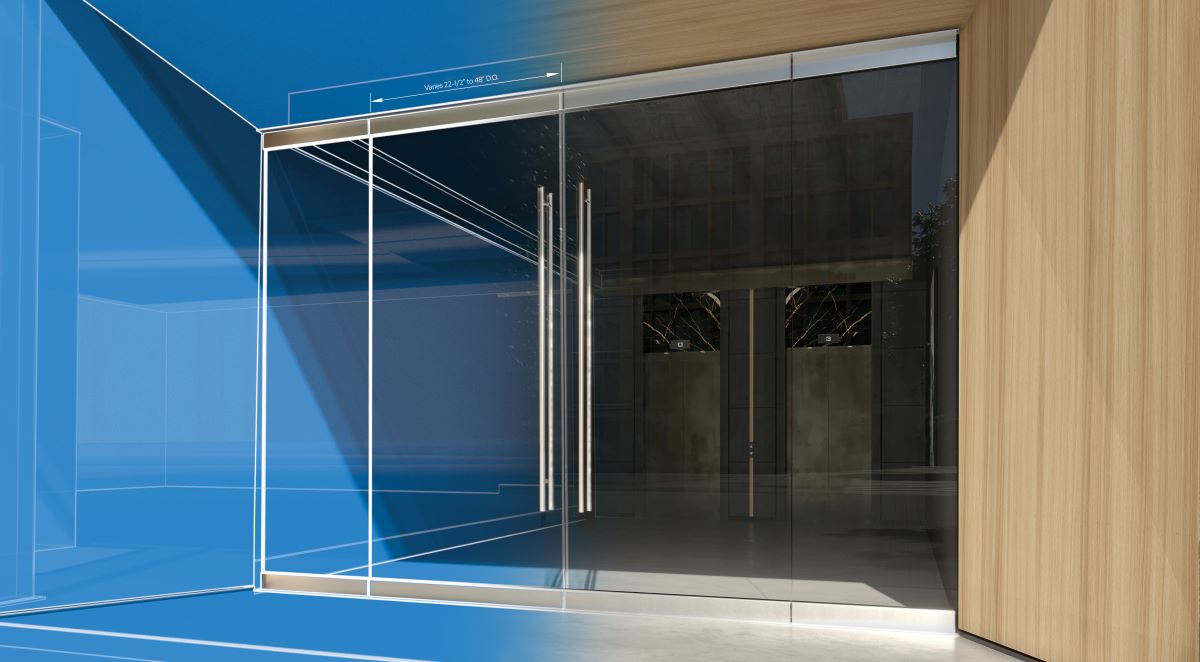
The all-glass aesthetic for commercial facades continues to be a mainstay. Maximizing a facade’s glass look with more glass as well as larger glass lites is more than a trend; it’s an architectural movement. For example, a recent Glass Magazine survey found that “83% of respondents expect (glass) sizes to continue to grow.”
The glazing community has a first-hand understanding of the immense popularity of glass designs. It has boosted the bottom line of many glazing businesses across the nation for years. Glaziers also understand the hurdles of installing commercial glass, particularly glass entrances which often serve as focal points. Successful installation of custom glass doors within tight timelines requires careful planning. The process for installing custom glass commercial doors may begin with specification, but manufacturers frequently dictate the schedule. Fabrication and shipment of custom glass doors and components, including door rails, can sometimes be a major project bottleneck.
Whether it’s supply issues, shipping delays, or manufacturing backlogs, any lag in delivery of custom glass doors brings the glazing contractor’s workflow to a standstill. Project schedules are quickly impacted, and general contractors begin to agonize over the domino effect of delays.
A new, modular approach
These kinds of predicaments have pushed the industry to rethink the production and installation process for commercial glass doors. As a result, a new modular alternative to pre-built custom doors has surfaced, putting greater control in the hands of glaziers and temperers to better manage jobs and meet deadlines. From a technical standpoint, the modular approach deconstructs the standard door rail system that’s widely available in the market today. Instead of the manufacturer shipping fully assembled top and bottom rails, glass professionals can order a simple kit that includes all of the components necessary to assemble one door rail. These kits can be stocked by the glazier or glass tempering shop, and assembled when needed, eliminating manufacturer lead times.
This new modular approach can be used to fabricate and install standard or custom door rails of various lengths in the shop or on-site, which enables improved speed, efficiency, and faster project completion. In essence, modular door rail kits give glaziers and glass temperers greater control over when, where, and how commercial glass doors are put together and installed. An added benefit of modular door rails is that the side covers can be slid on after the glass door has been completely installed, thus preventing damage during construction. This keeps the door rails looking pristine at project completion. After years of use, the side covers can be easily replaced if needed without removing the glass door from the pivot.
Utilizing complementary modular door headers
Modular door rails have a partner in crime in the form of newly available modular door headers. These unique header systems can also be stocked by glass professionals, then cut to the desired length in the shop or on-site, eliminating manufacturer lead times for custom door headers. Using proprietary precision jigs, mounting holes can be drilled on-site to match the opening. No factory prep is required. When the entrance calls for a double door setup, included splice connectors can be used to create a continuous door header up to 96 inches long. Modular door headers are typically shipped pre-drilled for door closers.
Glaziers and glass temperers need every advantage they can get when it comes to workflows and efficient project completion. Modular door rails and headers are set to revolutionize glass door customization and installation, providing a significant advantage in time savings. By stocking these innovative systems, manufacturer lead times for custom doors are eliminated, which puts glass professionals in complete control over how and when glass doors are assembled and installed.