
Energy, Affordability Top Priorities for Congress at NGA’s Glass & Glazing Advocacy Days
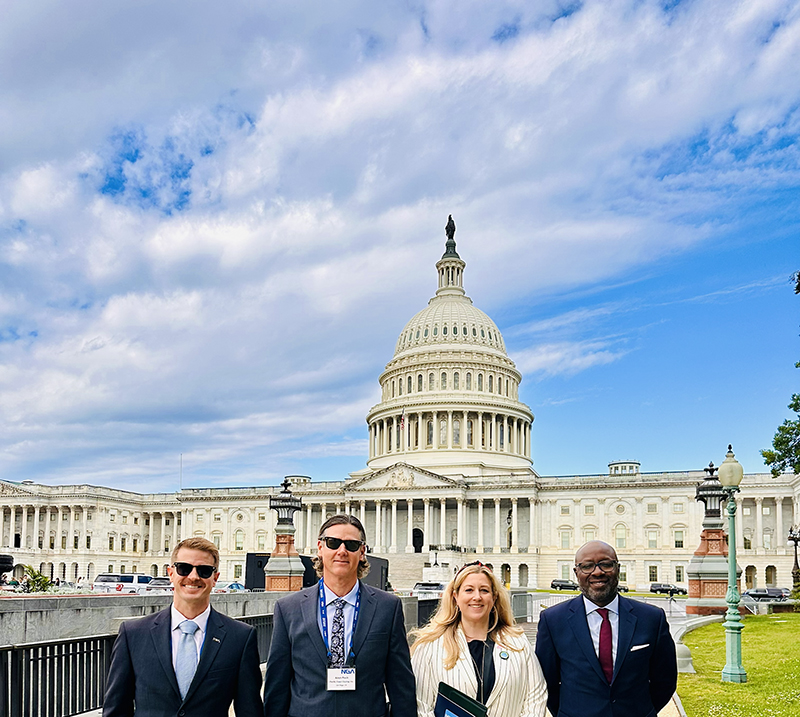
Last week, the National Glass Association staff and 23 leading members of the glass and fenestration industries went to Capitol Hill to advocate for architectural glass as the material choice for the spaces where people live, play, learn, work and heal. Conversations with Congressional Reps in 26 states centered on four main priorities:
- Specifying bird-friendly glazing in select GSA buildings
- Adopting a national framework for stronger security glazing solutions in schools
- Increasing reimbursable funding for workforce development and training
- Implementing high-performance glass and fenestration to strengthen and stabilize the U.S. energy grid
Congressional staff receptive to NGA priorities
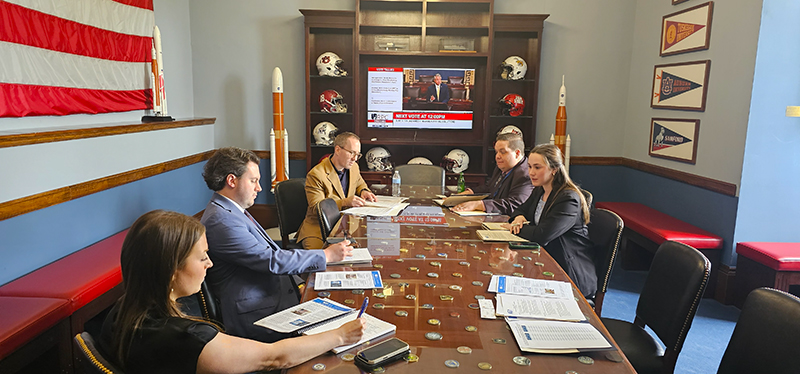
In 45 meetings, NGA advocates emphasized the bipartisan nature of our priorities, and how the glass and fenestration industries have products ready to solve and mitigate the country’s current challenges.
Congressional staff were interested in how architectural glass efficiency can help support a stronger energy grid and relieve current strain. “We’re all looking for ways to keep costs down as rates increase,” says a staff member of Sen. Adam Schiff’s office. “Energy efficiency is something everyone is working on right now,” says an aide for Rep. Suhas Subramanyam.
Energy costs have of course been increasing for consumers and businesses in recent months. The Bureau of Labor Statistic’s energy index, which tracks fuel costs for consumers, rose 10.9% in March and another 3.8% in April, as reported in Forbes. Even before higher fuel costs, the built environment already accounted for 40% of the U.S. energy usage, according to the Environmental and Energy Study Institute.
“New buildings typically are not designed to optimize energy performance, and most existing buildings have not been upgraded with even the most basic and affordable energy efficiency strategies,” say EESI reps.
NGA staff and advocates also met with two representatives from the Department of Energy’s Building Technologies Office, Asa Foss and Sven Mumme. Foss says that builders and developers are taking envelope performance seriously, and suggested that this could be an opportunity for the glass industry, as substituting high-performance windows into the envelope is a much less disruptive change than altering other parts of the façade.
Advocates also expressed how critical workforce development funding is for the glass industry. “We need trained, skilled labor in order to continue doing our jobs,” says Lori Ann Benish, general manager of Enclosures Unlimited. “There’s so many workforce shortages right now, and we want people to get employment,” says a staffer for Sen. Mark Warner.
Paul Bush, NGA Advocacy Committee Chair Paul Bush, V.P. Technical Service, Sustainability & Government Affairs of Vitro Architectural Glass, says that meetings produced interest in architectural glass's security and eco-friendly benefits as well. "Congressional staff we met with were especially receptive to the School Safety Act, now introduced in both the House and Senate, as well as the potential introduction of bird-friendly glazing legislation," he says.
Overall, participating industry members agreed that advocacy interventions remain critical. Julie Schimmelpennigh, technical applications manager – architectural of Eastman Chemical says industry advocacy is important because “elected representatives have the power to do the things we want them to do.” Bush says, “Vitro will continue to actively advocate for these priorities and encourages fellow NGA members to do the same as we work together to strengthen and advance our industry."
If you would like to help shape NGA’s advocacy priorities, please reach out to Amber Johnson, technical services and advocacy manger, NGA at ajohnson@glass.org.