Best Decorative Glass Application | Metro D Line Subway Extension – Section 1
Nominating company: Aragon Construction
Location: Los Angeles, California
Winning team
- Architect: Parsons
- Glass fabricators: Moon Shadow Glass Inc., Pulp Studio, Glasswerks, Vetrotech Saint Gobain
- Metal systems manufacturer/contract glazier: Aragon Construction Inc.
- Glass canopy: Stella Glass Hardware
- General contractor: Skanska Traylor Shea Joint Venture
- Photo credit: Artwork Commissioned by Metro Art (Los Angeles County Metropolitan Transportation Authority)
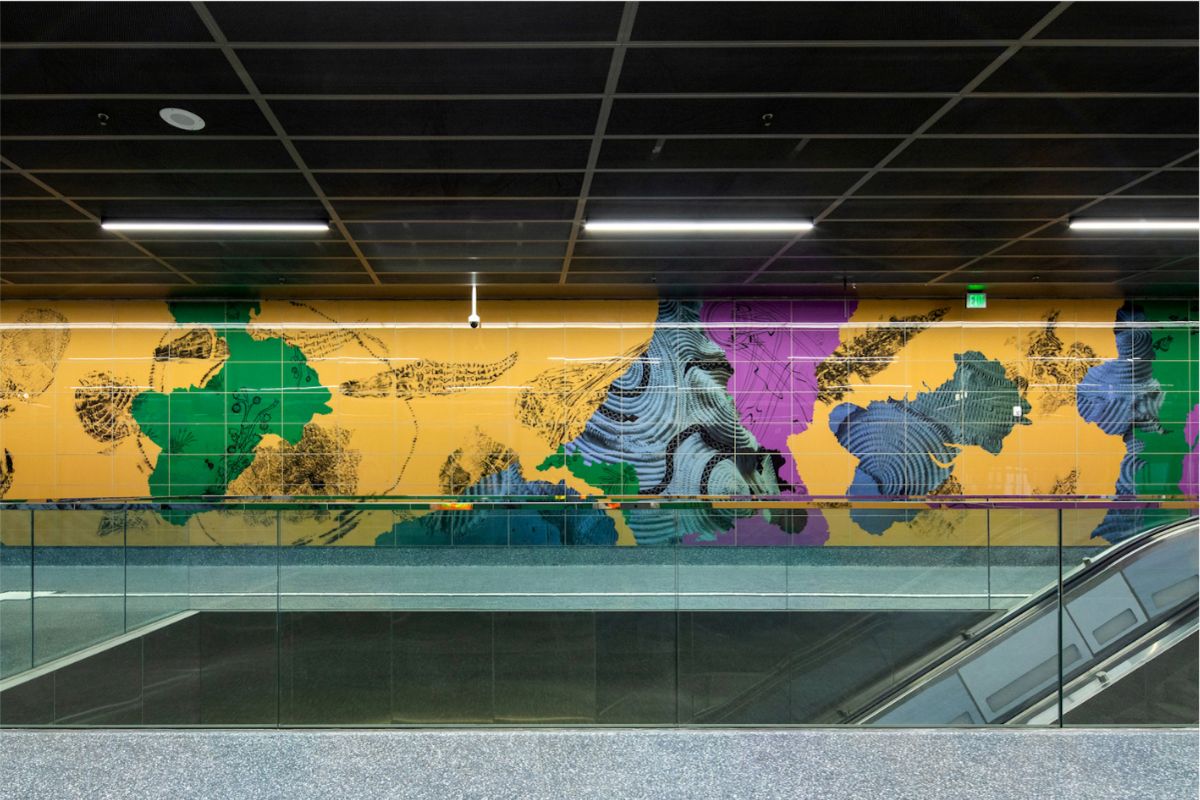
Six artists designed murals that portray stories through glass walls. Project players collaborated over a span of years to produce samples, digital artwork and full-scale mockups of the panels. Aragon and general contractor Skanska worked with glass fabricators and the artists themselves to create a proprietary art-glass system combining a digitally printed interlayer, laminates and low-iron glass. The result is an incredibly nuanced and vibrant scene for each station.
Metro D Line Subway Extension – Section 1 in Los Angeles, California, extends subway service west along Wilshire Boulevard in three sections to improve travel between central Los Angeles and the Westside. The project improves access to jobs, schools, medical centers and cultural destinations, according to Aragon Construction officials.
“The design adds much needed color and vibrancy to a normally dark and crowded space,” says judge Tom O’Malley, partner and director of sales, Clover Architectural Products.
This decorative glass brings the artists’ and architects' vision to life in high-definition views. What the murals depict varies based on the artist and the section of the subway they worked on. For example, at the Wilshire/La Brea Station, “the artwork at the station’s entrance and escalator landing pays tribute to L.A.’s architectural and cultural past while imagining its rapidly changing future,” says artist Eamon Ore-Giron. But the murals also share a commonality: depictions of recognizable local landmarks like the Wilshire Tower, the La Brea Tar Pits, and the Saban Theater.
The magic of this project was capturing the vision and translating it into the real world, say project players. Though the concrete wall substrates exceeded the tolerances required for art murals, the field installation team were able to render a finished product that hid the structural concrete elements beneath. The colors, tones, and details of the artwork were refined by Moon Shadow Glass Inc. and Pulp Studio to bring together a finished product that impresses and inspires Los Angeles commuters and travelers in their daily lives. Without these art glass feature walls, passengers would walk through concrete corridors.
The all-mounted art glass murals were affixed to concrete utilizing a custom aluminum extrusion grid system. Large, cantilevered steel trusses support a glass canopy system creating a decorative translucent shade structure over the escalators/stairs. The canopy is composed of stainless-steel point fittings and laminated acid-etched low-iron silk screen fritted glass and structural silicone. Custom stainless steel, fire-rated enclosed glass stairwells surround the passengers from the platform level to the mezzanine levels.
“The decorative glass completely changes the passenger experience. Instead of plain concrete corridors, the stations become public art spaces that tell stories and bring color, detail and identity into everyday transit,” says judge Zajichek. “What makes it successful is the scale and execution. Translating multiple artists’ work into durable, vibrant glass murals required a lot of coordination, but the final result feels approachable and impactful for the public.”