Project of the Year and Best Feat of Engineering | Glasshouse Theatre
Nominating company: Kuraray
Location: Brisbane, Australia
Winning team
- Architect: Blight Rayner Architecture and Snøhetta
- Interlayer provider: Kuraray
- Curved glass fabricator: NorthGlass
- Façade specialist: seele Inc.
- Owner: Queensland Government / Queensland Performing Arts Centre (QPAC)
- Structural engineer: Arup
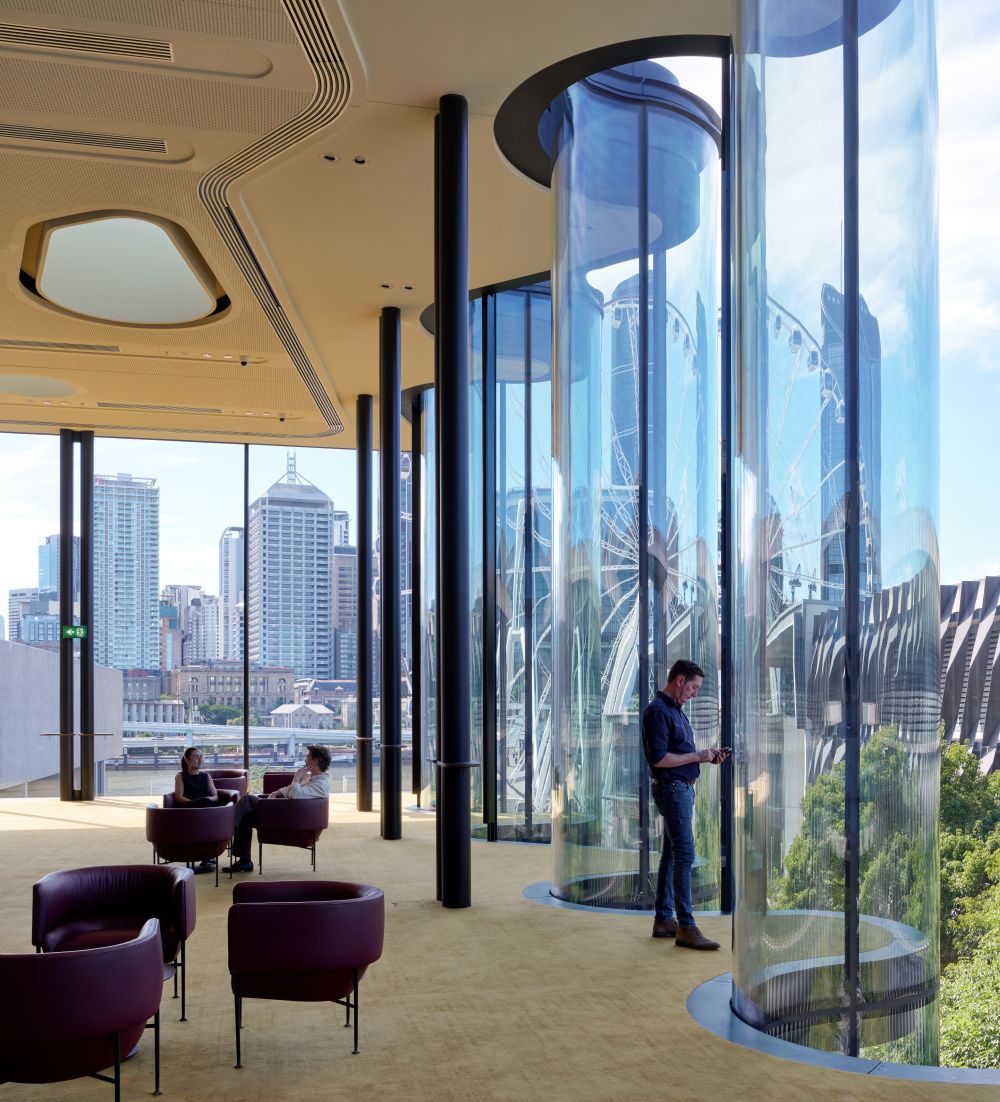
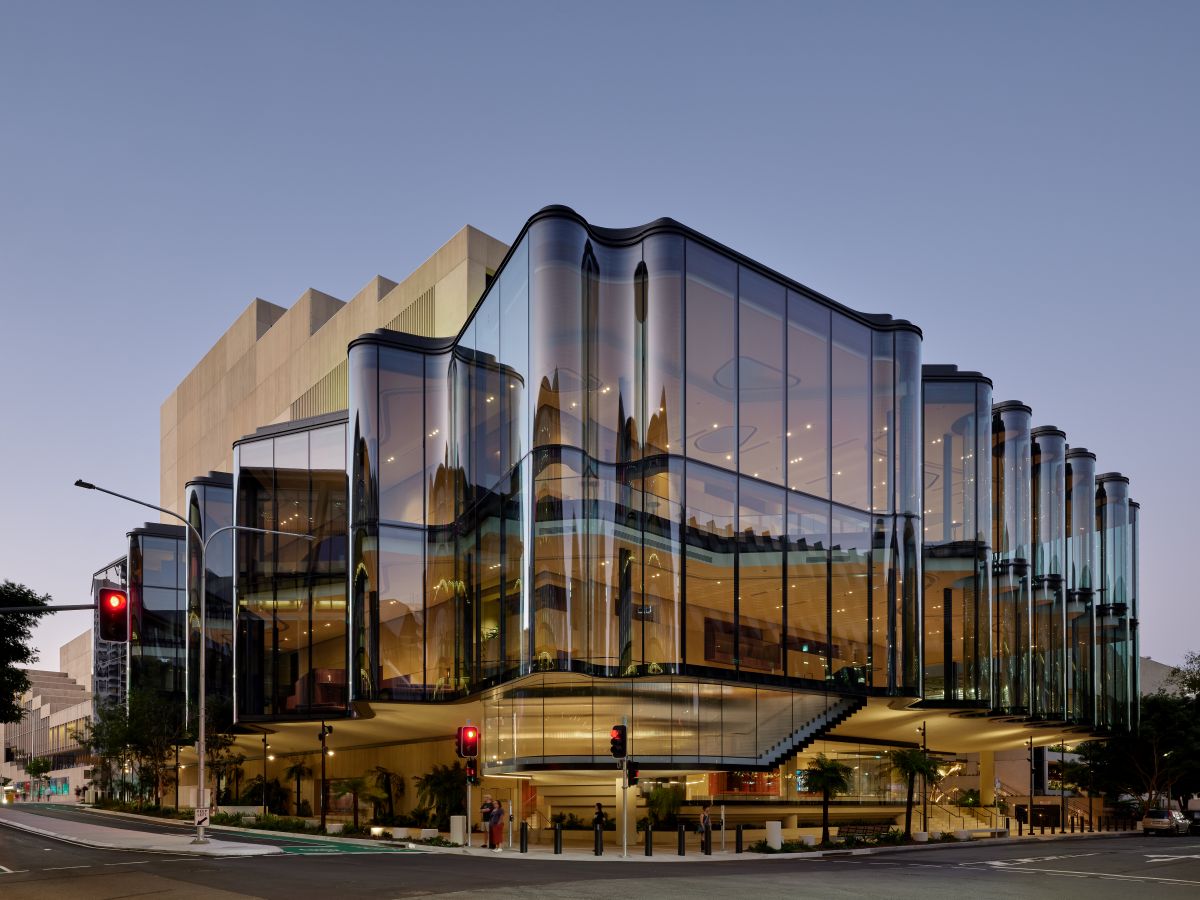
Glasshouse Theatre at Queensland Performing Arts Center is a 1,500-seat performing arts venue located in Brisbane, Australia. Superlative design vision and engineering made judges award this project twice—both as Project of the Year and Best Feat of Engineering. This project is distinguished by a rippling structural glass façade engineered as a transparent, frameless “curtain.” Delivered by seele with curved glass by NorthGlass and 1.52-millimeter SentryGlas interlayers from Kuraray, the façade transforms complex geometry into a landmark of technical precision.
“The Glasshouse Theatre stands out as the Project of the Year because it represents one of the most ambitious and refined expressions of structural glass in contemporary architecture,” says Glass Magazine Awards judge Austin Zajicheck,marketing manager, Linetec - Apogee Architectural Metals. “The defining feature is a rippling, transparent glass façade that transforms an incredibly complex engineering challenge into something that appears effortless and fluid.”
“What elevates this project above others is not just the technical difficulty, but how seamlessly that complexity is resolved into a clean architectural gesture that connects the building to its surroundings. The façade becomes more than an enclosure. It is the identity of the building, blurring the boundary between structure, skin and public interface,” he adds.
Glasshouse Theatre is a standout Best Feat of Engineering entry because its defining architectural gesture, a wavelike, transparent glass façade, required highly specialized engineering, advanced glass forming and precision installation at an exceptional scale. Designed by Blight Rayner Architecture in partnership with Snøhetta, the project transforms the edge of a major cultural venue into a fully glazed civic interface inspired by the movement of the Brisbane River.
The façade comprises 217 individually shaped panels forming a continuous undulating surface, with flat, concave and convex insulating glass units engineered to create the theatre’s signature wave effect. Curved panes reach up to about 23 feet in height and required tight radii and highly controlled tolerances. According to representatives of seele, the façade is a 3D-engineered structural glass system in which vertical loads are carried by tension rods and fins, while horizontal wind loads are managed through structural silicone glazing.
NorthGlass’s deeply curved laminated insulating glass, incorporating 1.52 mm SentryGlas interlayer, pushed forming precision even further. The result is a façade that appears effortless and frameless, yet is technically demanding, structurally expressive, and central to the project’s identity as one of Australia’s most talked-about new cultural landmarks as one the city’s newest performing arts theaters.
“The Glasshouse Theatre façade stood out, as the project details reinforce what the images already convey—the complex engineering required to bring this design to life. Combined with its striking aesthetics, advanced product integration, and the high level of engineering and installation expertise, this project is truly outstanding,” says Glass Magazine Awards judge Alice Dickerson, founder and managing director, Division 08 Marketing.