
Smart Factories are the Future of Glass Fabrication
How integrated technologies can provide supply chain solutions to fabricators
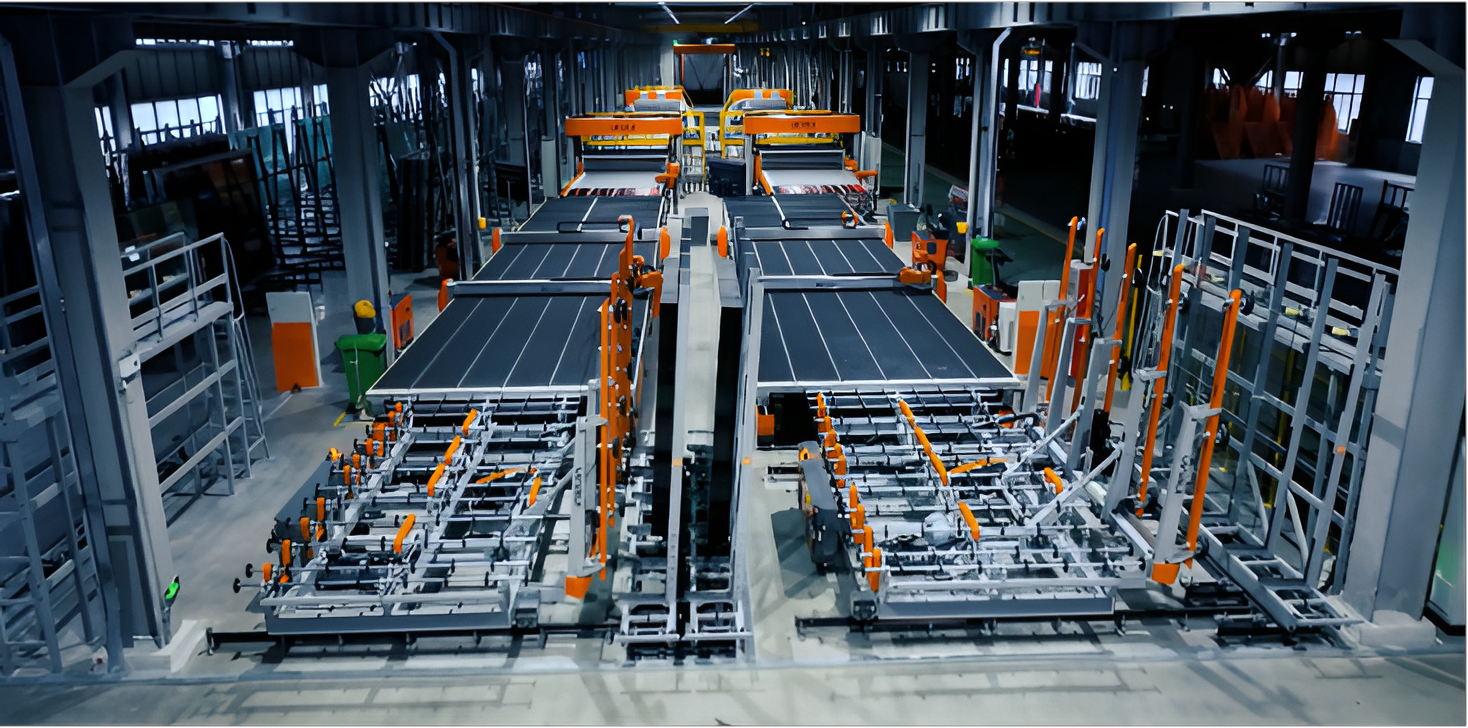
The North American glass fabrication industry is still in its early stages of adopting smarter, more efficient ways to deliver glass to the marketplace. As part of that evolution towards efficiency, a powerful new phrase has entered our vocabulary: “smart Factory.”
A smart factory moves production efficiently through the plant with minimal human intervention, while delivering real-time information and controlling all machinery. It provides solutions up and down the supply chain including storage , cutting, laser identification, fabricating, cleaning, sorting, tempering, insulating, and warehousing / finished goods.
Europe and Asia embraced smart factories years ago. I saw my first one in Europe around 2004. While impressive for its time, it was relatively simple—glass was cut and automatically placed in harp carts, but was then manually moved to an insulating line. In contrast, the smart factories I’ve toured recently in China still leave me saying “Wow!” Glass moves seamlessly from loading to cutting, edging, washing, sorting, tempering, and insulating with only a handful of people overseeing the entire process.
Most North American fabricators operate as full-service providers, handling tempered glass, insulating units, shower doors, and large commercial projects. This breadth creates integration challenges, but also offers an enormous upside for those who implement smart factory technology successfully.
Smart Factory Technologies
At the heart of this transformation is the seamless integration of four core technologies:
- ERP: Enterprise Resource Planning
- MES: Manufacturing Execution System
- CNC: Computer Numerical Control
- SCADA: Supervisory Control and Data Acquisition
ERP – The Business Command Center
ERP integrates core business functions—sales, quoting, procurement, inventory, finance, and planning—into one unified platform. When tightly connected with MES and SCADA, it receives live shop-floor data to dynamically adjust schedules, factor in maintenance needs, and provide accurate, real-time lead times. This eliminates information silos and empowers data-driven decision making at the executive level.
MES – The Orchestrator of Production
MES is the real-time “brain” on the shop floor. It manages, monitors, and optimizes every production activity, bridging high-level planning (ERP) with actual execution. In glass fabrication, MES dynamically routes individual lites through cutting, edging, washing, tempering, insulating, and sorting. It optimizes furnace bed utilization, tracks quality and defects, monitors Overall Equipment Effectiveness (OEE), and provides full traceability using laser-based QR codes. The result is dramatically reduced errors, minimal staffing requirements, lower waste, and predictive maintenance.
CNC – Precision at the Cutting Edge
CNC machines are the skilled hands of the operation. Designs created in CAD software are converted into numerical code that guides diamond wheels, drills, and waterjets with exceptional accuracy. These machines handle everything from straight cuts and complex shapes to holes, notches, and polished edges. In a smart factory, CNC equipment receives jobs automatically from the MES and sends real-time quality data back into the system, minimizing waste and maximizing precision—especially important as glass sizes continue to increase.
SCADA – Real-Time Monitoring and Control
SCADA serves as the nervous system of the factory. It continuously monitors critical parameters such as tempering furnace temperatures, conveyor speeds, equipment status, and polishing performance. Through centralized dashboards, operators (and automated systems) gain immediate visibility, enabling faster responses to issues, predictive maintenance, maximized uptime, and improved energy efficiency.
The Power of Integration
The true advantage of today’s smart factories lies not just in automation, but in the depth of system integration. Data flows bidirectionally:
- ERP sends orders to the MES →
- MES schedules and routes →
- SCADA and CNC execute and monitor →
- feedback loops update all systems in real time.
This creates a responsive, self-optimizing environment that delivers cleaner, safer, more efficient, and far less labor-intensive operations.
As glass sizes grow and quality standards tighten, smart factories will rapidly shift from a competitive advantage to an industry necessity. They deliver improved quality, safety, equipment utilization, and predictive capacity planning. Fabricators can quote reliable lead times that automatically account for maintenance and true factory capacity. Inventory reordering becomes automated, and downstream processes are optimized far beyond traditional cutting yields.
I believe smart factories will become the standard—especially in major markets where reliability and service are critical. General contractors will increasingly choose fabricators who can demonstrate this level of control, quality, and dependability. The next five years will be exciting as the industry shifts.